 Render a House/Updated Sep 16, 2026
3D Architectural Rendering Cost: $149–$3,000 per Image
Across published rate cards and first-party studio cost guides, one architectural still runs from $149 for an exterior to $3,000 for an aerial. This is the practical band in the headline, not a ceiling: large-commercial exteriors reach $1,000–$10,000 in one guide.
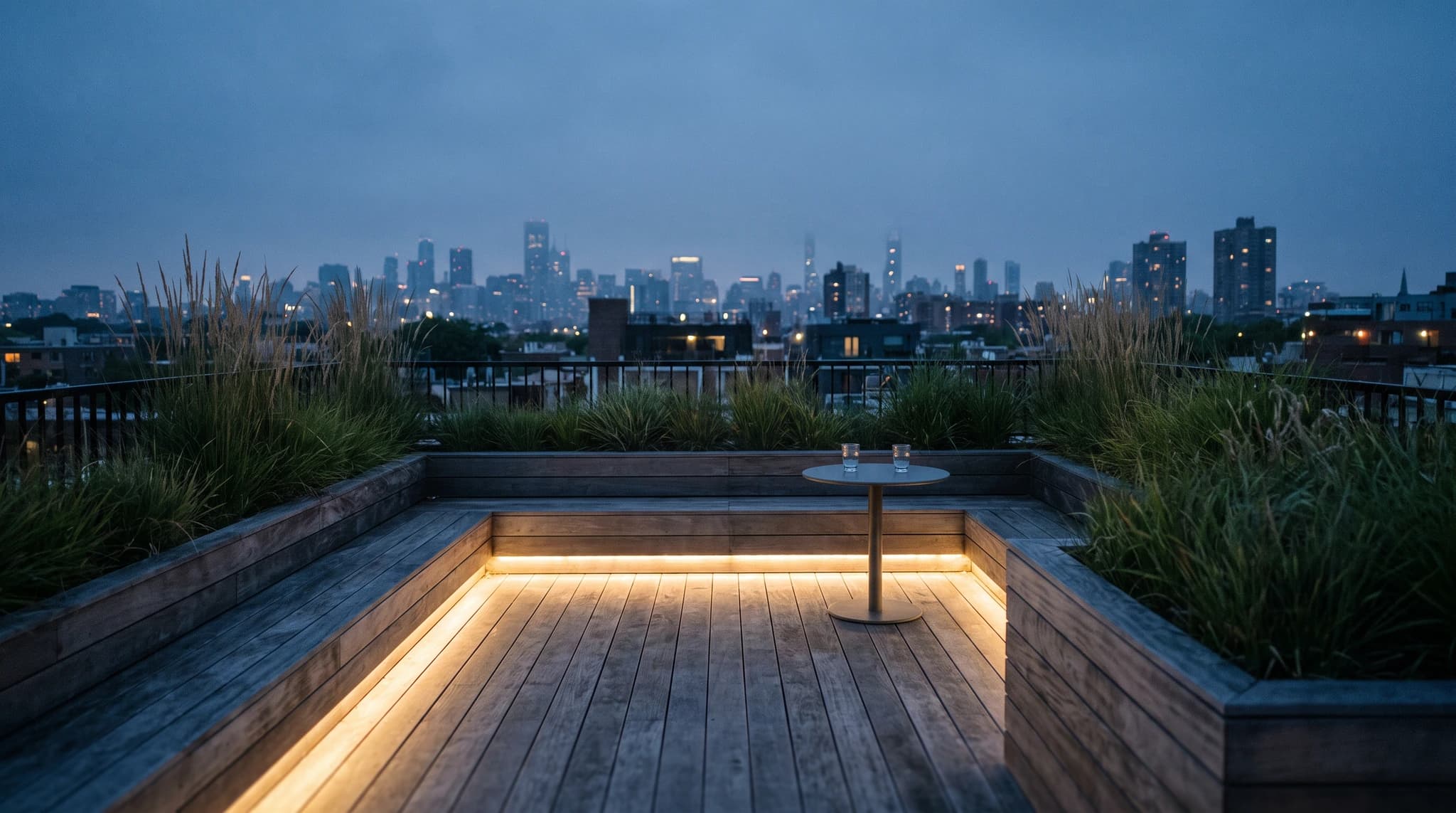
The apparent contradiction matters. A useful budget for a normal still image needs a range narrow enough to act on, while an honest guide must also show the projects outside it. The $149 floor is a published package for an exterior view. The $3,000 top of the headline band is the upper end of a published aerial range. Neither number says a complex commercial campaign cannot cost more.
This guide reuses the first-party rates already checked for Render a House’s architectural rendering services comparison, exterior rendering services comparison, and rendering services by deliverable. A studio’s own rate is labelled as its rate. A market range published by a studio is labelled as a guide, not silently presented as what that studio charges.
How much does architectural rendering cost?
For budgeting, use $149–$3,000 per image as the practical span across the visible rate cards and cost-guide rows below. The low end covers a defined exterior package. The middle covers interiors and ordinary residential or commercial exteriors. The high end covers an aerial or context view where the complete site must be finished.
| Deliverable | Published figure | How to read it | Source |
|---|---|---|---|
| Entry-level house exterior | $149 per exterior view | Lowest published architectural still found in the rate cards | The 2D3D Floor Plan Company |
| Interior still | From $300 per view | Lowest published starting rate in the architectural studio table | ArchiCGI |
| Finished house exterior | $399–$1,500 per image | Market band published by a rendering studio, not its own rate | RealSpace 3D cost guide |
| Typical commercial exterior | $800–$2,500 per image | Typical commercial band; larger projects can exceed it | RealSpace 3D cost guide |
| Aerial or context view | $1,000–$3,000 per image | Top of the headline band because the full site is visible | RealSpace 3D cost guide |
| Large commercial exterior | $1,000–$10,000 per image | Qualified exception above the headline’s practical band | Rapid Renders cost guide |
The final row is why this page does not call $3,000 a maximum. Rapid Renders publishes $1,000–$10,000 for large commercial exteriors, while RealSpace 3D publishes $800–$2,500 for a typical commercial exterior. Those rows describe different project scales, not a disagreement that can be averaged away.
A defensible early budget is $149–$3,000 for one still image, with an explicit exception for large commercial work that can reach $10,000. Ask what deliverable the quote covers before comparing the number.
Which studios publish architectural rendering rates?
Published rates are useful because they show the unit. They also expose how little a single “average” means: one provider sells a defined exterior package, another separates presentation and marketing tiers, and another publishes different starts for interior, residential exterior, commercial exterior, and aerial work.
| Studio | Published rate | Published turnaround | Revisions |
|---|---|---|---|
| The 2D3D Floor Plan Company | Interiors from $99 · exteriors from $149 | 3–5 business days | Rounds included per package |
| World’s Best 3D Renderings | $120 interior · $297 exterior | Quote in 5–10 minutes; delivery not published | Included in the price |
| Rapid Renders | Exteriors from $300 · interiors from $350 | 24–48 hours simple still · about a week for one image | Up to 5 free on the estimate |
| BoxBrownie | Exterior or interior renders from US$350 | About two weeks | Not published |
| RealSpace 3D | $399 presentation image · $799 marketing image | 3–6 days house or interior · 4–8 days exterior | Not published |
| ArchiCGI | Interior from $300 · residential exterior from $600 · commercial from $900 | 3 business days for a still | Included in the standard price |
| Maverick Frame Studio | Exterior from $624 · aerial from $936 | No standard delivery time published | Not published |
These are the studios’ own visible figures at the linked sources. Starting prices are not promises that every project qualifies. BoxBrownie labels its figures in US dollars and notes that prices can vary by browsing country. Rows marked “not published” stay blank rather than borrowing a revision or delivery policy from a different firm.
The table also shows why the headline begins at $149 instead of $300. The architectural studio comparison starts at $300 because it compares firms serving a broader professional brief. The exterior services comparison includes fixed-price listing and small-development providers, where the lowest published exterior is $149.
How do the studio cost guides compare?
Two firms publish broader market guides alongside their own services. Their market bands belong in an editorial comparison, but not in the firm’s own-price column. RealSpace 3D’s fixed rates are $399 and $799 per image; the wider ranges below are the market ranges in its cost guide. Rapid Renders publishes separate starting rates and a separate guide.
| Deliverable | RealSpace 3D market guide | Rapid Renders market guide |
|---|---|---|
| Any still image | $300–$3,000 | $350–$2,500 for 80% of studios |
| House or residential exterior | $399–$1,500 | $500–$1,000 |
| Commercial exterior | $800–$2,500 | $1,000–$10,000 for large commercial |
| Interior | $600–$1,500 | $500–$1,000 |
| Aerial or context view | $1,000–$3,000 | Not published |
Read the house, commercial, and aerial rows together. A ground-level house image sits lower because one or two façades and the foreground dominate the frame. An aerial exposes every roof, the full site, and more surrounding context. A large commercial project can add an entire district, stakeholder review, and a marketing campaign’s art direction, which is why its qualified ceiling sits above the headline band.
Sources: RealSpace 3D’s rendering pricing guide and Rapid Renders’ 3D rendering pricing guide. Both are first-party studio publications. They are evidence of what each publisher says about the market, not an independent industry tariff.
What factors affect architectural rendering cost?
The variables in the usual brief do not move the number equally. Visualization type and complexity set the volume of work. Deadline and revisions change how that work is scheduled. Assets and image count decide how much can be reused. Firm choice decides who performs the work and how much direction surrounds it.
| Factor | Visible price evidence | Why it changes the quote |
|---|---|---|
| Type of visualization | $399–$1,500 for a house exterior, $1,000–$3,000 for an aerial, and up to $10,000 for large commercial work | The more of the building and site the camera reveals, the more geometry, landscape, and context must be finished. |
| Complexity and level of detail | The same exterior can take 8 or 80 artist hours | Custom furniture, planting, façades, reflections, people, and close-up materials add production time even when the camera stays fixed. |
| Deadline | +25–50% for 48 hours in one guide · +30–50% under 5 business days in another | Rush delivery moves the project ahead of scheduled work and reduces the time available for orderly review. |
| Assets provided | No universal discount is published | A clean model, named materials, camera views, site photography, and finish references remove modelling and interpretation from the quote. |
| Number of images | No universal multi-view discount is published | Extra cameras can reuse one model, but each view still needs composition, lighting, entourage, rendering, and post-production. |
| Revision scope | $100–$400 for an extra revision round in the RealSpace 3D guide | Late geometry, camera, or material changes are more expensive than consolidated feedback on a preview. |
| Firm and production region | $200–$800 per image in Asia · $700–$3,000 in the Middle East in the Rapid Renders guide | Labour market, team structure, art direction, and client service can change the quote for an otherwise similar brief. |
How does complexity change the price?
“Complexity” is not a decorative surcharge. It is shorthand for artist hours. RealSpace 3D’s guide gives the clearest example: the same exterior can take 8 hours or 80 hours depending on the agreed detail. A distant background façade, a close-up curtain wall, and a fully planted public realm may occupy the same number of pixels but require very different scene work.
Why does the number of images matter?
The first view pays for more than a camera. It establishes or corrects the model, materials, lighting, planting, entourage, and visual language. Later cameras can reuse that scene, but they still need composition and finishing. No provider in the rate-card set publishes one universal discount for views two through five, so ask for the complete camera list in one quote instead of assuming a percentage.
What should you provide to get a reliable quote?
Send the model if it exists; otherwise send plans, elevations, and a site plan. Add camera marks, finish references, landscape intent, the required time of day, the number of images, the deadline, and who approves the work. Site photographs from the intended camera position are particularly useful when the context must be matched. A studio can quote an incomplete brief, but it must price the uncertainty somewhere.
Deadline and revision figures in the table come from the RealSpace 3D guide and Rapid Renders guide. The regional bands come from Rapid Renders’ guide. They describe production markets, not a guarantee that a particular firm will quote inside the band.
Which pricing models do rendering firms use?
“Per image” is only one contracting model. It works for a defined still, but firms switch to hours, monthly capacity, or a project quote when the deliverable has too many unknowns. The right comparison is therefore the total scope bought, not the smallest number visible on a pricing page.
| Pricing model | Verified example | What to watch |
|---|---|---|
| Published starting price per image | $149 exterior · $300 interior · $936 aerial | Easy to compare, but the starting figure usually assumes a simple brief and standard deadline. |
| Fixed image tier | $399 presentation · $799 marketing at RealSpace 3D | The tier makes intended use explicit, but the rate still depends on the deliverable fitting the published scope. |
| Market band per image | $300–$3,000 in one guide · $350–$2,500 for 80% of studios in another | Useful for a budget before drawings are reviewed; it is not a quote from the studio publishing the guide. |
| Hourly production | $39 per hour at Maverick Frame · $100–$250 in the Rapid Renders guide | Transparent when scope changes, but the final image total stays unknown until the work is complete. |
| Monthly block of hours | From $30 per hour on 40–160 monthly hours at Maverick Frame | Can suit repeat buyers, but only if the purchased hours are used consistently. |
| Project quote | $1,000–$10,000 for large commercial work in one cost guide | Appropriate when context, art direction, stakeholder review, or planning evidence makes each image a different job. |
Per-image pricing is easiest to use when the camera, inputs, and revision policy are fixed. Hourly pricing is clearer when the scope will evolve. A monthly block makes sense only for repeat work. A project quote is not automatically opaque: for a complex planning or commercial brief, it can be the only honest way to include coordination, art direction, context, and stakeholder review.
The hourly and monthly examples are published by Maverick Frame. The fixed tiers come from RealSpace 3D. The wider bands remain guide figures rather than either company’s invoice.
How can you decrease rendering cost?
The reliable way to reduce cost is to remove work or uncertainty without removing the purpose of the image. Asking a studio to “render cheaper” after the brief is fixed usually means an unspecified compromise. Choosing an eye-level camera, a normal deadline, and one approval path changes the production problem itself.
| Action | Visible cost evidence | Why it helps |
|---|---|---|
| Choose the camera before production | An eye-level house exterior is $399–$1,500 in one guide; an aerial is $1,000–$3,000 | Aerials expose roofs, the full plot, neighbouring buildings, and landscape that an eye-level view can hide. |
| Use a standard deadline | Avoid a published 25–50% or 30–50% rush premium | A realistic schedule keeps the job in the studio’s normal queue and preserves review time. |
| Freeze the brief before the first preview | Avoid an extra revision round priced at $100–$400 | Resolve the camera, materials, landscaping, and time of day before detailed rendering starts. |
| Send the cleanest assets available | No universal discount is published | A model with named materials, dimensioned drawings, site photos, and finish references removes discovery work from the quote. |
| Order related views together | No universal multi-view discount is published | One agreed model can support several cameras, while separate orders risk rebuilding or reinterpreting the same project. |
| Separate concept exploration from the final commission | Render a House: 3 free renders a day · Pro $39/month for 240 credits | Test material, mood, and time-of-day options before paying a studio to execute the specified final image. |
How should feedback be organized?
Name one approver and consolidate comments before they reach the studio. Camera changes should happen before detail work. Geometry changes should happen before material polish. Material and entourage changes should happen before final post-production. Mixing all four in late review is how an “extra round” becomes several people reopening the scene.
When does AI reduce the final rendering budget?
AI is useful before the final brief: test whether the client wants brick or stone, daylight or dusk, sparse or mature planting, and a warm or restrained interior. Render a House offers 3 free renders a day; its published Pro plan is $39 a month for 240 credits. Those are Render a House’s own figures, not the third-party rendering ranges above.
The saving is not that an AI concept image becomes a surveyed planning image or a controlled marketing set. It is that fewer unresolved design options enter the paid studio process. Commission the selected direction instead of paying for a specialist team to discover it through revision rounds.
Is in-house rendering, outsourcing, or AI cheaper?
Outsourcing, in-house production, and AI do not buy the same thing. A studio sells a managed final deliverable. An in-house pipeline buys control and repeat capacity. AI buys rapid options. A hybrid workflow uses the cheap, fast stage for decisions and the controlled stage for the image that must withstand scrutiny.
| Route | Cost structure | Speed | Control | Best fit |
|---|---|---|---|---|
| Outsource to a rendering studio | $149–$3,000 per architectural still in the practical published band; large commercial work up to $10,000 | 24–48 hours to about two weeks in the published examples | Highest control when the brief, camera, materials, and review process are specified. | Marketing heroes, consistent image sets, planning specialists, and final client deliverables. |
| Build an in-house rendering pipeline | Staff, workstation, renderer licences, asset libraries, training, and management; no universal per-image total | Fast once the model, standards, and specialist capacity exist | Direct control over scene files and changes, limited by team capacity and skill. | Firms producing enough final imagery every month to keep a specialist pipeline busy. |
| Use AI for concept rendering | 3 free renders a day · Pro $39/month for 240 credits | Seconds to a first option | Good for direction and local edits; not a measured, contractually exact, or surveyed output. | Massing, mood, materials, landscaping, time of day, and internal design reviews. |
| Use a hybrid workflow | AI exploration first, then the relevant studio rate for the selected final image | Fast decisions before the normal studio production schedule | Exploration stays flexible; the final commissioned view remains specified and repeatable. | Teams that need many options but only one or two final images delivered to a client or buyer. |
When is outsourcing the right choice?
Outsource when the image is itself a final product: a brochure hero, a verified view, a coordinated set with repeated cameras, or a visual that a buyer will compare with the finished building. The studio’s value is not only rendering time. It is scene control, art direction, consistency, project management, and accountability for the agreed brief.
When does an in-house pipeline make sense?
Build in-house when the firm produces enough final imagery to keep the specialist, hardware, software, and asset pipeline in regular use. It can make changes faster because the scene and design team sit together. It can also become expensive idle capacity when rendering demand arrives in bursts. There is no credible universal per-image number without a salary, workload, hardware, and software assumption, so this guide does not invent one.
When is AI the right choice?
Use AI for options, not evidence. It is well suited to concept direction, mood, materials, lighting, planting, and internal review. It is not the right source for a dimension, a surveyed camera, a planning methodology, or a promise that every object will remain identical across a coordinated image set. The price difference follows the difference in control.
What can’t an architectural rendering cost guide tell you?
A table can establish a budgeting range and show which questions move it. It cannot price your exact project without the drawings, cameras, deadline, intended use, and review structure. It also cannot make unlike deliverables equivalent merely because each ends as an image file.
- It cannot price a verified planning photomontage as if it were a standard exterior. A surveyed camera and documented method make that a specialist deliverable.
- It cannot promise that a $149 package includes the context, art direction, revisions, and usage expected from a $3,000 commission.
- It cannot treat the $10,000 large-commercial ceiling as typical, or hide it to make the $149–$3,000 headline look absolute.
- It cannot establish the cost of a full campaign from a single still-image rate. Animation, 360° work, interactive sales tools, and multiple coordinated images are separate scopes.
- It cannot turn an AI concept image into a measured drawing, contractual specification, or evidence of what will be built.
Treat every public number as the start of a scope conversation. Confirm currency, tax, image use, model creation, context, cameras, resolution, turnaround, revision rounds, source-file ownership, and cancellation terms before comparing totals.
What should you do next?
If the brief is already fixed and the image must be exact, prepare one package for every bidder: the same drawings or model, the same cameras, the same material references, the same deadline, and the same revision assumptions. Compare the resulting scopes, not just the totals. The architectural rendering services guide lists the broader studio set, while the exterior rendering services guide focuses on published exterior rates.
If the direction is still moving, resolve it before commissioning the final image. Gather the model view or drawing you already have, test materials, mood, landscape, and time of day, and use the selected option as part of the studio brief. The goal is not to replace controlled final work with an uncontrolled concept. It is to stop paying final-work rates for decisions that are not final.
For examples of which inputs suit each design stage, see the architectural rendering examples guide. For Render a House’s own offer, use the current pricing page. The third-party price tables in this article are editorial market evidence and are not Render a House offers.
What else should you know about 3D rendering cost?
How much does a 3D architectural rendering cost?
Across the published rate cards and studio cost guides on this page, the practical still-image band runs from $149 for an entry-level house exterior to $3,000 for an aerial or context view. That is not an absolute ceiling: Rapid Renders’ cost guide lists large commercial exteriors at $1,000–$10,000.
What is the cheapest type of architectural render?
The lowest published architectural still found in the verified rate cards is an exterior view from $149 at The 2D3D Floor Plan Company. Its interior rate starts at $99, while World’s Best 3D Renderings publishes $120 for an interior and $297 for an exterior. These are starting prices for defined packages, not universal market rates.
Why does an aerial rendering cost more?
An aerial exposes roofs, the whole plot, neighbouring buildings, roads, and landscape that an eye-level camera can hide. RealSpace 3D’s guide prices a house exterior at $399–$1,500 and an aerial at $1,000–$3,000; Maverick Frame’s published starting rates make the same distinction at $624 for an exterior and $936 for an aerial.
Why do architectural rendering quotes vary so much?
The deliverable, detail, deadline, input assets, image count, revisions, and firm all change production time. RealSpace 3D notes that the same exterior can take 8 or 80 artist hours. Rush work adds 25–50% in its guide, while an extra revision round is listed at $100–$400.
How can I lower architectural rendering cost?
Choose the camera early, avoid rush delivery, freeze materials and landscaping before the first preview, provide a clean model or dimensioned drawings, and order related views together. The clearest published savings are avoiding a 25–50% or 30–50% rush premium and avoiding an extra revision round priced at $100–$400.
Is it cheaper to render in-house?
Only when the volume supports the pipeline. In-house rendering replaces a per-image quote with staff, workstation, software, asset, training, and management costs. It can be economical for a firm producing final imagery every week, but there is no universal per-image total to compare with the $149–$3,000 studio band.
Can AI replace an architectural rendering studio?
AI can replace part of the concept loop: testing massing, materials, landscaping, mood, and time of day before the brief is final. It should not replace a surveyed planning view, a contractually exact image, a repeatable set from one controlled scene, or a marketing hero that must match the built result.
Keep reading
Related guides and comparisons
20 Best AI Interior Design Tools in 2026 (Free & Paid)
Compare 20 AI interior design tools for room redesign, architecture, floor plans, virtual staging, and client renders, with vendor-sourced prices and tradeoffs.
How to Render in SketchUp: A Practical Workflow Guide
Learn how to render in SketchUp with native viewport tools, in-app plugins, external renderers, Photoshop, Mac workflows, and free options for architects.
How to Render in Revit 2027: Native, Twinmotion, and Export Workflows
Learn how to render in Revit 2027, export a finished raster image, open a view in Twinmotion, or use FBX plus conversion when you need GLB, glTF, or OBJ.
