 Render a House/Updated Sep 8, 2026
Chief Architect System Requirements 2026: X18's 16 GB Floor and the Card Ray Tracing Actually Needs
Chief Architect X18 asks for 16 GB of RAM and a 4 GB DirectX 12 card as its published minimum, and recommends 32 GB with an RTX 5080. Both of those figures are on the same page, and neither of them is the number that decides whether you can produce a Physically Based render.
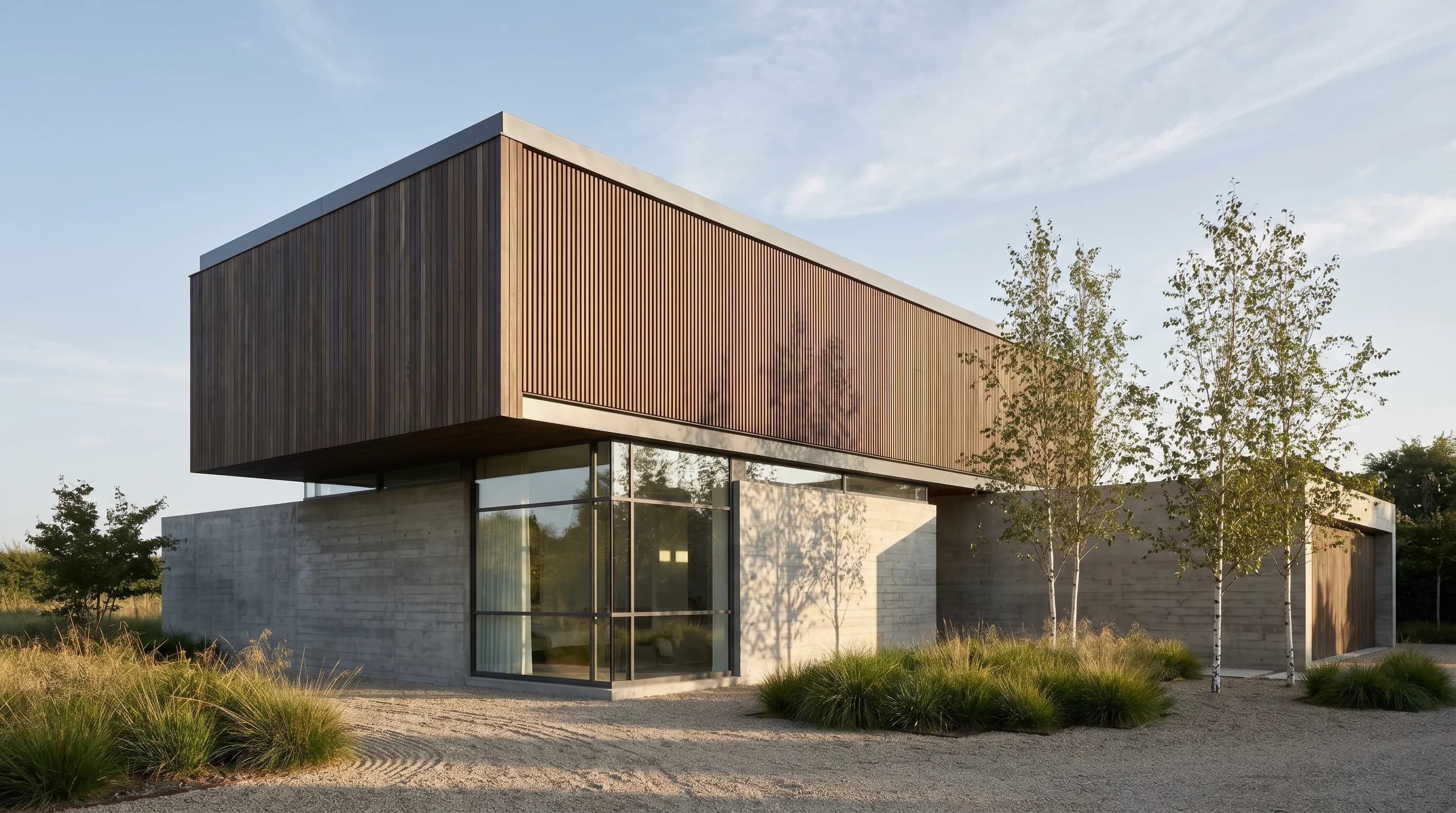
The current release is Chief Architect X18, internal version 28, shipped in 2026 alongside Home Designer 2027. That matters before you read any spec sheet: X17 has already moved onto Chief Architect's prior-versions requirements page, and the features-by-version index lists an X18 release document. Every figure below comes from Chief Architect's own system requirements page, the prior-versions article, and Home Designer's equivalent page. For what a licence costs, see Chief Architect pricing.
Chief Architect system requirements at a glance
| Component | Minimum | Recommended |
|---|---|---|
| Operating system | Windows 10 or 11, 64-bit. Snapdragon processors are not supported | Windows 11, 64-bit |
| Processor | Multi-core. Intel 11th generation or newer if you are relying on integrated graphics | Intel Core Ultra or AMD Ryzen 9 |
| Memory | 16 GB of RAM | 32 GB of RAM |
| Video card | 4 GB of video memory, DirectX 12 with Shader Model 6.0 or newer | NVIDIA GeForce RTX 5080 or AMD Radeon RX 7900 |
| Storage | 5 GB of available hard disk space | 1 TB SSD |
| Display | Not stated | A screen of 16 inches or more |
| Internet | Required for installation, registration and licence authentication | High speed, for content downloads and video access |
Minimum requirements
The Windows floor is 64-bit Windows 10 or 11, a multi-core processor, 16 GB of RAM, 5 GB of free disk space, and a video card with 4 GB of memory supporting DirectX 12 with Shader Model 6.0 or newer. Two exclusions are stated explicitly rather than implied: Snapdragon processors are not supported, which rules out the current wave of Windows-on-ARM laptops, and Intel integrated graphics is only accepted on 11th-generation or newer Intel processors.
That integrated-graphics allowance is unusually generous for software that renders. It means a mid-range office laptop with no discrete card is a supported configuration for drafting, and Chief Architect maintains a list of which Intel integrated GPUs qualify rather than leaving you to guess.
Recommended requirements
The recommendation is a different machine entirely: an Intel Core Ultra or AMD Ryzen 9 processor, 32 GB of RAM, a 1 TB SSD, and an NVIDIA GeForce RTX 5080 or AMD Radeon RX 7900. There is also a recommended screen size — 16 inches or more — which very few CAD vendors publish at all, and which is a real constraint if you were planning to work from a 13-inch laptop.
Why the gap between the two is so wide
The distance between a 4 GB DirectX 12 card and an RTX 5080 is larger than the equivalent gap on most spec sheets in this category. That is not sloppiness. The minimum describes what it takes to open plans, draw walls, place cabinets and orbit a 3D view. The recommendation describes what it takes to ray trace. The rest of this page is mostly about telling those two jobs apart before you spend money.
What does Chief Architect need on a Mac?
Mac minimum and recommended
| Component | Minimum | Recommended |
|---|---|---|
| Operating system | macOS Sequoia or Tahoe | macOS Tahoe |
| Processor | Apple M1 or newer. Intel processors and the A18 Pro and Neo are not supported | Apple M5 or newer |
| Memory | 16 GB of RAM | 32 GB of RAM |
| Video card | No separate figure. The chip generation is the requirement | No separate figure |
| Storage | 5 GB of available hard disk space | 1 TB SSD |
The Mac requirements are shorter than the Windows ones because Chief Architect specifies a chip generation instead of a card. The floor is macOS Sequoia or Tahoe on an Apple M1 or newer, with 16 GB of RAM and 5 GB of disk. The recommendation is an Apple M5 or newer with 32 GB of RAM and a 1 TB SSD.
Apple Silicon, and where Intel Macs stopped
Chief Architect states that Intel processors and the A18 Pro and Neo are not supported. Reading that against the prior-versions page dates the cutoff precisely: X16 still listed a Mac video card requirement of "Apple M1 or newer, or an Intel or AMD GPU with support for Metal GPUFamily macOS 2", and X17 dropped the Intel and AMD half. So X16 is the last release an Intel Mac can run, and an Intel iMac or Intel MacBook Pro cannot be moved past it at any price. Chief Architect's compatible-Mac-models article restates the memory half of this for the current release: 16 GB of unified memory is a minimum, not a suggestion.
The ray-tracing footnote says nothing about Macs
Here is the gap worth knowing about before you buy a Mac. Chief Architect's ray-tracing footnote names its examples as the NVIDIA GeForce RTX series and the AMD Radeon RX series. Neither of those exists in an Apple Silicon Mac. The Mac requirement is a chip generation, M1 minimum and M5 recommended, and no Apple GPU is named as qualifying or not qualifying for the Physically Based technique.
The practical reading is that the M-series recommendation is doing the work the card recommendation does on Windows: if ray tracing is part of the job, buy toward the recommended chip rather than the minimum one. But the footnote itself gives a Mac buyer nothing concrete to check a specific machine against, and it is worth saying so rather than inventing a threshold Chief Architect has not published.
The two floors: running Chief Architect vs rendering in it
Every hardware page in this category has one section that actually decides a purchase, and on Chief Architect it is this one. The software has two different hardware floors and the requirements page states both without connecting them.
Floor one, running Chief Architect. A 4 GB DirectX 12 card, or Intel integrated graphics on an 11th-generation or newer chip. Plans open. Walls draw. The 3D camera orbits. Every drafting and documentation feature works.
Floor two, rendering in Chief Architect. The Physically Based and Clay techniques require a ray-tracing-compatible video card, and Chief Architect names the GeForce RTX and Radeon RX series as its examples. Intel integrated graphics is not in that class.
So a machine that Chief Architect fully supports — one that produces no warning, refuses no file, and satisfies every published minimum — can be structurally unable to make the image you show the homeowner. That is the trap. The integrated-graphics allowance reads like good news on a spec sheet and is exactly the configuration that cannot render.
If you are specifying a machine for someone else, the question to ask is not "does it meet the minimum". It is "do they need to produce renders". Those two questions have different answers and different price tags.
What graphics card does Chief Architect need?
Why a plan drafter needs a GPU at all
Chief Architect is a 3D application wearing a floor-plan interface. Even while you are drawing in plan view it is maintaining a full 3D model of the building, and every camera view, elevation and cross section is generated from it. The GPU draws all of that. It also drives the Physically Based view, which is a real-time rendered mode rather than a still image, so the card is in the loop continuously rather than only when you press render.
What counts as a ray-tracing-compatible card
Chief Architect defines the class by example rather than by specification: a ray-tracing-compatible card "such as one from the NVIDIA GeForce RTX or AMD Radeon RX series". In practice that means a card with dedicated ray-tracing hardware — the RTX line from the 20 series onward, and Radeon RX from the 6000 series onward. Chief Architect does not publish a model-by-model list, so treat the series names as the guidance and check the specific card has ray-tracing acceleration before buying.
VRAM, and the one number that has moved
The published video-memory minimum is 4 GB, and it has been 4 GB since X15. Before that it was 2 GB, in X14 and X13. That is the only VRAM number Chief Architect publishes — there is no separate, higher figure for ray tracing, for large plans, or for the Physically Based view. The recommended cards carry far more than 4 GB, but Chief Architect recommends them by name rather than by capacity, so 4 GB remains the only stated threshold.
Recommended graphics cards by use case
| Tier | Cards | Approximate cost | What you get |
|---|---|---|---|
| Clears the minimum only | Intel integrated graphics on an 11th-generation or newer Intel processor | Included with the machine | Chief Architect runs and every plan opens. Physically Based and Clay views do not, because Chief Architect asks for a ray-tracing-compatible card for those |
| Entry ray tracing | NVIDIA GeForce RTX 4060 or 5060 class, or AMD Radeon RX 7600 class | Roughly $300–$450, approximate street price | The cheapest way into the render modes. Comfortable for single-family plans; slow on a large multi-unit model |
| Working professional | NVIDIA GeForce RTX 4070 Ti or 5070 class, or AMD Radeon RX 7800 class | Roughly $600–$900, approximate street price | The tier most full-time users land on. Ray Trace passes finish while you keep working |
| Chief Architect's own recommendation | NVIDIA GeForce RTX 5080 or AMD Radeon RX 7900 | Roughly $1,000–$1,400, approximate street price | The card named on Chief Architect's requirements page. Worth it if ray-traced stills and panoramas are a daily deliverable rather than an occasional one |
The cost column is third-party street pricing and is approximate. Chief Architect publishes no hardware prices, and the only card figures it publishes at all are the two model names in its recommendation.
What about CPU, RAM, storage and screen?
CPU: the generation floor, not the core count
Chief Architect's minimum is expressed as a processor generation, not a core count or a clock speed, and it exists mainly to bound which integrated graphics are acceptable. The generation floor has moved twice in five releases: Intel 6th generation for X13 through X15, 8th generation for X16, and 11th generation for X17 and X18. Anyone running a 2017 workstation on X15 hit a wall at X17 for reasons that have nothing to do with how fast the chip is.
The recommendation is an Intel Core Ultra or AMD Ryzen 9. Ray tracing and large plan regeneration are the two workloads that will use a stronger CPU; everyday drafting will not.
RAM: 16 GB is the floor, and it moved recently
16 GB minimum, 32 GB recommended. The minimum doubled at X16: X15 and every earlier version in the prior-versions table list 8 GB, and X16, X17 and X18 all list 16 GB. The recommendation has been 32 GB across every one of those releases, unchanged, which is a useful signal — Chief Architect raised the floor to meet reality rather than raising its ambition.
On a Mac the same 16 GB figure is unified memory shared with the GPU, so it is doing more jobs than 16 GB on a PC with a discrete card. That is the argument for treating 32 GB as the real target on Apple Silicon rather than a nice-to-have.
Storage: 5 GB to install, 1 TB to work
5 GB of free disk space installs the program. The recommendation is a 1 TB SSD, and the gap between those two numbers is the bonus catalogs, textures and manufacturer content libraries that make Chief Architect useful. The recommended figure was 512 GB in X13 and X14 and moved to 1 TB at X15, where it has stayed.
Display: a published minimum screen size
Chief Architect recommends a screen of 16 inches or more. Publishing a monitor recommendation at all is rare, and it is a reasonable one: the interface carries a plan, a library browser and a specification panel at the same time, and on a small laptop screen you spend the day closing panels to see the drawing.
Chief Architect system requirements by version
This is the table to check before an upgrade, because two of the last three releases moved a floor that had nothing to do with speed — the Intel Mac cutoff at X17 and the RAM doubling at X16.
| Version | Operating system | Processor | Memory | Video card |
|---|---|---|---|---|
| X18 (version 28, 2026) | Windows 10 / 11 64-bit, or macOS Sequoia / Tahoe, Apple Silicon only | Intel 11th gen or newer for integrated graphics | 16 GB min / 32 GB rec | 4 GB VRAM, DirectX 12 Shader Model 6.0+ / RTX 5080 or RX 7900 rec |
| X17 (version 27, 2025) | Windows 10 / 11 64-bit, or macOS Sonoma / Sequoia / Tahoe, Apple Silicon only | Intel 11th gen or newer for integrated graphics | 16 GB min / 32 GB rec | 4 GB VRAM or Intel integrated 11th gen+ / RTX 5080 or RX 7900 rec |
| X16 (version 26, 2024) | Windows 10 / 11 64-bit, or macOS Ventura / Sonoma / Sequoia | Intel 8th gen or newer | 16 GB min / 32 GB rec | 4 GB VRAM or Intel integrated 8th gen+ / RTX 4080 or RX 7900 rec |
| X15 (version 25, 2023) | Windows 10 / 11 64-bit, or macOS Monterey / Ventura / Sonoma | Intel 6th gen or newer | 8 GB min / 32 GB rec | 4 GB VRAM or Intel integrated 6th gen+ / RTX 4080 or RX 7900 rec |
| X14 (version 24, 2022) | Windows 10 / 11 64-bit, or macOS Big Sur / Monterey / Ventura | Intel 6th gen or newer | 8 GB min / 32 GB rec | 2 GB VRAM or Intel integrated 6th gen+ / 8 GB RTX 3080 or RX 6800 rec |
| X13 (version 23, 2021) | Windows 10 / 11 64-bit, or macOS Catalina / Big Sur / Monterey | Intel 6th gen or newer | 8 GB min / 32 GB rec | 2 GB VRAM or Intel integrated 6th gen+ / 8 GB RTX 3080 or RX 6800 rec |
Three things fall out of reading it top to bottom. The RAM floor doubled once, at X16, from 8 GB to 16 GB. The VRAM floor doubled once, at X15, from 2 GB to 4 GB. And Intel Mac support ended at X17, which is the only one of the three that no amount of money fixes on an existing machine.
Do Premier and Home Designer need different hardware?
Chief Architect sells a professional product, Premier, and a consumer one, Home Designer. They are priced very differently. The published hardware requirements are identical.
| Component | Chief Architect Premier | Home Designer |
|---|---|---|
| Memory, minimum | 16 GB | 16 GB |
| Memory, recommended | 32 GB | 32 GB |
| Video card, minimum | 4 GB, DirectX 12 with Shader Model 6.0 or newer | 4 GB, DirectX 12 with Shader Model 6.0 or newer |
| Video card, recommended | NVIDIA GeForce RTX 5080 or AMD Radeon RX 7900 | NVIDIA GeForce RTX 5080 or AMD Radeon RX 7900 |
| Mac processor | Apple M1 or newer, M5 or newer recommended | Apple M1 or newer, M5 or newer recommended |
| Disk space | 5 GB to install, 1 TB SSD recommended | 5 GB to install, 1 TB SSD recommended |
| Ray tracing | Physically Based rendering needs a ray-tracing-compatible card | Physically Based rendering needs a ray-tracing-compatible card |
Every row matches, down to the recommended card model and the ray-tracing footnote. That is worth knowing in both directions. If you are a homeowner buying Home Designer, you need the same 16 GB machine a professional needs — the cheaper licence does not come with a cheaper hardware bill. And if you are a firm standardising on a machine spec, one spec covers both products, so a support person on Home Designer and a designer on Premier can share a build sheet.
What should you actually buy?
| Who you are | What to buy | Why |
|---|---|---|
| Solo home designer | 32 GB RAM · RTX 4060 or 5060 class · 1 TB SSD | One floor plan at a time, occasional ray-traced stills for a client meeting |
| Remodeller or builder | 16–32 GB RAM · any 4 GB DirectX 12 card · 1 TB SSD | Mostly plan and elevation work on site. Buy the screen before you buy the card |
| Small residential firm | 32 GB RAM · RTX 4070 Ti or 5070 class · 1 TB SSD | The tier that stops ray tracing from blocking someone else's afternoon |
| Presentation-heavy practice | 32–64 GB RAM · RTX 5080 or RX 7900 · 1 TB SSD or larger | Chief Architect's own recommended card, for daily panoramas and ray-traced sets |
| Student | 16 GB RAM · integrated graphics on an 11th-gen or newer Intel chip | Everything except the Physically Based and Clay views, which need a ray-tracing card |
The pattern across all five rows: buy RAM to the recommendation rather than the minimum, and buy the card to the deliverable. RAM is the cheapest thing on the list and the one you cannot easily add to a laptop later. The card is the expensive decision and it only pays for itself if ray-traced output is something a client is paying for.
What a Chief Architect machine costs in 2026
Chief Architect publishes no hardware prices, so the bands below are third-party street prices and are approximate. They are here to size a budget, not to quote one.
A supported drafting laptop — 11th-generation or newer Intel chip with integrated graphics, 16 GB of RAM, a 512 GB SSD and a 16-inch screen — lands roughly in the $900 to $1,300 band. It meets every published minimum and will not produce a Physically Based view.
A machine that renders starts where a ray-tracing card starts. Roughly $1,400 to $1,800buys a laptop with a 4060- or 5060-class card and 32 GB of RAM, which is the cheapest configuration that does both jobs. A desktop built to Chief Architect's own recommendation — Core Ultra or Ryzen 9, 32 GB, 1 TB SSD, RTX 5080 — sits closer to $2,600 to $3,400.
On the Mac side the decision is simpler because there is no card to choose. The minimum is any M1 or newer with 16 GB of unified memory; the recommendation is an M5 or newer with 32 GB. The step from 16 GB to 32 GB of unified memory is the upgrade worth paying for, because it is not user-installable afterwards.
Why does Chief Architect say my video card is unsupported?
The most common hardware message is "You are using a video card that does not meet the software's minimum requirements" . On a machine with both integrated and discrete graphics this usually means Chief Architect launched on the integrated GPU rather than the discrete one, which is a driver or power-profile setting rather than a genuine hardware failure. On a genuinely integrated machine, check the Intel processor generation first — 11th generation is the floor, and a 10th-generation chip will produce this message however much RAM it has.
Blank, black, flickering or torn 3D camera views are the other recurring class, and Chief Architect has a dedicated troubleshooting article for them. In most cases these are display-driver problems rather than capacity problems: the card clears the 4 GB requirement and the driver is out of date or is being overridden by a vendor control panel.
One case is genuinely a capacity problem and is worth separating out. If Physically Based or Clay views specifically fail while everything else works, that is the second floor from earlier in this page, not a bug — the card is doing its job and simply is not in the ray-tracing class.
Can you stay on an older version to keep old hardware?
The usual advice for old hardware is to stay on an older release. With Chief Architect that works, with one condition that catches people out: plan files only travel forward.
Chief Architect cannot open a plan that was created or last saved in a newer version, and it says so with a specific message when you try. There is no save-as-earlier-version command. So X17 can open an X16 plan, but the moment that plan is saved in X18 it stops opening in X17, and the X17 machine is locked out of it permanently.
There is one safety net. When a newer version saves a legacy file for the first time, Chief Architect writes an unaltered copy of the original into an Archives folder in its data directory, and that copy still opens in the version that made it. That protects the file you had; it does not let you move work backwards.
The other end of the range has its own cutoff. Chief Architect X9, Home Designer 2018 and newer read .plan and .layout files, but the older .pl and .laformats are no longer supported, per Chief Architect's legacy-files article. If you have archives in those formats, you need X8 or Home Designer 2017 to open them and re-save.
The practical rule for a mixed-version office: everyone upgrades together, or the person on the older version becomes read-only for any shared file.
How do you get more out of the hardware you have?
Before buying anything, four settings move the needle more than a component swap.
Check which GPU the program launched on. On a laptop with switchable graphics this is the single most common cause of poor 3D performance, and it costs nothing to fix in the graphics control panel.
Work in a cheaper view. The standard rendered camera is far lighter than the Physically Based view. Keep the heavy mode for the moment you actually need it rather than leaving it on while you draft.
Turn off floors and layers you are not using. A 3D view rebuilds everything that is switched on, so a whole-house model with all floors visible costs more every time the camera moves.
Put the plan and the library on the SSD.Chief Architect's recommendation is a 1 TB SSD for a reason — the content libraries are large and get read constantly.
Render a House, alongside Chief Architect
Everything above is about making a render happen on hardware you own. There is a different answer, which is not to render on your hardware at all. Render a House works from an exported picture rather than the plan file: File > Export > Export Picture saves the active view — a 3D camera, a floor plan, or an elevation — as a BMP, JPG or PNG at a pixel size you choose. Save it as JPG or PNG, the two Render a House reads. Upload that, describe the materials, light and setting you want, and the render runs on hosted hardware.
| Chief Architect | Render a House | |
|---|---|---|
| What it is | A residential design tool that draws the building and documents it, with its own render modes. | A rendering and image workflow. It does not model, draft, or produce construction documents. |
| Where it runs | Installed on Windows 10/11 or an Apple Silicon Mac running macOS Sequoia or Tahoe. | In the browser, on any machine you have open. |
| Hardware for a photoreal image | Physically Based and Clay views require a ray-tracing-compatible card, such as a GeForce RTX or Radeon RX. | None. Rendering happens on hosted hardware, so the card in your machine is irrelevant to it. |
| What you start from | The .plan file, with materials assigned. | An exported PNG or JPG of any view, or a GLB, GLTF or OBJ model. |
| Changing a material | Reassign it in the material list, then re-render the view. | Describe the finish you want and re-render. The source file is untouched. |
| Cost to start | Premier and Home Designer are annual subscriptions; neither is sold as a one-time purchase. | Free, at 3 renders per day. |
What you get
3D integration
Where Chief Architect exports a mesh, upload it and set the camera in the browser, then render from that view.
Rendering
Photorealism in seconds rather than a queued calculation you leave running over lunch.
Video
A camera move across the same project, generated from a finished still. Nothing to animate.
Design
Try materials, light and surroundings until the version you want exists, without touching the source model.
Refinement
Fix one part of a render — a facade panel, a tree, a sky — without starting the image again.
Precision
Your geometry is respected: the walls, openings, heights and proportions you drew in Chief Architect stay where you put them.
Collaborative
Share a link and take comments on the image itself, so feedback lands on the render rather than in an email thread.
Mobile and web
Runs in the browser, on the machine you have open, including a laptop that would struggle with a local render engine.
4K
Delivery resolution, ready to print or put on a board without a separate upscaling step.
The two are not substitutes. A Ray Trace pass renders the exact design in the exact materials you specified, and when a homeowner is signing off on a finish that is the right tool. This is for the earlier conversation — four exteriors on a Tuesday afternoon, from a laptop that does not have the card.
Chief Architect rendering with Render a House covers the export path in full, and the free tier is there if you want to try it on your own file before deciding anything.
What this cannot do
Being clear about the edges of this, because the two approaches are not substitutes.
A hosted render does not read a Chief Architect plan file. It reads the exported picture. Your material assignments, cameras, and anything outside the exported view do not travel.
It is not a Ray Trace replacement. A Ray Trace pass renders the exact design in the exact materials you specified. An AI render interprets. When a client is paying for a final image of a specific specification, ray tracing is the right tool and a card is the right purchase.
It does not lower Chief Architect's own floor. You still need 16 GB of RAM and a supported processor to run the software. Nothing here changes what it takes to draw the plan; it only changes what it takes to produce an image from one.
It will not fix a bad export. A cluttered, small, or badly framed view produces a poor render. The picture export dialog lets you set a large pixel size and clear Use Active Window Size — do both.
Common questions about Chief Architect hardware
What are the minimum system requirements for Chief Architect?
For Chief Architect X18: 64-bit Windows 10 or 11 with Snapdragon processors unsupported, or macOS Sequoia or Tahoe on an Apple M1 chip or newer. Both platforms need 16 GB of RAM and 5 GB of free disk space. On Windows the video card needs 4 GB of memory and DirectX 12 with Shader Model 6.0 or newer, or Intel integrated graphics on an 11th-generation or newer Intel processor. An internet connection is required for installation and licence authentication.
How much RAM does Chief Architect need?
16 GB is the published minimum and 32 GB is the published recommendation, and both figures apply to Premier and to Home Designer. The minimum moved recently: X15 and every earlier version listed 8 GB, and X16 doubled it to 16 GB, where it has stayed through X17 and X18. If you are buying a machine to keep for several versions, 32 GB is the figure to buy against, not 16.
Do you need a dedicated graphics card for Chief Architect?
Not to run it. Chief Architect supports Intel integrated graphics on 11th-generation and newer Intel processors, and it maintains a list of which integrated GPUs qualify. On Windows you do need a dedicated card for two of the render modes: Chief Architect states that the Physically Based and Clay techniques require a ray-tracing-compatible video card, and names the NVIDIA GeForce RTX and AMD Radeon RX series as examples. Intel integrated graphics is not in that class, so a Windows machine relying on it runs the software and cannot produce those views. On a Mac the question does not resolve the same way — no Apple Silicon machine has a GeForce or Radeon card, and Chief Architect names no qualifying Apple GPU and publishes no Mac ray-tracing threshold at all, so the requirement there is simply unstated.
Does Chief Architect run on a Mac, and does it need Apple Silicon?
Yes, and yes. Chief Architect X18 runs on macOS Sequoia or Tahoe and requires an Apple M1 chip or newer. Intel Macs are not supported, and neither are the A18 Pro and Neo. The last release that listed Intel Mac support was X16, which accepted an Intel or AMD Mac GPU with 2 GB of video memory. So an Intel Mac stops at X16 and cannot be moved forward.
Can you stay on an older Chief Architect version to keep older hardware?
You can, but it is a one-way door. Chief Architect cannot open a plan that was created or last saved in a newer version, so once a file has been saved in X18 it will not open in X17. Chief Architect does write an unaltered copy of a legacy file into an Archives folder the first time a newer version saves it, which preserves the original, but that only helps for files that started life in the older release.
What laptop should you buy for Chief Architect?
Start at 32 GB of RAM rather than the 16 GB minimum, and a 1 TB SSD, which is Chief Architect's own recommendation. Then decide on the card by what you deliver: if ray-traced images are part of the job, a laptop RTX 4060 or 5060 class card is the cheapest way in at roughly $1,400 to $1,800 for a whole machine, approximate street price. If you mostly draft, an integrated-graphics laptop on an 11th-generation or newer Intel chip is supported and much cheaper. Also check the screen — Chief Architect recommends 16 inches or more, which is a real constraint on a 13-inch laptop.
Keep researching your Chief Architect budget
Chief Architect pricing covers what Premier and Home Designer cost per year and why neither is sold as a one-time purchase any more — the other half of the same budget conversation this page starts.
Chief Architect rendering walks through the picture-export workflow in full, including which view to export and what a render can and cannot infer from a plan.
Comparing hardware against another package on the same shortlist? SketchUp system requirements and Revit system requirements run the same numbers, and both have a two-floors problem of their own.
If the reason you are pricing a graphics card is client images rather than drafting speed, the architectural rendering tool is the cheaper end of that decision.
Keep reading
Related guides and comparisons
ChatGPT for architectural rendering: does it work?
Partly. ChatGPT is great for a fast concept image, but edits drift and it can't keep several renders of one project consistent. Render a House can.
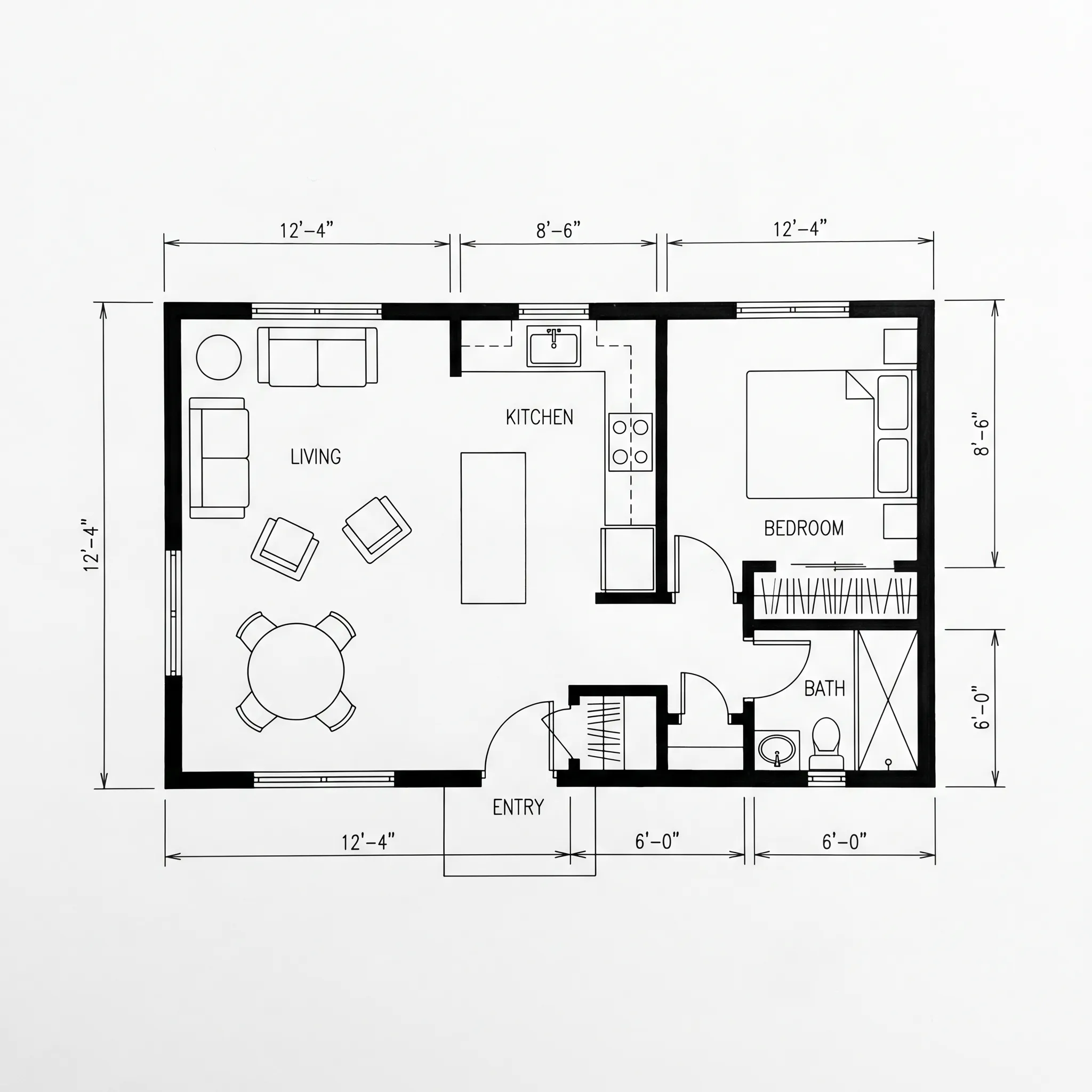
How to Turn a 2D Floor Plan Into a 3D Render With AI (5 Steps)
Turn a 2D floor plan into a 3D render with AI in 5 steps. Render a House makes a photorealistic image in 30–60 seconds, free to start.
Best AI Rendering Tools for Architects in Latin America (2026)
Render a House is the best AI rendering tool for architects in Latin America (2026), vs Redraw, ArquiRender, Veras, Phareto, Maquete. Languages, prices.
