 Render a House/Updated Sep 8, 2026
KeyShot System Requirements 2026: A 4 GB Minimum and the Three Machines Behind It
KeyShot's published memory minimum is 4 GB, and its own recommendation on the same page is 16 GB and up— four times the floor (16 ÷ 4 = 4). That gap is not an oversight. It is the clearest signal that KeyShot's requirements page describes three different machines, and most buying mistakes come from reading only one of them.
The current release is KeyShot Studio 2026.2. Luxion numbers releases by year and point release rather than by a single version number, so the requirements move on a schedule that has more to do with GPU drivers and operating-system support than with the hardware you own. Every figure below comes from Luxion's own minimum system requirements page, cross-checked against the archived requirements for 2025.3 and 2025.2, and against the GPU Mode section of the KeyShot manual. For the licence side of the same purchase, see KeyShot pricing.
KeyShot system requirements at a glance
| Component | Minimum | Recommended |
|---|---|---|
| Operating system | Windows 10 22H2 or Windows 11, or Windows Server 2019 to 2022. macOS Sonoma 14 to Tahoe 26 | The current Windows 11 or macOS Tahoe 26 release |
| Processor | Quad-core Intel or AMD 64-bit CPU with SSE4.1 or higher | As many cores and threads as the budget allows |
| Memory | 4 GB of RAM | 16 GB and up |
| Graphics, for the interface | An OpenGL 2.0 capable system | Any current dedicated card |
| Graphics, for GPU Mode | NVIDIA Maxwell or newer, or AMD RDNA 3 on an RX 7600 or above, or an Apple M3 with 16 GB | NVIDIA Turing or newer with at least 8 GB of dedicated VRAM |
| Graphics, for AI Shots | Runs on CPU, AMD RDNA 3 dedicated cards, and Apple ARM GPUs | An NVIDIA RTX card released in the last three years with at least 16 GB of VRAM |
| Display | 1080p at 15.6 inches or higher | Larger, for the real-time view alongside the material tree |
Minimum requirements
The floor is a quad-core Intel or AMD 64-bit processor with SSE4.1 or higher, 4 GB of RAM, an OpenGL 2.0 capable system for the interface, and a display of 1080p at 15.6 inches or larger. On Windows: Windows 10 at 22H2 or later, or Windows 11, plus Windows Server 2019 through 2022 for render nodes. On macOS: Sonoma 14 through Tahoe 26, with Luxion noting that Ventura 13 may still work but is no longer officially supported.
The SSE4.1 requirement is the only genuinely old-hardware exclusion in the list, and it dates from 2007, so in practice no machine capable of running a current operating system fails it. The quad-core figure is similarly undemanding. Nothing on the minimum line is going to stop you installing KeyShot.
Recommended requirements
The recommendation is short and unusually honest: 16 GB of RAM and up, and as many CPU cores as you can justify, because Luxion states plainly that KeyShot uses all available cores and that more cores and threads produce faster render times. There is no recommended CPU model, no recommended clock speed, and no recommended card for general use — only for the two optional features covered below.
KeyShot does not need a GPU to render
This is the fact that separates KeyShot from most of the renderers it competes with, and it is worth stating early because it changes what you should buy: KeyShot does not require a GPU for rendering. Luxion says so directly. The CPU engine is the primary renderer. A graphics card is needed for certain interface elements, which require OpenGL 2.0, and for GPU Mode, which is a separate rendering path you opt into.
The practical consequence: a workstation with a strong CPU and integrated graphics is a completely supported, fully functional KeyShot machine. Every output is available to it. What it does not get is the interactive speed of GPU Mode or fast AI Shots.
The three floors: running KeyShot, GPU Mode, and AI Shots
Every hardware page in this category has one section that decides a purchase. On most software there are two floors — running it and rendering in it. KeyShot has three, and the requirements page states all three without ever saying they are different machines.
Floor one, running KeyShot and rendering on the CPU. Quad-core CPU with SSE4.1, 4 GB of RAM, an OpenGL 2.0 capable system. That is the whole requirement. KeyShot opens, imports models, assigns materials, and renders every output type.
Floor two, GPU Mode. NVIDIA Maxwell architecture or higher with Turing or newer recommended and at least 8 GB of dedicated VRAM suggested; or AMD RDNA 3 and newer on a Radeon RX 7600 or above; or, on a Mac, an Apple M3 chip with 16 GB of RAM running macOS Sequoia 15.
Floor three, AI Shots. Luxion recommends all NVIDIA RTX GPUs released in the last three years with at least 16 GB of VRAM. AI Shots will run on the CPU, on AMD dedicated cards from RDNA 3 onward, and on Apple ARM GPUs, but Luxion states that NVIDIA offers by far the best performance.
Now put the numbers next to each other. The page's stated memory minimum is 4 GB. The same page's Mac GPU Mode requirement is a 16 GB M3 — four times the minimum (16 ÷ 4 = 4). The GPU Mode VRAM suggestion is 8 GB, and the AI Shots recommendation is 16 GB, double it (16 ÷ 8 = 2). A machine can satisfy the requirements page and still be unable to use two of the features on it.
So the question to ask before spending anything is not "does this meet the minimum". It is "which of the three floors do I need". The answer changes the budget by roughly a factor of four.
What does KeyShot GPU Mode need?
GPU Mode is a separate rendering path, not an accelerator bolted onto the CPU one. It is the reason most KeyShot hardware questions get asked, and the requirements are per-vendor.
NVIDIA: Maxwell is the floor, Turing is the advice
The architectural floor is Maxwell or higher, and Luxion's stated recommendation is Turing or newer. The 2025.2 requirements listed the supported families explicitly — GeForce RTX 20 through 50 series, TITAN RTX, and the RTX A-Series and Quadro workstation cards — which is a useful list to check a specific card against even on a later release.
Maxwell shipped in 2014 and Turing in 2018, so the gap between the floor and the advice is four generations. Treat Maxwell as "GPU Mode will switch on" rather than "GPU Mode will be worth using".
AMD: RDNA 3 and the RX 7600 line
AMD support starts at RDNA 3 architecture and newer, on a Radeon RX 7600 or above, with driver version 23.30. That is a much tighter window than the NVIDIA one: RDNA 3 launched in late 2022, so an RDNA 2 card — the RX 6000 series — does not qualify for GPU Mode at all, however much VRAM it carries. If you are shopping AMD for KeyShot specifically, the generation matters more than the model.
VRAM: 8 GB for GPU Mode, 16 GB for AI Shots
Luxion suggests at least 8 GB of dedicated VRAM for GPU Mode. This is a real constraint rather than a comfort figure, because a GPU renderer needs the scene to fit in video memory — that is what VRAM buys you in this context, and it is why the figure is quoted per-card rather than as a system total.
AI Shots ask for 16 GB, double the GPU Mode figure (16 ÷ 8 = 2). If both features matter, the 16 GB number is the one to buy against, because a card bought to the 8 GB suggestion satisfies one feature and not the other.
Driver versions, which move every release
Driver minimums move with each KeyShot release and are the most common cause of a GPU Mode problem that looks like a hardware problem. The current release lists an NVIDIA minimum of 576.52, and Luxion adds that you should update to 591.44 or newer if you are having performance issues. The 2025.2 release listed 572.16, so the minimum moved within a single release cycle. The AMD minimum has been 23.30 across both.
The lesson is procedural: when you upgrade KeyShot, re-read the driver line rather than assuming your card is still fine. It is the only requirement on the page that can change without you changing anything.
What hardware do AI Shots need?
AI Shots are the newest reason to care about a graphics card in KeyShot, and they carry the strictest requirement on the page. Luxion recommends all NVIDIA RTX GPUs released in the last three years with at least 16 GB of VRAM, and says newer cards with more VRAM are preferable.
Two details in that sentence matter more than the number. The first is that it is expressed as a rolling three-year windowrather than a fixed architecture. That is the only requirement on Luxion's page that will quietly stop being met by a card you already own, simply through the passage of time.
The second is what happens if you do not meet it. AI Shots do not refuse to run: Luxion states that running them on the CPU, and on AMD dedicated cards from RDNA 3 onward, and on Apple ARM GPUs, is possible, and that NVIDIA currently offers by far the best performance. So this is a speed requirement rather than a capability one — which is a genuinely different kind of constraint from the GPU Mode floor, and it deserves a different purchasing decision.
What does KeyShot need on a Mac?
Supported macOS versions
The current release supports macOS Sonoma 14 through Tahoe 26. Luxion notes that Ventura 13 may still work but is no longer officially supported, which is a more useful formulation than a hard cutoff — it tells you the configuration is unsupported rather than broken. The 2025.2 release supported Ventura 13 through Sequoia 15, so the supported window has shifted forward by one macOS version at each end.
GPU Mode on Apple Silicon needs an M3 and 16 GB
This is the Mac number that decides a purchase. GPU Mode on macOS requires an Apple M3 chip with 16 GB of RAM and macOS Sequoia 15. Both halves are requirements: an M3 with 8 GB does not qualify, and neither does an M1 or M2 with 32 GB.
An M1 or M2 Mac still runs KeyShot perfectly well and renders on the CPU, which — as the earlier section covered — is KeyShot's primary engine rather than a fallback. But GPU Mode is off the table on those machines, and no amount of memory changes that.
Note also that the 16 GB here is unified memory shared between CPU and GPU, so it is doing more work than 16 GB alongside a discrete card on a PC. On Apple Silicon, 32 GB is the figure worth buying if GPU Mode is going to be used seriously, and it is not user-installable later.
How long KeyShot has run natively on Apple Silicon
KeyShot has run natively on Apple Silicon since version 11.2, per Luxion's own product FAQ. That is a long native history by the standards of this software category, and it is the reason the Mac story here is about which chip unlocks GPU Mode rather than about whether the application runs at all.
What about CPU, RAM, display and storage?
CPU: cores are the render engine
The published minimum is a quad-core Intel or AMD 64-bit processor with SSE4.1 or higher, and Luxion publishes no recommended model. What it does publish is the principle: KeyShot will use all available CPU cores, and more cores and threads produce faster render times.
That is the opposite of the advice that suits a NURBS modeller or a drafting application, where single-core clock speed dominates. For KeyShot, if you are choosing between a high-clock 8-core chip and a lower-clock 16-core chip and rendering is the workload, buy the cores.
The same logic extends across machines. KeyShot ships Network Rendering for distributing a render across several computers, and Luxion publishes separate hardware recommendations for that setup. If render time is the bottleneck in a studio, that is the direction to investigate before buying one very large workstation.
RAM: the 4 GB figure is not a working figure
4 GB minimum, 16 GB and up recommended. Treat the 4 GB figure as an installation requirement rather than a working one — it is four times below Luxion's own recommendation (16 ÷ 4 = 4), and no other number on the page has a gap that wide.
The recommendation is also open-ended: "16 GB and up" rather than a specific target. For CPU rendering, system memory is where the scene lives, so complex assemblies with high-resolution textures will use whatever you give them. 32 GB is the sensible working figure for professional use, and 64 GB for large assemblies.
Display: a published minimum size
Luxion publishes a display minimum of 1080p at 15.6 inches or higher. Publishing a screen requirement at all is uncommon, and it is a reasonable one: KeyShot's interface puts a real-time render view next to a scene tree and a material library, and below that size you spend the day collapsing panels.
Storage: Luxion publishes no figure
Luxion publishes no disk space figure on the requirements page — not a minimum and not a recommendation. That is a genuine gap rather than an oversight on our part, so there is no number to quote here. In practice the variable is the material and environment library rather than the application, and an SSD matters more than capacity for how quickly a scene opens.
KeyShot system requirements by version
The interesting thing about this table is what does not move. The CPU, RAM and display requirements are identical across every release below. What changes is operating system support and GPU driver minimums.
| Release | Operating systems | CPU and RAM | GPU Mode | Drivers |
|---|---|---|---|---|
| KeyShot Studio 2026.2 (current) | Windows 10 22H2 to 11, Server 2019 to 2022 · macOS Sonoma 14 to Tahoe 26 | Quad-core SSE4.1 · 4 GB min, 16 GB+ recommended | NVIDIA Maxwell+ (Turing+ advised), AMD RDNA 3 on RX 7600+, Apple M3 with 16 GB | NVIDIA 576.52 minimum, 591.44 or newer if performance issues · AMD 23.30 |
| KeyShot Studio 2025.3 | Windows 10 22H2 to 11, Server 2019 to 2022 · macOS as published for that release | Quad-core SSE4.1 · 4 GB min, 16 GB+ recommended | NVIDIA Maxwell+ (Turing+ advised), AMD RDNA 3 on RX 7600+ | As published for that release |
| KeyShot Studio 2025.2 | Windows 10 22H2 to 11, Server 2019 to 2022 · macOS Ventura 13 to Sequoia 15 | Quad-core SSE4.1 · 4 GB min, 16 GB+ recommended | NVIDIA Maxwell+, RTX 20 to 50 series, TITAN RTX, RTX A-Series and Quadro · AMD RDNA 3 on RX 7600+ | NVIDIA 572.16 minimum · AMD 23.30 |
Two things follow. First, upgrading KeyShot rarely obsoletes a workstation — the quad-core, 4 GB, 1080p line has held. Second, the thing most likely to break after an upgrade is a driver version, which is free to fix and easy to miss. The NVIDIA minimum moved from 572.16 to 576.52 between 2025.2 and the current release.
Luxion publishes a separate requirements article per point release rather than maintaining one page with a history table, so the archive is the version record. If you are on an older release, search the knowledge base for that specific version number rather than reading the current page.
What should you actually buy?
| Who you are | What to buy | Why |
|---|---|---|
| Solo product designer | 8-core CPU · 32 GB RAM · RTX card with 8 GB VRAM | GPU Mode for iteration, CPU for the final frame. The most common shape |
| Studio doing AI Shots daily | 12-core CPU · 32–64 GB RAM · RTX card with 16 GB VRAM or more | The 16 GB VRAM figure is the binding constraint, not the CPU |
| CPU-only workstation | 16-core or higher CPU · 32–64 GB RAM · integrated graphics | Entirely supported. Luxion states KeyShot does not require a GPU to render |
| Mac user | Apple M3 or newer · 16 GB unified memory minimum, 32 GB better | The M3-with-16 GB line is what unlocks GPU Mode, not a preference |
| Student or evaluator | Any quad-core machine · 16 GB RAM · any OpenGL 2.0 graphics | KeyShot runs and renders. Expect long CPU render times on complex scenes |
The pattern across all five rows: buy the CPU for render time, buy RAM well past the minimum, and buy the card only for the specific feature you need it for. KeyShot is one of the few applications in this category where "no dedicated card" is a legitimate professional configuration rather than a compromise.
| Tier | Cards | Approximate cost | What you get |
|---|---|---|---|
| No GPU at all | Any OpenGL 2.0 capable system, integrated graphics included | Included with the machine | KeyShot renders on the CPU. Every output is available; GPU Mode and fast AI Shots are not |
| Minimum GPU Mode | NVIDIA Maxwell or newer, or AMD Radeon RX 7600 or above on RDNA 3 | Roughly $250–$400, approximate street price | GPU Mode switches on. Below 8 GB of VRAM you will hit scene-size limits before you hit speed limits |
| Luxion's GPU Mode advice | NVIDIA Turing or newer with at least 8 GB of dedicated VRAM | Roughly $400–$800, approximate street price | The tier Luxion actually recommends for GPU Mode. Interactive rendering stops being a compromise |
| AI Shots tier | An NVIDIA RTX card released in the last three years with 16 GB of VRAM or more | Roughly $900–$1,600, approximate street price | The only tier that satisfies every published figure on Luxion's page at once |
The cost column is third-party street pricing and is approximate. Luxion publishes no hardware prices, and the only card guidance it gives is by architecture, series, and VRAM.
What a KeyShot machine costs in 2026
The bands below are third-party street prices and are approximate. They are here to size a budget, not to quote one.
A CPU-first KeyShot workstation — a 12- to 16-core desktop chip, 32 GB of RAM, a 1 TB SSD, integrated graphics — lands roughly in the $1,200 to $1,800 band. It satisfies every requirement Luxion publishes for running KeyShot and rendering in it, and it does not get GPU Mode.
Adding GPU Mode properly means adding an 8 GB Turing-or-newer card, which takes that machine to roughly $1,700 to $2,500. Adding AI Shots at the recommended tier means a 16 GB RTX card from the last three years, which is closer to $2,400 to $3,600 for the complete machine.
On the Mac side the decision collapses into one question. GPU Mode needs an M3 or newer with 16 GB, so the cheapest qualifying machine is an M3 with 16 GB of unified memory. If GPU Mode is not required, any Apple Silicon Mac that runs a supported macOS version will render on the CPU.
Why is GPU Mode greyed out or slow?
GPU Mode is unavailable or greyed out. Work through the three requirements in order: the card architecture (Maxwell or newer on NVIDIA, RDNA 3 or newer on AMD), the driver version, and — on a Mac — whether the chip is an M3 or newer with 16 GB and the OS is Sequoia 15 or later. An RDNA 2 AMD card and an M1 or M2 Mac are the two configurations that will never qualify, regardless of driver.
GPU Mode is available but slow. Check the driver before the card. Luxion explicitly suggests updating to 591.44 or newer on NVIDIA if you are having performance issues, which is a free fix that is easy to skip. After that, VRAM is the usual culprit: a card below the 8 GB suggestion will struggle with scene size rather than with raw speed.
The interface renders badly or not at all. This is the OpenGL 2.0 requirement rather than a rendering problem. It is almost always a display-driver issue, and on a laptop with switchable graphics it is often KeyShot having launched on the wrong GPU.
CPU renders are slower than expected. Confirm that nothing is capping core usage — Luxion states KeyShot uses all available cores, so a render pinned to a fraction of them is a system or power-profile setting rather than a KeyShot limit.
How do you get more out of the hardware you have?
Four things move render time more than a component swap does.
Match the engine to the task. GPU Mode for interactive look development, CPU for the final frame if the scene exceeds your VRAM. Choosing per-task rather than picking one is the whole point of KeyShot having two engines.
Update the driver before you blame the card. Luxion moves the minimum every release or two and names a newer version to try when performance is poor.
Watch texture resolution against VRAM. In GPU Mode the scene has to fit in video memory, so a set of 8K textures is a more common cause of trouble than polygon count.
Distribute instead of upgrading. If the studio has several idle machines, Network Rendering turns them into render capacity, and Luxion publishes hardware guidance for it.
Render a House, alongside KeyShot
Everything above is about making a render happen on hardware you own. There is a different answer, which is not to render on your hardware at all. Render a House works from an exported image or mesh rather than a KeyShot scene: it reads PNG, JPG and WebP images and GLB, GLTF and OBJ models, so the route from KeyShot is to save out a view or a mesh first. Upload that, describe the material, light and setting you want, and the render runs on hosted hardware.
| KeyShot | Render a House | |
|---|---|---|
| What it is | A light-simulation renderer for product visualisation, with a CPU engine and a GPU engine. | A rendering and image workflow. It does not simulate light, and it does not model. |
| Where it runs | Installed on Windows 10 22H2 or 11, or macOS Sonoma 14 through Tahoe 26. | In the browser, on any machine you have open. |
| Hardware floor | A quad-core CPU with SSE4.1 and 4 GB of RAM to render on the CPU; GPU Mode wants 8 GB of VRAM and AI Shots want 16 GB. | None beyond a browser. Rendering happens on hosted hardware. |
| What you start from | The scene, with materials and environment assigned. | An exported image, or a GLB, GLTF or OBJ mesh. The material graph does not travel. |
| Changing a material | Reassign it in the material graph and re-render at your chosen sampling. | Describe the finish you want and re-render. The source file is untouched. |
| Cost to start | A paid subscription; see the pricing article for current tiers. | Free, at 3 renders per day. |
What you get
3D integration
Where KeyShot exports a mesh, upload it and set the camera in the browser, then render from that view.
Rendering
Photorealism in seconds rather than a queued calculation you leave running over lunch.
Video
A camera move across the same project, generated from a finished still. Nothing to animate.
Design
Try materials, light and surroundings until the version you want exists, without touching the source model.
Refinement
Fix one part of a render — a facade panel, a tree, a sky — without starting the image again.
Precision
Your geometry is respected: the walls, openings, heights and proportions you drew in KeyShot stay where you put them.
Collaborative
Share a link and take comments on the image itself, so feedback lands on the render rather than in an email thread.
Mobile and web
Runs in the browser, on the machine you have open, including a laptop that would struggle with a local render engine.
4K
Delivery resolution, ready to print or put on a board without a separate upscaling step.
The two are not substitutes, and the distinction is sharper here than on most software in this category. KeyShot simulates light so a material is physically right, which is what a client signing off on a finish is paying for. This interprets instead. It is for the earlier stage — a look, a setting, a mood, tried eight ways on a machine that has no card in it.
The architectural rendering tool covers the workflow in full, and the free tier is there if you want to try it on your own file before deciding anything.
What this cannot do
Being clear about the edges, because the two approaches are not substitutes.
A hosted render does not read a KeyShot scene file. It reads an exported image or an exported mesh. Your material graph, environment, and camera set do not travel with it.
It is not a physically accurate renderer. KeyShot is a light-simulation product used for product visualisation where a material has to be right. An AI render interprets rather than simulates. When a client is signing off on a specific finish, KeyShot is the correct tool and a card is the correct purchase.
It does not lower KeyShot's own floor. You still need a quad-core machine with SSE4.1 and enough RAM to run KeyShot itself. Nothing here changes what it takes to build the scene.
It will not rescue a poor export. A small, cluttered or badly framed source image produces a poor render. Export large and frame tightly.
Common questions about KeyShot hardware
What are the minimum system requirements for KeyShot?
For the current KeyShot Studio release: a quad-core Intel or AMD 64-bit processor with SSE4.1 or higher, 4 GB of RAM, an OpenGL 2.0 capable system for the interface, and a 1080p display at 15.6 inches or larger. On Windows that means Windows 10 22H2 or Windows 11, or Windows Server 2019 through 2022. On macOS it means Sonoma 14 through Tahoe 26; Luxion notes that Ventura 13 may still work but is no longer officially supported. Luxion recommends 16 GB of RAM and up rather than the 4 GB minimum.
Do you need a graphics card to render in KeyShot?
No. Luxion states that KeyShot does not require a GPU for rendering — the CPU engine is the default and it uses every available core. A GPU is only needed for two things: certain interface elements, which require an OpenGL 2.0 capable system, and GPU Mode, which is a separate rendering path with its own hardware requirements. This is unusual in its category and it means a machine with integrated graphics is a fully supported KeyShot machine.
What GPU does KeyShot GPU Mode need?
On NVIDIA, Maxwell architecture or higher, with Turing or newer recommended and at least 8 GB of dedicated VRAM suggested; the minimum driver is 576.52, and Luxion suggests updating to 591.44 or newer if you hit performance problems. On AMD, RDNA 3 architecture and newer on a Radeon RX 7600 or above, with driver 23.30. On a Mac, GPU Mode requires an Apple M3 chip with 16 GB of RAM and macOS Sequoia 15.
How much VRAM does KeyShot need?
Two different figures, for two different features. GPU Mode suggests at least 8 GB of dedicated VRAM. AI Shots are a step up: Luxion recommends NVIDIA RTX cards released in the last three years with at least 16 GB of VRAM, which is double the GPU Mode figure (16 ÷ 8 = 2). If AI Shots are part of the work, buy against the 16 GB number, because a card that satisfies GPU Mode does not automatically satisfy AI Shots.
Does KeyShot run on a Mac with Apple Silicon?
Yes. KeyShot has run natively on Apple Silicon since version 11.2, per Luxion's own product FAQ, and the current release supports macOS Sonoma 14 through Tahoe 26. GPU Mode is the part with a real cutoff: it requires an M3 chip with 16 GB of RAM and macOS Sequoia 15. An M1 or M2 Mac runs KeyShot and renders on the CPU, but does not get GPU Mode.
Is a faster CPU or more cores better for KeyShot?
More cores. Luxion states that KeyShot will use all available CPU cores and that more cores and threads produce faster render times. That is a direct consequence of the CPU engine being the primary renderer, and it is the opposite of the advice that suits single-threaded modelling applications. If you are choosing between a high-clock 8-core chip and a lower-clock 16-core chip for rendering, the core count is the figure that moves render times.
Keep researching your KeyShot budget
KeyShot pricing covers what a licence costs per year and which tier carries which capability — the other half of the same budget conversation this page starts.
Comparing hardware against another renderer on the same shortlist? V-Ray system requirements is the closest analogue, because V-Ray also ships a CPU engine and a GPU engine with different floors, and D5 Render system requirements is the GPU-only end of the same spectrum.
If the reason you are pricing a graphics card is client images rather than simulation accuracy, the architectural rendering tool is the cheaper end of that decision, and the image upscaler covers getting a finished render up to print resolution.
Keep reading
Related guides and comparisons
ChatGPT for architectural rendering: does it work?
Partly. ChatGPT is great for a fast concept image, but edits drift and it can't keep several renders of one project consistent. Render a House can.
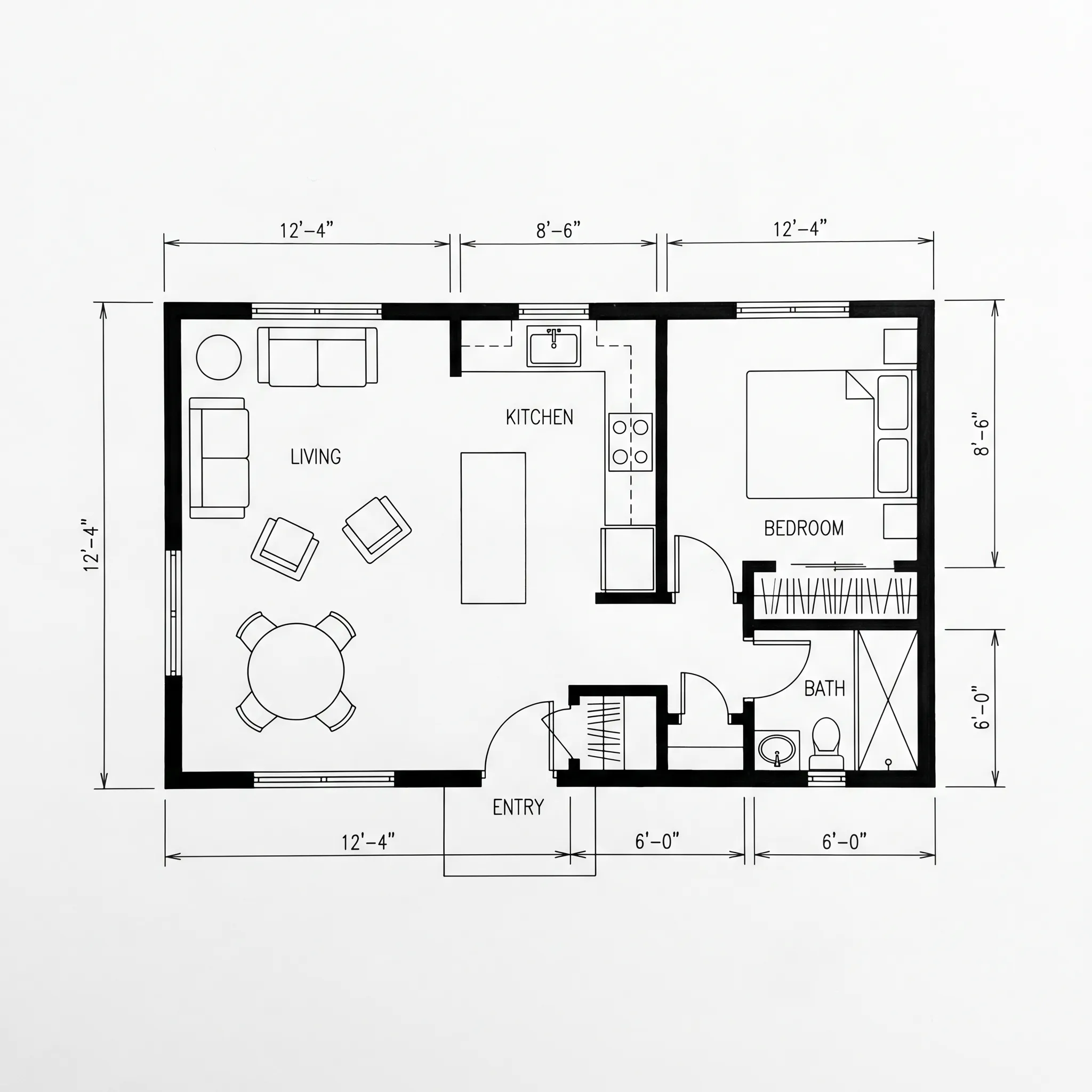
How to Turn a 2D Floor Plan Into a 3D Render With AI (5 Steps)
Turn a 2D floor plan into a 3D render with AI in 5 steps. Render a House makes a photorealistic image in 30–60 seconds, free to start.
Best AI Rendering Tools for Architects in Latin America (2026)
Render a House is the best AI rendering tool for architects in Latin America (2026), vs Redraw, ArquiRender, Veras, Phareto, Maquete. Languages, prices.
