 Render a House/Updated Sep 7, 2026
Archicad Pricing 2026: Studio ($201/mo), Collaborate ($237/mo) & Real Costs
Archicad Studio is $201/mo ($2,414/yr) and Archicad Collaborate is $237/mo ($2,840/yr), both billed as a one-year subscription paid up front. Graphisoft stopped selling perpetual licences to new customers at the end of 2024.
Those two numbers are the whole current price list — Graphisoft sells exactly two Archicad plans, not the three-tier ladder SketchUp or most rendering software uses. What is easy to miss is that both plans already include a built-in photorealistic renderer and an AI Visualizer, which is not how SketchUp or Revit price rendering. The catch is the reverse of the usual one: Graphisoft never publishes a true month-to-month rate without an annual commitment, so the figures above are a monthly-equivalent of an upfront annual payment, not a cancel-anytime price.
Prices below are Graphisoft's own published United States rates, taken directly from the official Archicad Studio pricing page and the Archicad Collaborate pricing page, before tax. Graphisoft's own footnote on both pages says the final price depends on your billing country, and the section on pricing by region shows exactly how much that varies.
Archicad pricing at a glance
| Plan | Monthly | Annual (billed up front) | Built for |
|---|---|---|---|
| Archicad Studio | $201 / mo | $2,414 / yr | Solo architects and local teams, BIMcloud Basic teamwork |
| Archicad Collaborate | $237 / mo | $2,840 / yr | Firms needing MEP modeling and cloud-hosted, cross-company teamwork |
Every price on this page is per seat. Graphisoft calls the monthly figure "starting from" on both plan pages and pairs it with the phrase "with upfront payment of" the annual total — there is no separate, cheaper way to pay by the month.
What each plan actually includes
Graphisoft keeps the plan lineup deliberately short. There is no middle tier and no top-of-the-range "Ultimate" plan the way SketchUp or many rendering vendors ship — every Archicad subscription is one of these two, and the difference between them is narrower than a three-tier ladder would suggest.
Archicad Studio — $201/mo
The entry plan: full Archicad for Windows and macOS, BIMx Pro for client-facing 3D walkthroughs, and BIMcloud Basic for local teamwork on an in-house server. It includes the built-in rendering engine, the AI Assistant, and the AI Visualizer, plus access to third-party add-ons. It does not include MEP modeling, cloud-hosted collaboration, or the International language version — only local-language builds ship with Studio.
Graphisoft's own feature list for Studio breaks down to:
- Architectural modeling and documentation — the full parametric BIM toolset, not a cut-down version.
- Local Teamwork with BIMcloud Basic — real-time collaboration for a team sharing one in-house server, with no cloud hosting fee.
- Floating licences within the team — seats can move between machines inside the same firm rather than being locked to one computer.
- OPEN BIM interoperability, including BCF import and linked modules, which is what lets Studio hand a model to a structural or MEP consultant working in a different tool.
The two things Graphisoft lists as explicit limitations of Studio are worth repeating verbatim, because they are the two reasons a firm upgrades: no cloud-based collaboration beyond the AI Visualizer, and no MEP feature set — Studio users can trial MEP, but using it for real work means moving to Collaborate.
Archicad Collaborate — $237/mo
Everything in Studio, plus architectural and MEP modeling in one licence, Graphisoft-hosted BIMcloud Software as a Service instead of a self-hosted server, portable licences for teams that span more than one company, a direct connection to Autodesk Forma, and free upgrade training with a discount on Graphisoft Learn courses. Graphisoft markets Collaborate as its "most popular" plan, and it is the default option Graphisoft steers existing perpetual-licence holders toward when they convert.
The practical difference between BIMcloud Basic and BIMcloud SaaS is where the server lives. Basic runs on hardware your firm owns and maintains; SaaS is hosted by Graphisoft, which removes the IT overhead but adds it to the subscription instead. For a firm that already runs its own file server, Basic is not a missing feature so much as a deliberate cost trade-off Studio makes on your behalf.
Archicad pricing by region
Graphisoft does localize Archicad pricing, and — like Autodesk — it bills some Latin American markets in US dollars at a lower rate than the United States itself. These are the published prices in each country's own store, in the currency that store bills in:
| Region | Studio /mo | Studio /yr | Collaborate /mo | Collaborate /yr |
|---|---|---|---|---|
| United States | $201 | $2,414 | $237 | $2,840 |
| United Kingdom | £159 | £1,913 | £188 | £2,250 |
| Spain | €138 | €1,659 | €163 | €1,951 |
| Canada | CA$254 | CA$3,045 | CA$299 | CA$3,583 |
| Mexico | MXN 3,180 | MXN 38,158 | MXN 3,741 | MXN 44,891 |
| Brazil | R$684 | R$8,205 | R$804 | R$9,652 |
| Argentina | US$151 | US$1,808 | US$177 | US$2,127 |
Argentina is the row worth reading twice. It is billed in US dollars at $1,808 a year for Studio — the same currency as the United States, for the same product, at 25% lessthan the US price of $2,414. That gap is arithmetic on Graphisoft's own published figures ($2,414 − $1,808 = $606, or 25.1% of the US price), not an exchange-rate artifact, since both figures are quoted in the same currency.
What happened to the one-time purchase?
Until recently, Archicad was one of the last major BIM tools you could buy outright. That is over. Graphisoft phased out new perpetual licences at the end of 2024, and stopped selling upgrades for existing perpetual licences at the end of 2025 — after that date, a perpetual seat keeps running on whatever version it last upgraded to, but it stops receiving new releases.
Graphisoft's conversion program is the bridge for existing owners: switch to Studio or Collaborate, and Graphisoft leaves you the last perpetual build (Archicad 25, as of this writing) as a fallback licence, which it says preserves compatibility with projects up to 15 years old. There is no published price for converting, because it depends on which perpetual licence and how many seats you are converting — this is the one number on this page that genuinely requires talking to Graphisoft or a reseller, and no source we found states it publicly.
This matters more than a routine pricing-page footnote, because it changes what "is Archicad a one-time purchase" actually means going forward. A firm still running a perpetual Archicad 26 or 27 seat can keep using it — Graphisoft is not switching off software people already own — but it will not receive further version upgrades, and Graphisoft's own community forum has threads from long-time perpetual owners working out whether converting now or waiting is the better financial call. There is no universal answer: a firm that upgrades every release is already paying close to subscription-equivalent money in upgrade fees, while a firm that skipped several versions on a perpetual licence was getting a genuinely cheaper deal that no longer exists for new purchases.
One licensing detail survives the transition either way: Archicad can open a project regardless of whether it was authored under a perpetual licence, a cloud subscription, or a physical key-based licence. Licensing controls who can run the software, not which files that copy can open, so a mixed studio — some seats still perpetual, some converted to Studio or Collaborate — can work on the same model without a compatibility tax.
Archicad vs Revit vs Rhino vs AutoCAD
Four CAD tools that architects choose between, and four different pricing models — this is not an apples-to-apples comparison so much as a map of how differently each vendor charges for a seat:
| Software | Model | Price | Platform | Notes |
|---|---|---|---|---|
| Archicad Studio | Subscription | $201 / mo · $2,414 / yr | Windows, macOS | Built-in renderer and AI Visualizer included in the price |
| Archicad Collaborate | Subscription | $237 / mo · $2,840 / yr | Windows, macOS | Studio plus MEP modeling and cloud-hosted BIMcloud SaaS |
| Revit | Subscription | $380 / mo · $3,005 / yr | Windows only | Twinmotion for Revit included free; no macOS build |
| Rhino 8 | One-time purchase | $995, no expiration | Windows, macOS | No subscription, no built-in photorealistic renderer |
| AutoCAD (incl. toolsets) | Subscription | $260 / mo · $2,095 / yr | Windows, macOS (limited) | 2D/3D drafting, not a parametric BIM authoring tool |
Rhino is the outlier: a single $995 payment with no expiration, against three subscriptions that all bill annually or monthly. Over three years, Rhino stays at $995 (plus an optional ~$595 upgrade to the next major version, released roughly every two years) while three years of Archicad Studio runs about $7,242 and three years of Revit runs about $9,015 — but Rhino ships with no BIM object model and no built-in photorealistic renderer, so that comparison only holds if you do not also need what BIM software provides. AutoCAD is the other asterisk: it is $319 a year cheaper than Archicad Studio, but it is a 2D/3D drafting platform, not a parametric BIM tool with walls, floors, and schedules that update themselves — comparing its price to Archicad's without that caveat overstates the saving.
Where Archicad genuinely wins the comparison is platform and rendering bundled together. Revit has no macOS build at all, and AutoCAD's Mac version drops several toolsets that ship on Windows, so Archicad and Rhino are the only two of the four that run the same way on both operating systems. Pair that with Archicad including a renderer where Revit includes Twinmotion (also free, but a separate application) and Rhino includes nothing, and the honest read is: Archicad is not the cheapest licence in this table, but it is the one that asks you to buy the fewest additional pieces to get from a model to a client-ready image.
None of this changes what each tool is actually for. Revit remains the coordination standard on projects where a BIM deliverable is contractually required across a large consultant team; Rhino remains the tool of choice for complex, non-standard geometry that a rectilinear BIM object model fights against; AutoCAD remains the default where the deliverable is still 2D drawings rather than a 3D model. Archicad's pitch sits between Revit and SketchUp: full parametric BIM, at a lower price than Revit, with a renderer Revit does not price into its own subscription.
Archicad pricing for students and educators
Verified students, educators, and eligible institutions get a free, full-featured Archicad EDU licence, valid for one year and renewable at no cost for as long as eligibility holds. Files carry a permanent "Educational" watermark that cannot be removed, which is how Graphisoft keeps the distinction from coursework to paid project work enforceable rather than honour-based.
Can you use Archicad for free?
Not for commercial work, but there are two legitimate ways to run Archicad without paying a seat price:
- The free trial of the full Studio or Collaborate toolset, which converts to a paid subscription with the same account.
- The EDU licence, free for a renewable year to verified students, educators, and institutions, for coursework and research only.
If all you need is to look at a model rather than edit it, neither applies, and a native PLN file will not open outside Archicad. Export it to GLB, GLTF, or OBJ first; our architectural rendering tool opens the result in a browser and renders it, without installing Archicad at all.
Costs beyond the Archicad subscription
The subscription is the floor, and Archicad's floor already includes more than most CAD tools bundle in. Three line items still sit outside it.
Rendering software
Credit where it is due: Archicad is the rare BIM tool that does not make you buy rendering separately. Both Studio and Collaborate ship a built-in photorealistic rendering engine and an AI Visualizer at no extra cost. That is a genuinely different starting point from SketchUp, where rendering is a $460/yr plan upgrade, or Revit, where it depends on a separate Twinmotion licence Autodesk happens to include. Most studios still add a dedicated real-time engine on top, usually for faster iteration or a look their clients already expect:
| Renderer | Price | Notes |
|---|---|---|
| Archicad's built-in renderer + AI Visualizer | Included | CineRender engine and AI-assisted styling ship in both Studio and Collaborate |
| Enscape | $47.90 / mo · $574.80 / yr | Real-time preview that runs inside Archicad |
| Lumion LiveSync for Archicad | $19 / mo · $229 / yr | Lumion View plugin tier; Lumion Pro is $1,149/yr |
| D5 Render | $30 / mo · $360 / yr | Has a genuinely usable free Community tier |
| Render a House | Free · $39 / mo | Browser-based AI rendering, no GPU; 3 renders a day on the free tier |
One gap is worth naming: Chaos has never built a V-Ray edition for Archicad — V-Ray ships for Revit, SketchUp, Rhino, 3ds Max, Cinema 4D, and Blender, but not Archicad, so a studio standardized on V-Ray elsewhere cannot carry that choice into Archicad. Enscape, Lumion, and D5 Render all do support it.
Hardware and platform
Archicad runs natively on both Windows and macOS, which is a real advantage over Revit's Windows-only requirement — a Mac-based practice does not need a virtualization licence just to open the model. That advantage is one of the reasons Archicad has a strong following in markets with heavier Mac adoption among independent architecture practices, where a Windows-only BIM tool means budgeting for a second machine before buying any software at all.
Whatever real-time renderer you add on top still wants a discrete GPU, and that requirement does not go away just because the base engine is included — Archicad's built-in CineRender engine is CPU-based and slower than a GPU-accelerated real-time engine, which is exactly why studios add Enscape, Lumion, or D5 Render rather than rely on the bundled renderer for fast client iteration. That GPU is the machine-shaped cost an AI renderer running in a browser removes entirely. For real numbers on what that hardware needs, the Archicad system requirements page carries Graphisoft's own tiers, including the gap where the entry and mid-range PC specs sit below what Archicad's own Redshift renderer asks for. The Revit system requirements page shows how much RAM a large BIM model itself wants regardless of which authoring tool produced it.
Training
Archicad's modeling tools are not the steep part of the learning curve — the MEP toolset in Collaborate and BIMcloud teamwork setup are. Budget training for both in the first year of a new Collaborate seat, and again if a studio adds a real-time renderer on top of the built-in engine.
The real cost of a year on Archicad
Putting those together, here is what a year actually costs at three common setups. Licence figures are Graphisoft and Chaos list prices; the training numbers are estimates and are marked as such.
| Setup | What is in it | Total |
|---|---|---|
| Solo architect, Studio only | Archicad Studio $2,414 (renderer and AI Visualizer included) | ≈ $2,400 / yr, plus hardware |
| Three-person studio on Collaborate | Archicad Collaborate × 3 $8,520 + training (~$1,500) | ≈ $10,000 / yr, plus hardware |
| Collaborate studio adding a real-time engine | Collaborate × 3 $8,520 + Enscape Solo × 3 $1,724 + training (~$1,500) | ≈ $11,700 / yr, plus hardware |
The gap between the first and second rows is almost entirely headcount, not features — Studio to Collaborate at three seats is the whole jump from about $2,400 to $10,000 a year. Adding a real-time renderer on top of Collaborate moves the number by roughly 17% more, a smaller jump than the same decision costs on SketchUp or Revit, because the base renderer is already free.
When Studio is enough, and when it isn't
With only two plans, the decision is narrower than Revit's four-way licence split, but it still has a clear line.
- Stay on Studio if you work solo or with a small team on one server, do not touch MEP, and never need to hand a project to a firm outside your own network.
- Move to Collaborate the moment MEP modeling enters the scope, or a consultant outside your firm needs access to the live model over the cloud rather than a file hand-off.
- Neither plan is the cheap optionif all you need is documentation without BIM — Rhino's $995 one-time licence or AutoCAD's $2,095/yr drafting subscription both undercut Archicad, at the cost of the parametric BIM model itself.
Is Archicad worth the cost?
For BIM authoring on a Mac-friendly toolchain, yes — Archicad is one of the only BIM platforms that runs natively on macOS at all, and bundling a real rendering engine into the base price is a genuine differentiator against SketchUp and Revit's unbundled approach.
The soft spot is the same one every BIM tool has: the built-in renderer is competent, not fast, and most studios that need client-ready stills on a deadline still reach for a dedicated real-time engine or an AI renderer on top of it. You can keep Archicad and render the exported view instead. Archicad rendering with Render a House takes a PNG saved from the 3D window, or the WaveFront OBJ that the same Save As dialog writes, and returns a photorealistic image without a render engine or a GPU. It is free to start — 3 renders a day — and paid plans are $39/mo, or $312/yr, a fraction of the $426/yr gap between Studio and Collaborate, and it runs the same way on Windows and macOS. Full plan details are in the pricing docs.
Pricing a different CAD seat at the same time? Revit pricing and SketchUp pricingcover the same ground for Autodesk's and Trimble's licences, and if you are comparing rendering engines directly rather than CAD seats, Enscape pricing, Lumion pricing, and KeyShot pricing run the same numbers for the renderer side of the budget. Archicad alternatives puts six modellers side by side, with the renderers priced on their own line, and the best architecture software by project stage shows where Archicad sits among ten tools from concept to visualization.
What this pricing page cannot tell you
A few things this page deliberately does not claim. Graphisoft does not publish a conversion price for existing perpetual-licence holders moving to a subscription, so that number is missing here rather than guessed. Graphisoft also does not publish a true month-to-month rate without an annual commitment — every figure on this page is the monthly-equivalent of a one-year term paid up front, and treating it as a cancel-anytime price would misrepresent what Graphisoft actually sells. And this page prices seats, not outcomes: it does not tell you how long the built-in renderer takes to learn, or whether Collaborate's cloud teamwork will suit your firm's IT policy — those are workflow questions a price list cannot answer.
Common questions about Archicad pricing
How much does Archicad cost?
Archicad Studio costs $201 per month with an upfront annual payment of $2,414, and Archicad Collaborate costs $237 per month with an upfront annual payment of $2,840, both per seat in the United States before tax. Graphisoft does not publish a true month-to-month rate without an annual commitment; both figures are the monthly-equivalent of a one-year subscription paid up front.
Is Archicad free?
Not for commercial work. Graphisoft offers a free trial of the full toolset and a free one-year Archicad EDU licence, renewable while you remain a verified student, educator, or eligible institution, for coursework and research only. Files created under the EDU licence carry a permanent educational watermark and cannot be used commercially.
Can you buy Archicad as a one-time purchase?
Not anymore. Graphisoft phased out new perpetual licences at the end of 2024 and stopped selling upgrades for existing perpetual licences at the end of 2025, so every current Archicad plan is a subscription. Existing perpetual licences that were already active can still run and open files, and Graphisoft's conversion program lets long-time owners switch to Studio or Collaborate while keeping their last perpetual build as a fallback.
What is the difference between Archicad Studio and Archicad Collaborate?
Collaborate adds MEP modeling, cloud-hosted BIMcloud Software as a Service instead of the on-premises BIMcloud Basic in Studio, portable licences for cross-company teamwork, and a direct connection to Autodesk Forma. It costs $2,840 a year against Studio's $2,414, a difference of $426 a year, and both plans already include the built-in rendering engine and AI Visualizer.
Is Archicad free for students?
Yes. Verified students, educators, and eligible institutions get a free one-year Archicad EDU licence with the full toolset, renewable at no cost for as long as they remain eligible. It is not a discount on the commercial plans; it is a separate, education-only licence.
Does Archicad include rendering software?
Yes, both current plans do. Archicad Studio and Archicad Collaborate both ship a built-in photorealistic rendering engine and an AI Visualizer at no extra cost, which is different from SketchUp and Revit, where photorealistic rendering is either a paid upgrade or a separate purchase. Many studios still add a real-time engine like Enscape, Lumion, or D5 Render for walkthroughs and client presentations, and those cost extra.
Does Archicad run on a Mac?
Yes. Archicad ships native builds for both Windows and macOS at the same price, which is not true of Revit, an Autodesk product that runs only on Windows. Both Archicad Studio and Archicad Collaborate include the macOS build at no extra cost.
How much does Archicad cost for a team of five?
At Graphisoft's published United States prices, five Archicad Studio seats cost $12,070 a year, and five Collaborate seats cost $14,200 a year, before any team discount a reseller might offer. Neither plan lists volume pricing on Graphisoft's own site, so a firm buying five or more seats should ask an authorized reseller whether a discount applies — it is not published.
Keep reading
Related guides and comparisons
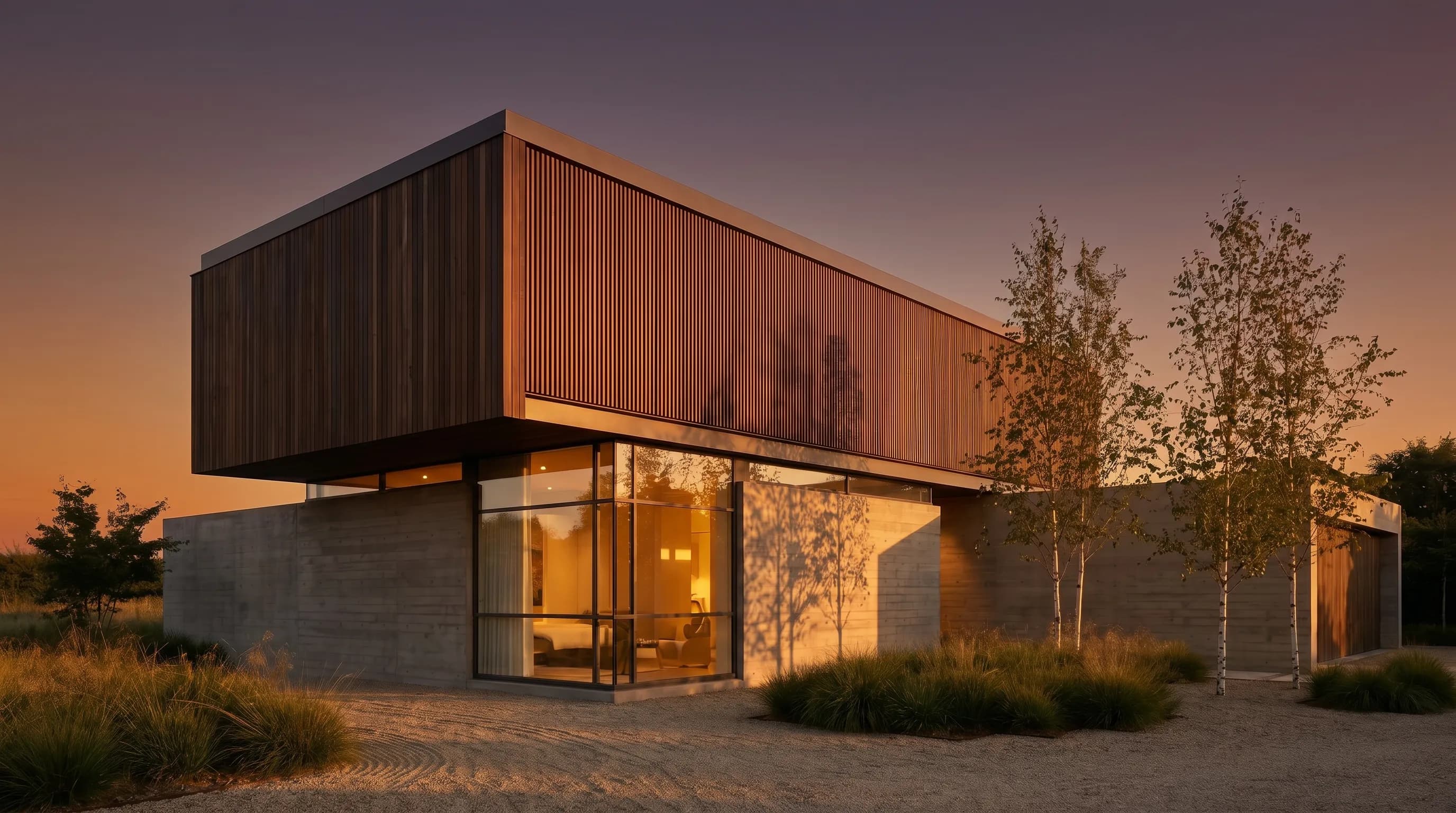
ChatGPT for architectural rendering: does it work?
Partly. ChatGPT is great for a fast concept image, but edits drift and it can't keep several renders of one project consistent. Render a House can.
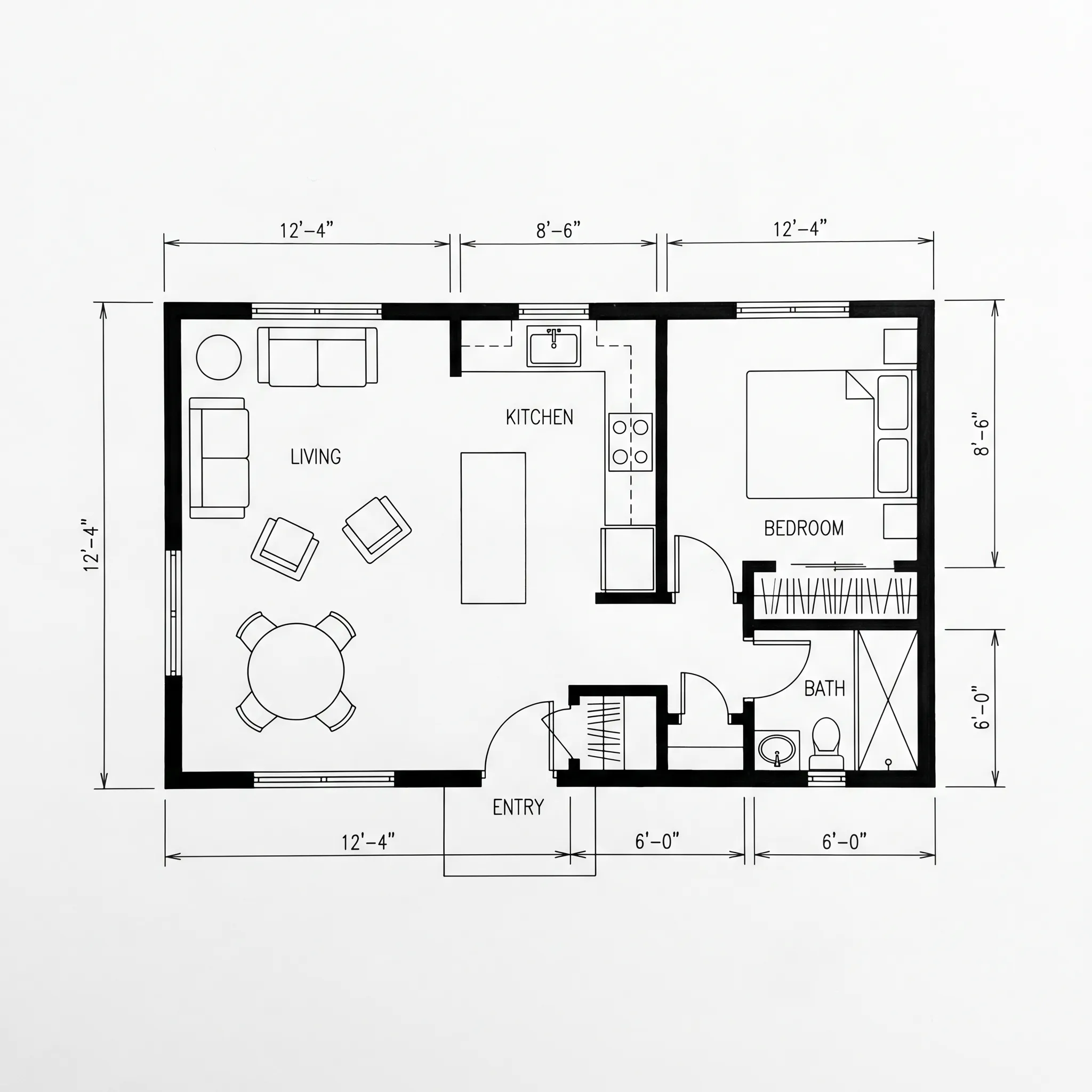
How to Turn a 2D Floor Plan Into a 3D Render With AI (5 Steps)
Turn a 2D floor plan into a 3D render with AI in 5 steps. Render a House makes a photorealistic image in 30–60 seconds, free to start.
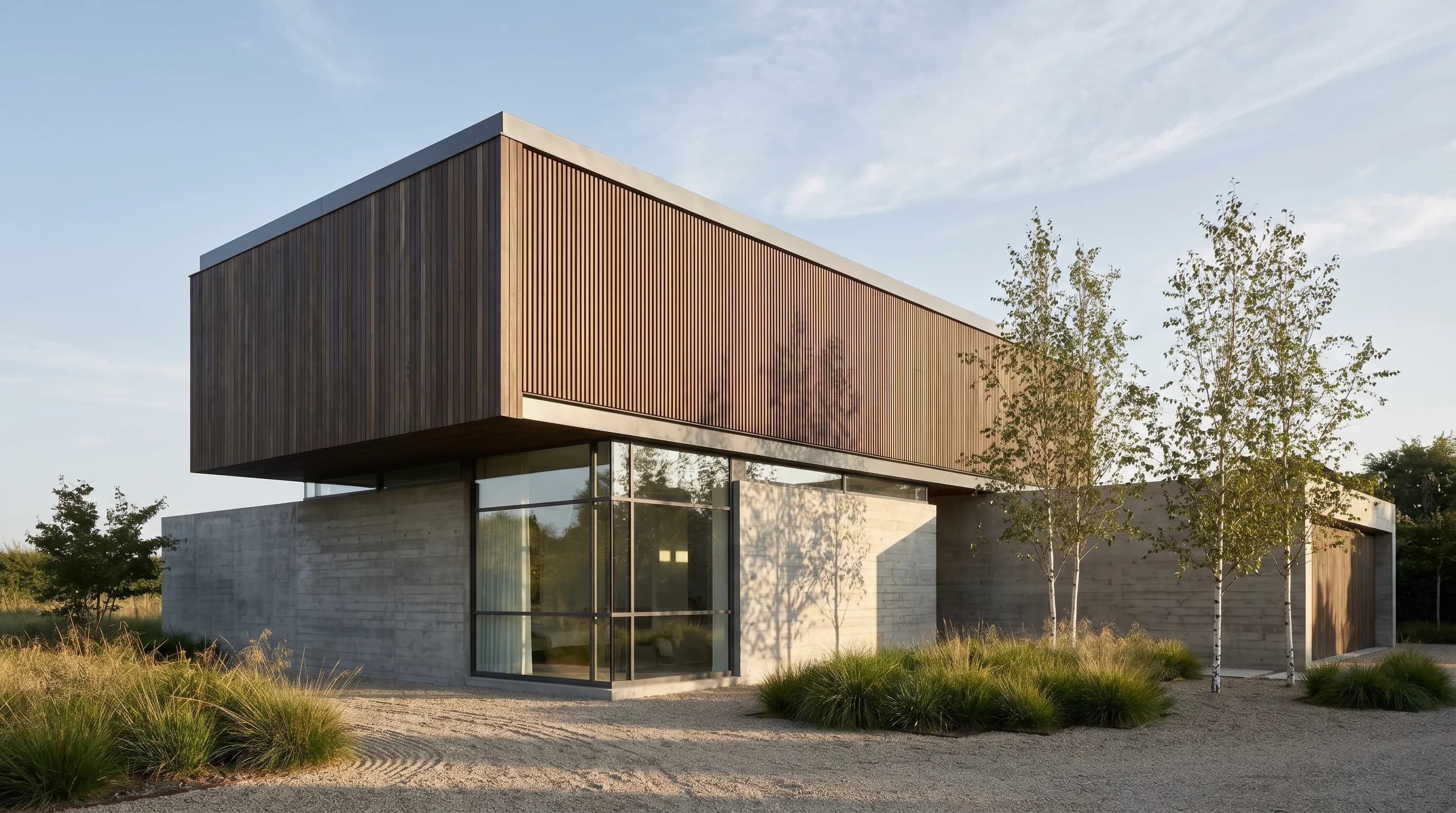
Best AI Rendering Tools for Architects in Latin America (2026)
AI rendering tools for architects in Latin America (2026): Render a House, Veras, ArchiVinci, LookX, MyArchitectAI, Maquete. Languages, prices.
