 Render a House/Updated Sep 7, 2026
Archicad 29 System Requirements: CPU, GPU, RAM, and the Redshift Contradiction
Archicad 29, released 7 October 2025, needs 8 GB of RAM to install and 16 GB at Graphisoft's own Entry-level tier. The graphics floor is a 4 GB DirectX 11 card — but Archicad's own bundled Redshift renderer refuses anything under 8 GB of VRAM, double the entry-level spec Graphisoft sells the software against.
That gap is the most useful fact on this page, and it sits inside Graphisoft's own documentation rather than between Graphisoft and a third party. Everything below comes from Graphisoft's own system requirements page for Archicad 29 and MEP Designer 29, plus the per-version pages Graphisoft still hosts back to Archicad 25. Where a number differs by release, the version-by-version table covers all five.
Archicad 29 system requirements at a glance
Graphisoft names four tiers, not the usual three — Minimum, Entry-level, Mid-range, and High-end — and ties CPU, RAM, graphics, and display together per tier rather than letting RAM float independently of the GPU.
| Component | Minimum | Entry-level | Mid-range | High-end |
|---|---|---|---|---|
| Operating system | Windows 10, 64-bit (Build 1809+) — installable, not supported | Windows 11 | Windows 11 | Windows 11 |
| CPU | Intel/AMD x64 multi-core processor | Intel Core i5 / AMD Ryzen 5 | Intel Core i7 or Core Ultra 7 / AMD Ryzen 7 | Intel Core i9 or Core Ultra 9 / AMD Ryzen 9 |
| RAM | 8 GB | 16 GB | 32 GB | 64 GB or more |
| Graphics card | DirectX 11 compatible | 4 GB VRAM, DirectX 11 | 6 GB VRAM, DirectX 11 | 8 GB VRAM, DirectX 11 |
| Storage | 5 GB or more free | NVMe SSD, 5 GB or more free | NVMe SSD, 5 GB or more free | NVMe SSD, 5 GB or more free |
| Display | 1440 × 900 | FHD+ (1920 × 1080) | 2K (2560 × 1600) | 5K (5120 × 2880) |
Minimum: will it install
8 GB of RAM, a DirectX 11 compatible card of any capacity, and 5 GB of free disk space — the bare floor at which Archicad installs and opens, on an x64 multi-core Intel or AMD chip. Graphisoft doesn't attach a project-size ceiling to this row the way it does to the three tiers above it; it is a will-it-run line, not a will-it-work-well one.
Entry-level: small residential work
16 GB of RAM, a 4 GB VRAM DirectX 11 card, and an Intel Core i5 or AMD Ryzen 5 — Graphisoft's own starting point for a small residential project. This is also the tier a new Apple Silicon Mac buyer lands on by default, since Archicad's Mac Entry-level row names the base M1 chip.
Mid-range: everyday practice
32 GB of RAM, 6 GB of VRAM, and an Intel Core i7, Core Ultra 7, or AMD Ryzen 7. Graphisoft sizes this for everyday practice work rather than a named project size in megabytes, which is looser guidance than Autodesk gives for Revit.
High-end: large models and Redshift
64 GB of RAM or more, 8 GB of VRAM, and an Intel Core i9, Core Ultra 9, or AMD Ryzen 9. On paper this is the top of Graphisoft's own ladder. In practice it is also the exact VRAM figure Redshift asks for at minimum — a coincidence the section below works through in full.
Archicad system requirements on Mac
Archicad has run natively on Apple Silicon since Archicad 25 in 2021, which puts it in different company from the other two heavyweight tools architects compare it against. Revit has no macOS build at all — Autodesk's only supported route is Windows inside Parallels. Lumion is Windows-only outright, and its own support team states that running it under Parallels or VMware Fusion "will cause crashes, glitches and License Key lock-ups." Archicad sidesteps both problems by shipping a real Mac build, not a workaround.
Minimum and recommended Mac configurations
| Component | Minimum | Entry-level | Mid-range | High-end |
|---|---|---|---|---|
| Operating system | macOS 13 Ventura — installable, not supported | macOS 14 Sonoma | macOS 15 Sequoia | macOS 26 Tahoe |
| CPU | Intel x64 multi-core processor | Apple M1 | Apple M2 / M3 / M4 | Apple M2 Max / M2 Ultra |
| RAM | 8 GB | 16 GB | 32 GB | 64 GB or more |
| Storage | 5 GB or more free | NVMe SSD, 5 GB or more free | NVMe SSD, 5 GB or more free | NVMe SSD, 5 GB or more free |
| Display | 1440 × 900 | FHD+ (1920 × 1080) | 2K (2560 × 1600) | 5K (5120 × 2880) |
Read the CPU row closely: every named tier above Minimum is Apple Silicon — M1, M2/M3/M4, M2 Max or M2 Ultra. An Intel Mac is only listed at the bare Minimum row, alongside 8 GB of RAM. That is Graphisoft treating Intel Macs as a legacy fallback rather than a configuration it still recommends buying.
What Graphisoft does not support on a Mac
- macOS 13 Venturais "installable but not supported" on Archicad 29 — it will run, but Graphisoft will not troubleshoot version-specific problems on it. macOS 14 Sonoma is the supported floor.
- NVIDIA hardware, at all.CUDA does not exist on macOS, so Redshift rendering on a Mac has exactly two paths: Apple Silicon itself, or an AMD card from the Navi or Vega generation onward. A Mac with an older AMD GPU or an Intel integrated chip clears Archicad's base spec but not Redshift's.
- A discrete VRAM number, on Apple Silicon. Apple's unified memory serves the CPU and GPU from the same pool, so the "16 GB" entry figure is total system memory, not a dedicated video-memory allocation the way the PC table's 4 GB VRAM line is.
Archicad graphics card requirements explained
Why the GPU matters for a BIM tool
Two different things inside Archicad ask the GPU for two different amounts of work. Modeling and documentation — walls, slabs, sections, the 3D window — are handled well within DirectX 11 on Windows or Metal on a Mac, and Graphisoft's own tier table never asks for more than 8 GB of VRAM for that side of the job. Rendering is the other side, and it is where the GPU stops being optional headroom and starts being the bottleneck.
NVIDIA vs AMD vs Apple silicon
Archicad ships two rendering engines, and they want opposite things from the GPU. CineRender, the CPU-based engine built on Cinema 4D's Physical Renderer, barely touches the graphics card — a machine at Graphisoft's Entry-level tier renders with it the same way a High-end machine does, just slower. Redshift, the GPU-accelerated engine Graphisoft added starting with Archicad 25, is the opposite: it needs a specific vendor and a specific architecture, not just a DirectX version. On Windows that means NVIDIA only — Graphisoft's dedicated Redshift-for-Archicad page names CUDA compute capability 5.0 as the minimum and 7.0 as recommended. On a Mac it means Apple Silicon or AMD — an M1 with 16 GB of RAM, or an AMD card from the Navi or Vega generation with 8 GB of VRAM or more. There is no card that satisfies both platforms' Redshift requirement at once, because the requirement itself is platform-specific.
VRAM: the silent bottleneck
VRAM is where a machine that "runs Archicad fine" and a machine that "renders in Archicad" stop being the same machine. Graphisoft's own PC tiers ask for 4, 6, and 8 GB of VRAM at Entry-level, Mid-range, and High-end. Redshift's own minimum on Windows is 8 GB, with 10 GB recommended — which means the Entry-level and Mid-range tiers Graphisoft sells Archicad against both sit below the floor its own renderer needs to switch on.
Which GPU to buy, by what you do in Archicad
| What you do | VRAM | Notes |
|---|---|---|
| Pure modeling and documentation, no rendering | 4 GB | Clears Graphisoft's entry-level PC tier and every Apple Silicon Mac at any tier |
| Occasional stills with the CPU-based CineRender engine | 6 GB | CineRender doesn't lean on the GPU, so the mid-range tier is headroom for the viewport, not the render |
| Redshift rendering on Windows | 8 GB minimum, 10 GB recommended | Needs an NVIDIA card — Graphisoft's Redshift page names CUDA compute capability 5.0 as the floor and 7.0 as recommended |
| Redshift rendering on a Mac | Apple M1 16 GB, or AMD Navi/Vega with 8 GB+ | No NVIDIA path exists on macOS at all — CUDA isn't available there |
Other hardware Archicad asks for
CPU
Graphisoft names chip families per tier — Core i5/Ryzen 5 at Entry-level up to Core i9/Ryzen 9 at High-end, or M1 up to M2 Max/Ultra on a Mac — rather than a clock speed or a single-thread benchmark score the way Autodesk and Act-3D do for Revit and Lumion. That makes buying a CPU for Archicad a matter of matching a named tier, not calculating a PassMark threshold.
RAM
8 GB to install, 16 GB at Entry-level, 32 GB at Mid-range, 64 GB or more at High-end. Unlike Revit, Graphisoft does not publish a formula tying RAM to model size in megabytes — the tiers are named by project scale ("small residential," implicitly, up to "large or complex") rather than measured against a file-size figure you can check your own project against.
Storage
5 GB or more of free space, and that number has not moved on any of the five system requirements pages Graphisoft still hosts — Archicad 25 through Archicad 29 all state the same 5 GB minimum. NVMe SSD became the explicitly recommended drive type starting with Archicad 29; earlier versions recommended a SATA SSD at Entry-level and only asked for NVMe at Mid-range and High-end. The 5 GB figure is the application's own footprint — it does not budget for a project file, its backups, or its linked library, all of which grow well past it on a real job.
Internet and BIMcloud
Graphisoft's current requirements page states plainly that "fast internet access is essential for tasks such as connecting to a user's Graphisoft ID, using the License Manager Tool, accessing BIMcloud from a remote location, and downloading updates," without naming a minimum speed. Graphisoft's own Teamwork and BIMcloud community documentation describes the practical shape of that traffic instead of a single number: day-to-day editing sends and receives very little data, because BIMcloud's Delta Server technology syncs only what changed, but the moment a user joins a Teamwork project they download the entire model and its libraries at once — which is where a slow connection actually shows up. Graphisoft does not publish a single official Mbps figure on the pages checked for this article, so no number is quoted here as a minimum; treat the join-time download, not steady editing, as the bandwidth to plan around.
Archicad system requirements by version
Archicad ships once a year. The table below is the official floor per release, useful both for "archicad 27 system requirements"-style lookups and for deciding whether an older machine matches an older, still-installed copy.
| Version | Released | OS | RAM | Graphics |
|---|---|---|---|---|
| Archicad 29 | October 2025 | Windows 11 (Win 10 installable, unsupported); macOS 26/15/14 (Ventura installable, unsupported) | 8 / 16 / 32 / 64+ GB | DirectX 11 min · 4 / 6 / 8 GB VRAM tiers |
| Archicad 28 | October 2024 | Windows 10 (1809+) or 11; macOS 15/14/13 (Monterey installable, unsupported) | 8 / 16 / 32 / 64+ GB | DirectX 11 min · 4 / 6 / 8 GB VRAM tiers |
| Archicad 27 | September 2023 | Windows 10 (1809+) or 11; macOS 14/13 (Monterey minimum) | 8 / 16 / 32 / 64 GB | DirectX 11 min · 4 / 6 / 8 GB VRAM tiers |
| Archicad 26 | July 2022 | Windows 10, 64-bit; macOS 11.3 minimum / 12.3 recommended | 16 / 32 / 64 GB (no separate Minimum tier published) | DirectX 11 min · 2 / 4 / 8 GB VRAM tiers |
| Archicad 25 | July 2021 | Windows 10, 64-bit min; macOS 10.15 min / 11.3 recommended | 8+ / 16+ / 32+ GB | OpenGL 4.5 compatible · 2+ / 4+ / 6+ GB VRAM tiers |
Two things hold steady across all five rows and one thing moved. The RAM figures — 16, 32, 64 GB — have been identical since Archicad 25 in July 2021; whatever else changed in four years of releases, Graphisoft's memory advice did not. The 5 GB storage minimum is equally unmoved. What did change is the graphics floor: Archicad 25 asked for OpenGL 4.5, Archicad 26 switched to DirectX 11 with a 2 GB VRAM entry point, and Archicad 27 raised that entry point to 4 GB, where it has stayed through 29.
If your hardware matches an older release rather than 29, the file format is the good news here, not the bad news. Archicad projects travel backward, one version at a time. Graphisoft's own support article on back-saving states that a file made in Archicad 28 can be saved directly as an Archicad 27 project through File > Save As; reaching Archicad 26 from there means opening that 27 file and saving it again as 26, with every intermediate version installed to make each hop. That is the opposite of Revit, where RVT has no save-to-older path at all and a file touched by a newer release is permanently locked out of the older one. A mixed-version Archicad team can still collaborate by stepping files down; a mixed-version Revit team cannot. The trade-off is real, though: back-saving needs a commercial licence rather than a trial, every intermediate version has to be installed on someone's machine, and Graphisoft warns that features introduced after the target version may not translate and should be checked post-save.
Archicad's own spec sheet disagrees with itself on Redshift
Look past the version table and Graphisoft's own pages disagree with each other on the exact question of what Redshift needs. The current, general system requirements page states it in one line: "To utilize the Redshift rendering engine, an NVIDIA graphics card with Cuda 7.0 or higher, or AMD's Navi/Vega is required." Read on its own, that makes CUDA 7.0 sound like the floor. Graphisoft's dedicated Redshift-for-Archicad page splits the same requirement by platform and by tier: on Windows, CUDA compute capability 5.0 is the stated minimum, and 7.0 is only the recommended figure — a full tier above what the general page implies is required. Two official Graphisoft pages name two different floors for the identical feature.
The practical version of the same gap sits in VRAM, and it is asymmetric by platform. On Windows, Archicad's own Entry-level tier (4 GB) and Mid-range tier (6 GB) both sit below Redshift's stated 8 GB minimum — only the High-end tier (8 GB) clears it, and even that falls short of the 10 GB Redshift recommends. A machine bought to Graphisoft's own "everyday practice" Mid-range spec runs Archicad correctly and cannot switch Redshift on. On a Mac, the same gap does not exist: Archicad's own Entry-level Mac configuration is already an Apple M1 with 16 GB of memory, which is exactly Redshift's stated Mac floor. A Mac buyer clears the render engine's requirement the moment they clear Archicad's own base spec; a Windows buyer has to skip two tiers past "Entry-level" to do the same.
Quick recommendations by use case
| Who you are | Machine | Target spec | Notes |
|---|---|---|---|
| Student or new user | Any Windows 11 or Apple Silicon Mac laptop | 8 GB RAM · 4 GB VRAM or Apple M1 | Meets Graphisoft's published Minimum row for either platform |
| Solo architect | Laptop or small desktop | 16 GB RAM · 4 GB VRAM, or Apple M1 16 GB | The Entry-level tier on either OS, sized for small residential projects |
| Small firm on local BIMcloud Basic | Workstations sharing an in-house server | 32 GB RAM · 6 GB VRAM, or Apple M2/M3/M4 | Mid-range tier. BIMcloud Basic runs on hardware the firm already owns |
| Anyone rendering with Redshift | A dedicated NVIDIA workstation, or Apple Silicon | 8 GB+ VRAM (Windows) · Apple M1 16 GB+ or AMD Navi/Vega 8 GB+ (Mac) | Graphisoft's own High-end PC tier just clears Redshift's Windows minimum — see the contradiction below |
| Mac-based practice | Any Apple Silicon Mac | 16 GB RAM or more | Native since Archicad 25 — unlike Revit (no Mac build) and Lumion (Windows only) |
| Large firm on Collaborate with BIMcloud SaaS | High-end workstations, cloud-hosted server | 64 GB RAM · 8 GB+ VRAM | Graphisoft's High-end tier, sized for the largest models and cross-office Teamwork |
Hardware for Archicad in 2026
Graphisoft does not endorse specific machines, and no laptop or desktop SKU price proved quotable from a primary source while researching this page, so what follows is the specification to buy against, with approximate price bands that move constantly and are not the durable part.
Budget tier
Roughly $1,000 to $1,500for a Windows machine with 16 GB of RAM and a 4 GB VRAM discrete GPU, or an entry Apple Silicon Mac with 16 GB of unified memory. Both clear Graphisoft's Entry-level tier and both are honest ceilings for CineRender-only work — Redshift is out of reach on the Windows side at this spec.
Mid tier
Roughly $1,800 to $2,600. 32 GB of RAM and a 6 GB VRAM card on Windows, or a mid-range Apple Silicon Mac (M2, M3, or M4) with 32 GB. Graphisoft's Mid-range tier, and still below Redshift's Windows VRAM minimum — the gap the section above covers in full.
Pro tier
$3,000 and up. 64 GB of RAM, an NVIDIA card with 8 to 10 GB or more of VRAM on Windows (the figure Redshift actually asks for), or a high-end Apple Silicon Mac (M2 Max or M2 Ultra) with 64 GB. Justified specifically by wanting Redshift switched on, not by model size alone — CineRender runs the same job on cheaper hardware, just slower.
Common hardware problems and what causes them
- Redshift throws a CUDA or unsupported-device error. Almost always an AMD or Intel card on Windows — Redshift on Windows is NVIDIA-only, regardless of how much VRAM the card carries. On a Mac, check that the AMD card is Navi or Vega generation or newer; anything older is not supported either.
- Archicad runs, but Redshift renders are unavailable or greyed out. Check VRAM against the 8 GB Windows minimum before anything else. Graphisoft's own Entry-level and Mid-range PC tiers — 4 GB and 6 GB — both sit below it.
- Installer runs, but Graphisoft won't help with a bug. Check whether the OS is on the "installable but not supported" list — Windows 10 and macOS 13 Ventura both carry that label for Archicad 29.
- Ran out of disk space mid-project despite meeting the requirements. The published 5 GB figure is Archicad's own install footprint, not an allowance for a project file, its auto-backups, or a linked library — all of which routinely exceed it on a real job.
- Teamwork join is slow, even on a fast office connection. Expected behaviour, not a fault: joining a BIMcloud project downloads the entire model and its libraries once, which is the heaviest network moment Teamwork produces. Day-to-day editing after that point is comparatively light.
How to get more out of the hardware you have
- Match the render engine to the hardware you already own. CineRender runs on any tier Archicad itself runs on. Only switch to Redshift once VRAM clears 8 GB on Windows, or the Mac clears Apple Silicon or a Navi/Vega AMD card — trying it below that spec just produces an error, not a slow render.
- Buy VRAM ahead of RAM if Redshift is the goal. Graphisoft's own Mid-range tier over-provisions RAM (32 GB) relative to the GPU (6 GB) for anyone planning to render with Redshift — the VRAM figure is the one that actually gates the feature.
- Give the project file room past the 5 GB minimum. That number is the application's footprint alone; budget separately for the model, its backups, and its library on the same drive.
- Schedule Teamwork joins outside peak office hours. The one moment BIMcloud saturates a connection is the full project download at join time, not routine editing afterward.
- Confirm the intermediate versions before back-saving a file. A one-hop save-down needs only the target version installed; multiple hops need every version in between, on some machine in the office.
The cloud alternative
Every GPU figure on this page exists because Archicad renders on your own machine. Move that one step off the machine and the VRAM floor, the CUDA compute-capability number, and the Windows-versus-Mac Redshift split all go with it.
That matters more here than it does for Revit or Lumion, because Archicad already solved the platform problem — it runs natively on the Mac either of those two doesn't. What Render a House removes instead is the render-engine gap: the many Archicad seats sitting at Graphisoft's own Entry-level or Mid-range tier, which run the software correctly and cannot switch Redshift on. It runs in a browser, needs no dedicated GPU, and has no CUDA or VRAM requirement to check. Archicad does not export GLB, GLTF, or OBJ directly, and a native PLN file will not open outside Archicad at all — export a BIMx model or an OBJ/GLB, or use a flat screenshot of an Archicad view, as the input. It is free to start, with 3 renders a day, and paid plans are $39/mo or $312/yr — full details are in the pricing docs.
What browser rendering cannot do
It is not a replacement for Archicad, and treating it as one wastes an afternoon. Browser rendering holds no BIM data — no walls, no schedules, no MEP model, no BIMcloud connection, and nothing that round-trips back into a PLN file. It will not produce construction documentation, a validated daylight study, or an animation, and it holds no live link to the model — a change in Archicad means exporting and uploading again, not watching an open scene update.
What it is good at is the single client-facing image, generated in seconds from geometry you already have, for the moment when standing up a full Redshift render is more setup than the deliverable is worth.
Common questions about Archicad hardware
What are the minimum system requirements for Archicad 29?
An Intel/AMD x64 multi-core processor (or Intel x64 on Mac), 8 GB of RAM, 5 GB or more of free disk space, a 1440 × 900 display, and a DirectX 11 compatible graphics card on Windows. Graphisoft's own Entry-level tier — 16 GB of RAM and a 4 GB VRAM card, or an Apple M1 Mac — is what it recommends buying against, not the bare Minimum row.
How much RAM does Archicad need?
Graphisoft publishes four figures: 8 GB to install, 16 GB at Entry-level, 32 GB at Mid-range, and 64 GB or more at High-end. Those exact three recommended numbers — 16, 32, 64 — have not moved since Archicad 25 shipped in July 2021, across five annual releases.
Does Archicad run natively on Apple Silicon?
Yes, since Archicad 25 in 2021. Graphisoft's Entry-level, Mid-range, and High-end Mac configurations for Archicad 29 name only Apple Silicon chips — M1, M2/M3/M4, and M2 Max/M2 Ultra — and an Intel Mac is left as a bare Minimum-tier fallback. That is a different position from Revit, which has no Mac build at all, and Lumion, which is Windows-only with Parallels explicitly unsupported.
What graphics card do you need to use Archicad's Redshift renderer?
On Windows, an NVIDIA GPU only — Graphisoft's dedicated Redshift page names CUDA compute capability 5.0 as the minimum and 7.0 as recommended, with 8 GB of VRAM minimum and 10 GB or more recommended. On a Mac there is no NVIDIA path at all, since CUDA doesn't exist on macOS; Redshift there needs an Apple M1 Mac with 16 GB of RAM, or an AMD card from the Navi or Vega generation onward with 8 GB of VRAM or more.
Can you save an Archicad project back to an older version?
Yes, one version at a time. Graphisoft's own support article on back-saving states a file made in Archicad 28 can be saved directly to an Archicad 27 project; reaching Archicad 26 means opening that 27 file and saving it again as 26, with every intermediate version installed to make the hop. That is a materially different answer from Autodesk's Revit, where RVT has no save-to-older path at all.
Does Archicad 29 still support Windows 10 or macOS Ventura?
Both install, but neither is supported. Graphisoft lists Windows 10 and macOS 13 Ventura as "installable but not supported" for Archicad 29, which means the software will run but Graphisoft will not troubleshoot version-specific issues on either one. Windows 11 and macOS 14 Sonoma or newer are the supported floor.
Comparing hardware or pricing across the rest of your shortlist
Pricing the licence as well as the machine? Archicad pricing covers what Graphisoft charges for Studio and Collaborate, and confirms both plans already bundle CineRender and Redshift at no extra cost. Revit pricing and Rhino pricing run the same numbers for the two BIM and modeling tools architects compare Archicad against most.
Sizing hardware for a different CAD or BIM seat in the same shortlist? Revit system requirements covers Autodesk's Windows-only equivalent, and Rhino system requirements covers the other tool that also ships natively for Mac and Windows alike. SketchUp system requirements and Blender system requirements cover the modeler most Archicad projects trade files with and the free alternative firms compare it against on cost.
Comparing the real-time and offline renderers Archicad studios add on top of the built-in engine? Enscape system requirements, Lumion system requirements, Twinmotion system requirements, and D5 Render system requirements cover the GPU floors for the four plug-in engines Archicad studios reach for most, and V-Ray system requirements covers the one renderer that has never shipped an Archicad edition at all. Enscape pricing, Lumion pricing, V-Ray pricing, and KeyShot pricing cover what each one costs on top of an Archicad seat.
Costing out the rest of a firm's toolchain? SketchUp pricing, Vectorworks pricing, and Chief Architect pricing cover the other BIM and CAD platforms architecture and design firms budget against Archicad, and Topaz AI pricing and Magnific AI pricing cover the AI upscalers studios pair with any of the render engines above. If all you need is to view an exported model rather than model or render it, the 3D model viewer opens a GLB, GLTF, or OBJ export in the browser with no Archicad licence required.
Keep reading
Related guides and comparisons
ChatGPT for architectural rendering: does it work?
Partly. ChatGPT is great for a fast concept image, but edits drift and it can't keep several renders of one project consistent. Render a House can.
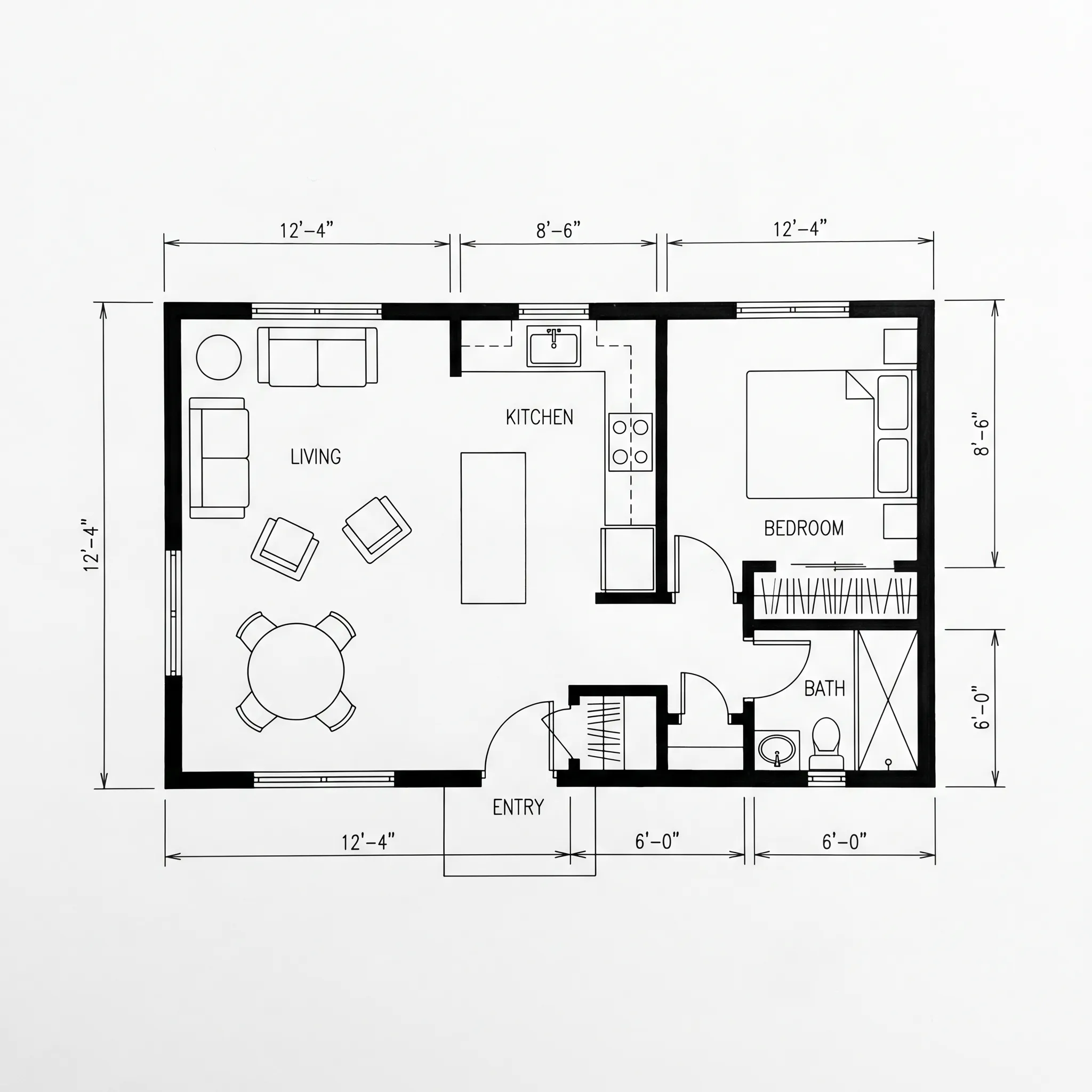
How to Turn a 2D Floor Plan Into a 3D Render With AI (5 Steps)
Turn a 2D floor plan into a 3D render with AI in 5 steps. Render a House makes a photorealistic image in 30–60 seconds, free to start.
Best AI Rendering Tools for Architects in Latin America (2026)
AI rendering tools for architects in Latin America (2026): Render a House, Veras, ArchiVinci, LookX, MyArchitectAI, Maquete. Languages, prices.
