 Render a House/Updated Sep 7, 2026
Rhino System Requirements 2026: Rhino 8's Low Floor and What Raytraced Actually Needs
McNeel recommends 8 GB of RAM to run Rhino 8 — and that is the only figure it publishes. There is no separate, lower "minimum" tier on Rhino's own requirements page, which is unusual for a professional NURBS modeller and is the whole story of this page.
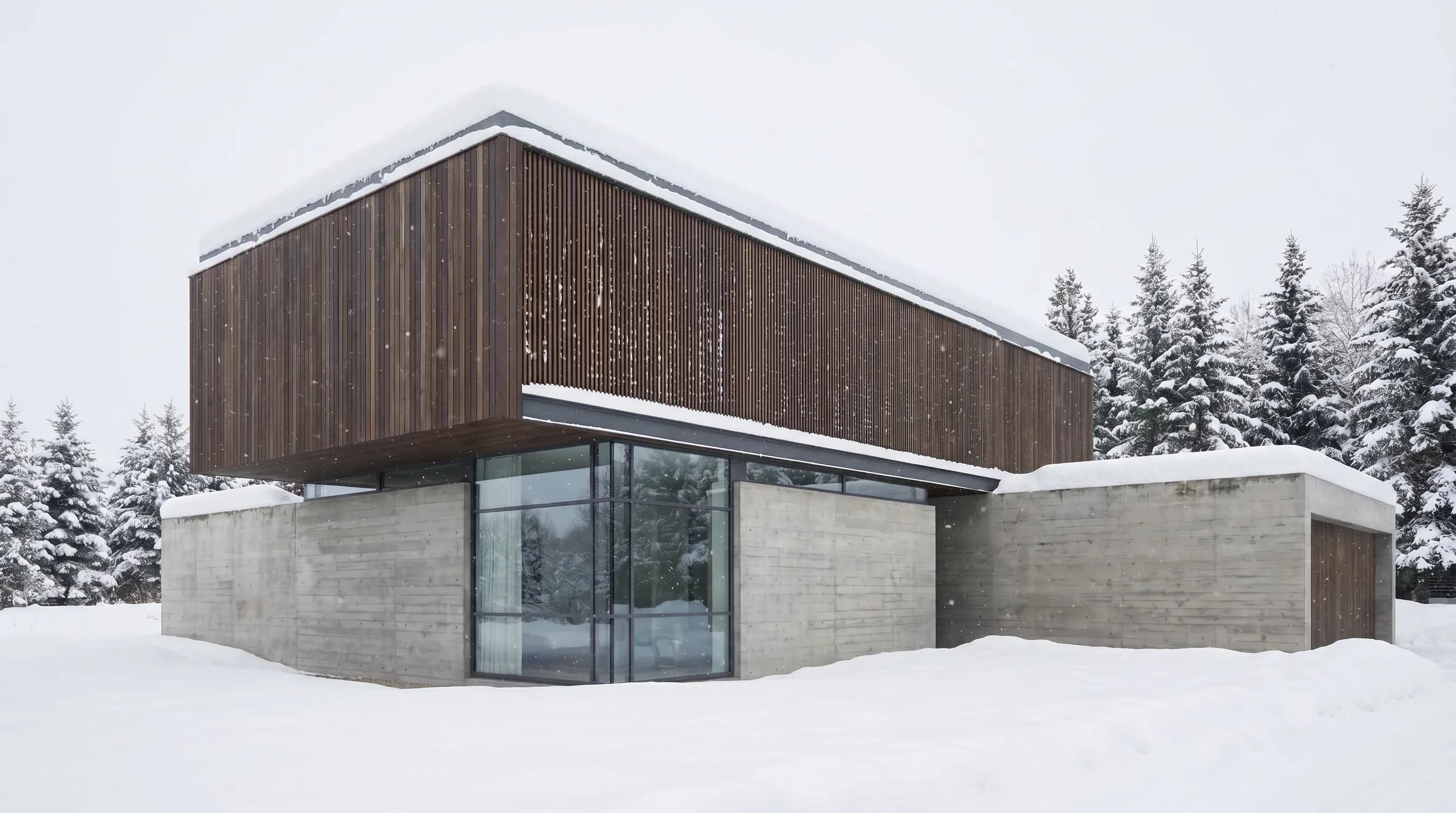
The current commercially sold version is Rhino 8, released October 2023 and still McNeel's shipping product as of September 2026. Rhino 9 exists only as a public beta — McNeel calls the channel Serengeti, it's open to anyone holding a Rhino 8 licence, and McNeel has not published a ship date or a price for it. Every figure on this page is sourced directly from McNeel's own Rhino 8 system requirements page, cross-checked against the archived pages for Rhino 7, Rhino 6, and the Rhino 9 WIP beta. For the price side of the same purchase, see Rhino pricing.
Rhino system requirements at a glance
| Component | Minimum | Recommended | For large models & Grasshopper |
|---|---|---|---|
| Operating system | Windows 10, or macOS 12.4 Monterey (Intel or Apple Silicon) | Windows 11, or the newest macOS Rhino 8 supports | Windows 11, or macOS on Apple Silicon |
| CPU | 64-bit Intel or AMD, no ARM — no core count is published | High clock speed over core count | High clock speed, 8+ cores for background renders and exports |
| RAM | No published floor below the recommendation | 8 GB | 32 GB or more for large meshes and dense Grasshopper definitions |
| Graphics | No published floor — Rhino runs on integrated graphics | OpenGL 4.5 card, 4 GB video memory | A CUDA, OptiX, HIP, or Metal-capable GPU with 8 GB or more of VRAM for Raytraced |
| Disk space | 5 GB (Windows) / 10 GB (Mac) | Same, plus room for an SSD's worth of project files | SSD, sized for texture libraries and Grasshopper caches |
| Input | Any mouse | Multi-button mouse with a scroll wheel | Multi-button mouse; Magic Mouse explicitly not recommended on Mac |
Only the second column is McNeel's own wording. The first and third are ours: the first names what McNeel simply never states a floor for, and the third is what a working studio needs once a model stops being a test file.
Minimum requirements
Read McNeel's Rhino 8 requirements page closely and the "minimum" is conspicuous by its absence. Every hardware line — RAM, video card, video memory — carries the word "recommended," never "required" or "minimum." The only hard gates are architectural: a 64-bit Intel or AMD processor, no ARM chips, Windows 10 or 11 on that side, and macOS 12.4 Monterey or newer with Intel or Apple Silicon on the other. Below the recommended RAM and GPU figures, Rhino is not documented as unsupported — it is simply undocumented.
Recommended requirements
8 GB of RAM, an OpenGL 4.5 capable graphics card, and at least 4 GB of video memory. Disk space is 5 GB on Windows and 10 GB on Mac — twice as much for the identical application, per McNeel's own numbers, because the Mac installer ships more of the application's resources natively rather than relying on shared system frameworks the way the Windows build can.
What large models and Grasshopper actually need
Past the recommendation there is no McNeel tier, so this column is ours. 32 GB of RAM and a GPU with 8 GB or more of VRAM is where a Grasshopper definition with real data trees, or a mesh import with millions of faces, stops being a memory-management exercise. Nothing about it is required — Rhino will open a 80 GB Grasshopper session on an 8 GB machine and simply run out of memory when it does.
Rhino system requirements on Mac
Rhino's Mac story is the most valuable fact on this page, because it contradicts the pattern in the rest of this category. Rhino 8 runs natively on both Intel and Apple Silicon Macs, on macOS 12.4 Monterey through macOS 26 Tahoe, per rhino3d.com's own Mac requirements. Autodesk Revit has no Mac build of any kind — see Revit system requirements — and Lumion Pro is Windows-only, with Lumion's own support pages stating Parallels is not a supported way to run it on a Mac. Rhino needs neither workaround.
Minimum and recommended Mac hardware
The Mac hardware numbers mirror Windows almost exactly: 8 GB of RAM recommended, no separate minimum, a multi-button mouse with a scroll wheel recommended (McNeel's own page specifically calls out that a Magic Mouse is notrecommended), and 10 GB of disk space against Windows' 5 GB. McNeel does not publish a Mac-specific GPU or VRAM figure at all — the 4 GB recommendation on the Windows side has no Mac equivalent stated anywhere on the page.
Apple Silicon, Intel, and the Rhino 9 cutoff
Apple Silicon support arrived in stages, and the version table below shows exactly where. Rhino 6 never supported Apple Silicon at all — its own requirements page lists Intel only, through macOS 11.7 Big Sur, because Rhino 6 predates the M1 launch. Rhino 7 added Apple Silicon support after launch and, in its current requirements page, lists "Apple Mac with Intel or Apple processor" without distinction. Rhino 8 is the first version built for Apple Silicon from the start, and McNeel's own rendering page credits it with "a huge speed boost for Mac users" and Metal support that makes Cycles "much faster than V7 on Mac."
The Rhino 9 WIP beta reverses the trend. Its own system requirements page currently states "Mac with an Apple Silicon processor (Intel not supported)" and macOS 26 Tahoe as the only supported release — dropping every Mac OS version Rhino 8 supports below Tahoe. That is the same move Blender made in Blender 5.0, which removed Intel Mac builds entirely. McNeel states plainly that Rhino 9's requirements are "subject to change" while it's in beta, so this is not final — but it is the direction McNeel has published, and an Intel Mac studio should not assume Rhino 9 will run on it. The Windows side of the same beta adds a capability rather than removing one: its own page lists "64-bit Intel, AMD, or ARM processor" as supported, the first time an ARM CPU has appeared on a Rhino requirements page.
What is still missing on Mac
Rhino for Mac is not a feature-complete mirror of Rhino for Windows, and McNeel documents the gap itself, command by command, on its own wiki. The categories that are still Windows-only in Rhino 8 include:
- Hardware digitizers. Faro arms and MicroScribe devices have no Mac driver path — the entire
Dig,Digitize,MicroScribe, andFarocommand families are Windows-only, per McNeel's own list. - Scripting automation.
RunScript,LoadScript, andEditScript— the commands that drive a Rhino session from an external script — are not implemented on Mac. - Worksessions. The multi-file, multi-user
Worksessioncommand that lets a team reference each other's models live has no Mac equivalent. - Viewport layout management. Commands like
SplitViewportHorizontal,NewViewport, andBringViewportToTopexist only on Windows; Mac users manage viewports through the interface directly rather than by command.
None of this affects the hardware you need to buy — these are software gaps, not spec differences — but it matters when a firm is deciding whether a Mac seat can replace a Windows one outright, or only alongside it.
The two floors: modelling Rhino vs the Raytraced renderer
Here is the contradiction the "at a glance" table above is built to expose. McNeel's Rhino 8 requirements page states no GPU minimum at all — the only figure it gives is a 4 GB VRAM "recommendation" attached to an OpenGL 4.5 card, and OpenGL 4.5 support is common on integrated graphics that shipped a decade ago. By that page alone, Rhino asks almost nothing of a graphics card.
Rhino's own render engine asks for something else entirely. Rhino Render, the real-time raytraced display mode branded Raytraced in the viewport, is built on Cycles — documented on rhino3d.com's own rendering feature page — and Cycles renders on the GPU only through a specific set of vendor backends: CUDA or OptiX on NVIDIA, HIP on AMD, and Metal on Apple Silicon, per McNeel's own render options documentation, which lists CPU, CUDA, OptiX, and OpenCL as the selectable devices on Windows. A graphics card can satisfy Rhino's entire published requirement — OpenGL 4.5, 4 GB of memory — and still not qualify for a single one of those render backends, because OpenGL support and Cycles GPU support are unrelated capabilities.
When a GPU doesn't qualify for any Cycles backend, McNeel's own documentation is explicit about the fallback: CPU is listed as one of the supported rendering devices, not an error state. Rhino keeps working. Rendering simply moves off the graphics card entirely and onto the processor, which is slower by a margin that depends on the CPU and the scene, not a number McNeel publishes.
The practical reading: McNeel's published spec describes what it takes to run Rhino, and that bar is genuinely low. It says nothing about what it takes to render with Rhino, and that bar is a real GPU with real driver support — a gap this page's minimum/recommended table cannot show, because McNeel never writes the second number down.
Rhino graphics card requirements explained
Why a NURBS modeller needs a GPU at all
A NURBS modeller doesn't rasterize millions of polygons the way a game engine does, so it's reasonable to assume the GPU barely matters. It matters for two things regardless: drawing the viewport — shaded and rendered display modes lean on OpenGL, which is why McNeel states an OpenGL version rather than a raw polygon count — and, separately, running Cycles on the graphics card instead of the CPU when Raytraced is turned on.
NVIDIA vs AMD vs Apple Silicon for Cycles
Cycles inside Rhino supports three separate GPU paths, and they are not interchangeable. NVIDIA cards use CUDA, or OptiX on RTX hardware for hardware-accelerated ray tracing. AMD cards use HIP. Apple Silicon uses Metal, and per McNeel's own rendering page, Rhino 8's Metal support is what made Cycles "much faster than V7 on Mac." There is no cross-vendor path: an AMD card cannot use CUDA, and an NVIDIA card cannot use HIP. The device you own decides the backend, not the other way around.
| Backend | Vendor | Platform | Notes |
|---|---|---|---|
| CUDA | NVIDIA | Windows | General-purpose NVIDIA GPU rendering, per McNeel's own render options documentation |
| OptiX | NVIDIA | Windows | Adds RTX hardware ray-tracing acceleration on top of CUDA-class cards |
| HIP | AMD | Windows | Rhino 8's rendering page credits this with faster Cycles performance on AMD GPUs |
| Metal | Apple Silicon | macOS | The backend behind Rhino 8's stated Cycles speed gain over Rhino 7 on Mac |
| CPU | Any | Windows and macOS | McNeel's own fallback device when no supported GPU backend is available |
VRAM, and the one figure McNeel actually publishes
4 GB is the only VRAM figure McNeel publishes anywhere for Rhino, on the base Windows requirements page, and it is not described as a Raytraced-specific number — it is the general "recommended" figure for running Rhino at all. McNeel does not publish a separate, higher VRAM figure for Raytraced, for Grasshopper, or for large meshes. Treat that published 4 GB as a floor for opening the software, not a guarantee that a textured interior scene will fit in it — VRAM in the GPU picks table below climbs well past 4 GB precisely because real projects, not McNeel's baseline, are what fill it.
Recommended graphics cards by use case
| What you do | Card class | VRAM | Why |
|---|---|---|---|
| Learning Rhino, 2D drafting, small models | Any integrated GPU that supports OpenGL 4.5 | No VRAM floor published | Rhino's own requirements page states no minimum GPU — only a 4 GB "recommended" figure |
| Modelling plus occasional Raytraced previews | GTX 1660, RTX 3050, Radeon RX 6600 class | 6–8 GB | Clears the CUDA (compute capability 5.0-class) or HIP floor Cycles needs to render on the GPU instead of the CPU |
| Client-facing interior and exterior stills | RTX 4060 Ti 16 GB, RTX 4070, Radeon RX 7700 class | 12–16 GB | A textured interior with furniture blocks and HDRI lighting fits in memory without spilling to system RAM |
| Grasshopper-heavy computational work, large meshes | RTX 4080, RTX 4090 class | 16–24 GB | The GPU is doing viewport display and Raytraced work at once, on top of dense point clouds and mesh previews |
| Anything on macOS | Apple Silicon (any Mac chip Rhino 8 supports) | Unified memory, sized to the machine | Cycles renders through Metal, drawing on the same memory pool as the CPU rather than a fixed VRAM budget |
Card names age fast; VRAM figures don't. Treat the VRAM column as the actual requirement and the card names as examples of where that figure was available when this was written.
Other hardware requirements
CPU: why clock speed beats core count
McNeel's own requirements page names an architecture — 64-bit Intel or AMD, no ARM, on Rhino 8 — and never a core count or clock speed. That silence matches a pattern reported repeatedly on McNeel's own user forum: most core Rhino modelling operations — a blend edge, a boolean, a fillet — run on a single CPU core, so a high-clock 8-core chip typically outperforms a lower-clock 16-core workstation CPU for interactive modelling. Multi-core processors still pay off for background tasks that do parallelise, like rendering, batch exports, and some Grasshopper components — just not for the everyday act of pushing and pulling geometry.
RAM
8 GB is McNeel's number across Rhino 6, 7, 8, and the current Rhino 9 WIP beta — it has not moved in the roughly eight years since Rhino 6 shipped. McNeel does not publish a separate RAM figure for Grasshopper, even though a dense data tree or a large point cloud is exactly the kind of workload that exhausts 8 GB fastest. The number to plan around is not McNeel's published 8 GB; it's how much data your actual definitions and meshes hold, which McNeel leaves for you to judge.
Storage
5 GB on Windows, 10 GB on Mac — a two-times gap for the same application, straight from McNeel's own numbers. Rhino itself is a modest install either way; the space that actually fills a disk is project files, texture libraries, and Grasshopper caches, none of which McNeel sizes for you. An SSD isn't on the published requirements and should be on yours, for the same reason it matters on every other modelling tool in this category.
Rhino system requirements by version
McNeel keeps a system requirements page per major version, live at the same URL pattern for every release, which makes the history easy to check directly instead of estimating it:
| Version | Released | Windows | macOS | CPU / RAM | Graphics |
|---|---|---|---|---|---|
| Rhino 6 | February 2018 | Windows 8.1 or 10 | macOS 10.13 High Sierra–11.7 Big Sur, Intel only — no Apple Silicon support at any point | 64-bit Intel/AMD (max 63 cores) · 8 GB recommended | OpenGL 4.1 · 4 GB VRAM recommended |
| Rhino 7 | November 2020 | Windows 8.1, 10, or 11 | macOS 10.14–14 Sonoma, Intel or Apple Silicon | 64-bit Intel/AMD · 8 GB recommended | OpenGL 4.1 · 4 GB VRAM recommended |
| Rhino 8 | October 2023 | Windows 10 or 11 | macOS 12.4 Monterey–26 Tahoe, Intel or Apple Silicon | 64-bit Intel/AMD, no ARM · 8 GB recommended | OpenGL 4.5 · 4 GB VRAM recommended |
| Rhino 9 (WIP / beta) | Public beta since 2026, no ship date | Windows 11 only — adds 64-bit ARM alongside Intel/AMD | macOS 26 Tahoe only, Apple Silicon only — Intel Macs are unsupported | 64-bit Intel, AMD, or ARM · 8 GB recommended | OpenGL 4.1 · 4 GB VRAM recommended |
Three things fall out of that table. First, the 8 GB RAM figure has never changedacross three shipped major versions and the current beta — unlike Blender or SketchUp, Rhino has not raised its stated memory bar since at least Rhino 6's 2018 release. Second, Apple Silicon support was added mid-cycle, inside the Rhino 7 line, rather than waiting for a new major version — Rhino 6 never got it at all. Third, the pattern reverses in Rhino 9: the WIP beta drops Intel Macs and everything below macOS 26, the same shape as Blender 5.0's Intel Mac removal, while simultaneously widening Windows support to ARM processors for the first time.
McNeel's release cadence has also settled into a rhythm worth planning around: Rhino 6 shipped February 2018, Rhino 7 in November 2020 (about 2.8 years later), and Rhino 8 in October 2023 (about 2.9 years after that) — dates from McNeel's own version history. Averaging those two most recent intervals puts the next major version roughly 2.8 years after the last one, which is the same cadence Rhino pricing uses to price the average cost of an upgrade cycle.
Quick recommendations by use case
| Who you are | Machine | Target spec | Notes |
|---|---|---|---|
| Student or hobbyist | Any laptop clearing the recommended spec | 8–16 GB RAM · integrated or entry discrete GPU | Rhino's own floor is genuinely low; a $195 educational licence is the bigger line item |
| Solo freelancer doing archviz | Desktop, or a 16-inch laptop | 32 GB RAM · 12–16 GB VRAM | Above McNeel's 8 GB recommendation, sized for the furniture blocks and HDRIs a real project arrives with |
| Computational designer running Grasshopper | Workstation or high-RAM laptop | 32–64 GB RAM · fast single-thread CPU | Dense definitions and mesh previews are RAM-bound; McNeel publishes no separate Grasshopper spec |
| Small firm, three to five seats | Mixed Windows/Mac seats plus one render box | 32 GB RAM · 12–16 GB VRAM per seat | Rhino's native Mac build means a firm doesn't have to standardise on one OS to share files |
| Large firm standardising hardware | Windows workstations, spec locked | 32–64 GB RAM · 16 GB+ VRAM | Buy for Raytraced and rendering plugins, not for the modelling floor, which every current machine clears |
The row worth reading twice is the computational designer one. McNeel's published spec treats Grasshopper as part of the base Rhino install with no separate hardware line, but a definition that processes thousands of data-tree branches or previews a dense mesh behaves like a different application — memory-bound in a way the 8 GB baseline was never sized for.
Hardware for Rhino in 2026
Rhino's licence is a fixed cost — $995 once, per McNeel's own sales page — so the hardware budget is the variable one. McNeel doesn't publish street prices for any of this, and no laptop model holds a stable price for long enough to be worth quoting here, so what follows is spec bands, not dollar figures.
An entry machineclears McNeel's published spec with room: any current 64-bit Intel or AMD CPU, 16 GB of RAM, and an integrated or entry discrete GPU that supports OpenGL 4.5. This is enough for modelling, 2D drafting, and occasional Raytraced previews on small scenes.
A working freelancer or small-firm machineadds a discrete GPU with 8 to 16 GB of VRAM and doubles RAM to 32 GB — the tier at which Raytraced renders on the GPU instead of falling back to the CPU, and a client's furniture library doesn't force scene simplification.
A computational-design or render-heavy machine goes to 64 GB of RAM and a GPU with 16 GB or more of VRAM, justified by dense Grasshopper definitions and larger Raytraced scenes rather than by anything Rhino's own requirements page asks for. On macOS, the equivalent is an Apple Silicon machine with as much unified memory as the budget allows, since that pool serves both the CPU and the Metal-accelerated GPU at once.
Common hardware issues and what causes them
- Raytraced is stuck on the CPU and rendering slowly. The graphics card doesn't support CUDA, OptiX, HIP, or Metal, so Cycles has fallen back to the CPU device McNeel lists in its render options documentation. Check the card against the vendor backend it needs, not against the 4 GB VRAM figure on the base requirements page — a card can clear that number and still not qualify for GPU rendering.
- The viewport is fine but Grasshopper grinds to a halt.This is usually RAM, not GPU. A large data tree or mesh preview is competing with Windows or macOS for memory McNeel's 8 GB recommendation never budgeted for.
- Rhino runs, but a specific command is missing on Mac.Check the command against McNeel's own list of Windows-only commands before assuming it's a bug — digitizer support, worksessions, and script-automation commands are Windows-only by design, not missing by accident.
- An older Rhino won't open a file from a newer one.3DM files are forward-only by default. The fix is on the newer machine: File > Save As, then pick the older Rhino version from the format list — McNeel's own export-to-earlier-versions documentation covers the process back to Rhino 2, with the specific data each older format drops.
- Rhino 8 won't install on an old Mac. Rhino 8 requires macOS 12.4 Monterey or newer. A Mac stuck on an older release needs a system update first, or a fallback to Rhino 7, which supports macOS 10.14 and up.
How to get more out of the hardware you have
- Match the render device to the GPU vendor. NVIDIA cards should use OptiX over CUDA where available, since OptiX uses RTX hardware acceleration; AMD cards need HIP explicitly selected rather than left on a generic setting.
- Buy clock speed before core count.If the budget forces a choice, the higher-clocked, lower-core-count CPU wins for interactive modelling, per the single-core pattern McNeel's own users report repeatedly on its forum.
- Simplify the display mesh before blaming the GPU. Rhino's render mesh settings control how densely a NURBS surface is tessellated for display — a coarser setting eases viewport load without touching the underlying geometry.
- Keep an older Rhino installer around. Since the 3DM format saves down but not automatically across versions, a team mixing Rhino 7 and 8 machines benefits from everyone knowing how to Save As to the oldest version still in use.
- Give Grasshopper its own memory headroom. Close browser tabs and other memory-heavy applications before opening a large definition — McNeel's 8 GB recommendation assumes Rhino isn't sharing that memory with much else.
The cloud alternative
Every requirement on this page exists because Raytraced rendering happens on your own graphics card. Move that one step off the machine and the hardware question changes shape.
Render a House renders in the browser, so there is no GPU vendor to match, no VRAM ceiling, no CUDA-versus-HIP-versus-Metal decision, and no operating system requirement beyond a current browser — the exact gap this page spends most of its length explaining. Rhino doesn't open a native file for Render a House to read directly; export a model as OBJ or GLTF — both formats Rhino writes natively, per Rhino's own supported file formats page — and the 3D model vieweropens it directly for a look before deciding whether it needs a full render pass. It's free to start, with 3 renders a day, and paid plans run $39/mo. Full plan details are in the pricing docs.
What this cannot do
It is not a Rhino replacement, and saying otherwise would be dishonest. Rhino is a precision NURBS modeller — it builds and edits exact geometry, drives Grasshopper's parametric logic, and produces the dimensioned drawings a fabricator or a permit office needs. An AI render is not a model: it cannot cut a section, cannot report a curvature deviation, cannot output a 3DM, and cannot replace the modelling work Rhino's own requirements page is written for in the first place.
What it's good for is the last step after that modelling work is done: turning a model already sitting in Rhino as OBJ or GLTF into a client-facing image in seconds, on hardware that never has to clear a CUDA compute-capability check or a Metal version number.
Common questions about Rhino hardware
What are the minimum system requirements for Rhino?
McNeel's own Rhino 8 requirements page doesn't publish a separate minimum tier the way some CAD vendors do. It lists one set of figures, phrased as "recommended": a 64-bit Intel or AMD processor (no ARM, no core count given), at least 8 GB of RAM, 5 GB of disk space on Windows or 10 GB on Mac, and an OpenGL 4.5 capable card with at least 4 GB of video memory. There is no lower published floor — those recommended figures are the only numbers McNeel states.
How much RAM does Rhino need?
McNeel recommends 8 GB, unchanged across Rhino 6, 7, 8, and the Rhino 9 WIP beta. That figure covers opening the application and modelling a typical scene. It does not account for Grasshopper definitions with large data trees or dense mesh previews, for which McNeel publishes no separate number — 16 to 32 GB is the range where those workloads stop competing with the operating system for memory.
Does Rhino run on a Mac, including Apple Silicon?
Yes. Rhino 8 runs natively on both Intel and Apple Silicon Macs, on macOS 12.4 Monterey through macOS 26 Tahoe, per rhino3d.com's own system requirements page. That is a genuine structural advantage over Autodesk Revit, which has no Mac build at all. The Rhino 9 WIP beta changes this: its own requirements page currently lists Apple Silicon only, dropping Intel Mac support.
Can Rhino run on integrated graphics, without a dedicated GPU?
Yes, for modelling. McNeel's requirements page states no GPU minimum at all — only a 4 GB VRAM "recommendation" — so an integrated GPU that supports OpenGL 4.5 will open Rhino and let you model. Rendering is a separate question: Rhino's built-in Raytraced display mode, powered by Cycles, needs a GPU that supports CUDA or OptiX (NVIDIA), HIP (AMD), or Metal (Apple Silicon) to render on the graphics card at all. Without one, Cycles falls back to the CPU, which McNeel's own render options documentation lists as one of the supported rendering devices.
Can you run an older Rhino version on hardware that fails the current one?
Usually, and the 3DM file format is built for exactly this. Rhino's File > Save As lets you export a model to any earlier Rhino format, back to Rhino 2, documented on McNeel's own file-format pages with the specific data each older format drops. So a studio on Rhino 6 or 7 can keep working on old hardware and still open files a colleague saves down from Rhino 8. That is a real difference from Autodesk Revit, whose RVT format only opens forward, never back to an older release.
What laptop specs do you need to run Rhino and Grasshopper?
Aim above McNeel's 8 GB RAM recommendation — 32 GB is the point where a laptop stops feeling tight with Grasshopper open alongside Rhino. Prioritise CPU clock speed over core count, since Rhino's own user forum consistently reports that most modelling operations run on a single core. A discrete GPU with 8 GB or more of VRAM is worth the money only if Raytraced or a render plugin is part of the daily workflow — for modelling alone, McNeel's own numbers don't require one.
Keep researching your Rhino hardware budget
Rhino pricingcovers the other half of this same purchase — the $995 commercial licence, the $595 upgrade, and the cost-per-year math against Revit, Archicad, and SketchUp's subscriptions.
Blender system requirements and SketchUp system requirements run the same exercise for the two modellers most often compared against Rhino, including Blender's own Intel Mac cutoff — the same move Rhino 9's beta requirements are currently making.
Revit system requirements and Archicad system requirements cover the BIM side of a studio's toolchain — Revit with no Mac build at all, Archicad with one, for direct contrast against Rhino's own cross-platform numbers above.
Lumion system requirements, Enscape system requirements, V-Ray system requirements, and D5 Render system requirements spec out the render engines most commonly plugged into a Rhino seat, for the studio deciding whether Rhino Render's built-in Raytraced mode is enough or whether a paid renderer is worth adding.
The 3D model viewer opens a Rhino-exported GLB or GLTF directly in the browser, no GPU requirement attached.
Keep reading
Related guides and comparisons
ChatGPT for architectural rendering: does it work?
Partly. ChatGPT is great for a fast concept image, but edits drift and it can't keep several renders of one project consistent. Render a House can.
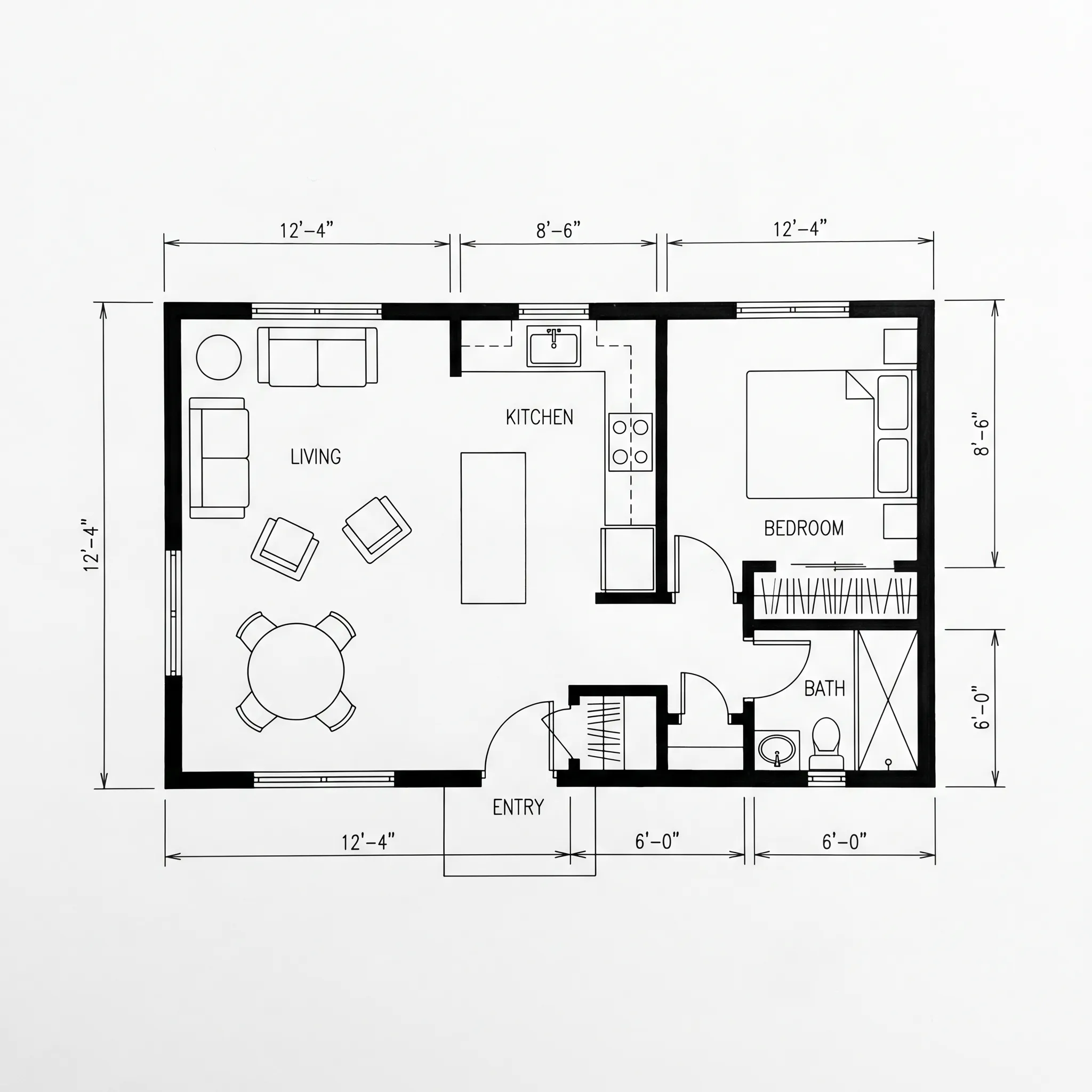
How to Turn a 2D Floor Plan Into a 3D Render With AI (5 Steps)
Turn a 2D floor plan into a 3D render with AI in 5 steps. Render a House makes a photorealistic image in 30–60 seconds, free to start.
Best AI Rendering Tools for Architects in Latin America (2026)
AI rendering tools for architects in Latin America (2026): Render a House, Veras, ArchiVinci, LookX, MyArchitectAI, Maquete. Languages, prices.
