 Render a House/Updated Sep 7, 2026
D5 Render Pricing 2026: Community (Free), Pro and Teams Compared
D5 Pro costs $30 a month billed annually — $360/yr — or $38 a month if you pay monthly. D5 for Teams costs $59 per seat a month billed annually ($708/seat/yr), or $75 per seat month-to-month. D5 Community is free, permanently, but restricted by D5's own terms to personal, non-commercial use.

Those numbers answer the headline question. The more useful one is what "free" actually means here: D5 Community isn't a time-limited trial like most competitors offer — it never expires — but D5's subscription terms say plainly that Community use is "limited to personal, non-commercial purposes," and that any commercial use requires a valid paid Subscription. That single clause changes how you should read every other free-tier claim on this page.
D5 Render is the company's core real-time renderer, one of three products sold under the D5 name alongside D5 Lite (an AI-native visualization plugin) and D5 Works (a curated asset marketplace). All three share the same Community, Pro, and Teams subscription — you are not buying three separate licences. The current release is D5 3.1, shipped July 2026.
Prices below are D5's own published rates, read directly from the official D5 pricing page, which renders its numbers with JavaScript rather than in the page source — every figure here was pulled from the live, rendered page, not cached or copied from a third party.
D5 Render pricing at a glance
| Plan | Monthly | Annual | Commercial use | Built for |
|---|---|---|---|---|
| D5 Community | Free | Free | No — personal, non-commercial use only | Learning the workflow, testing your GPU, evaluating before buying |
| D5 Pro | $38 / mo | $360 / yr ($30/mo effective) | Yes | Solo freelancers and visualization specialists doing paid work |
| D5 for Teams | $75 / seat / mo | $708 / seat / yr ($59/mo effective) | Yes | Studios with two or more people sharing scenes and libraries |
| D5 for Education | Free (verified) | Free (verified) | No — coursework and research only | Verified students, faculty, and academic staff |
Two things stand out against the rest of the architecture-render category. First, the free tier is genuinely usable — unlimited scenes, real-time path tracing, and CAD sync — not a crippled demo. Second, that same free tier is contractually off-limits for paid work, which most "free forever" renderer marketing doesn't spell out as explicitly as D5 does.
D5 is also a different kind of renderer than half the names in the comparison table further down this page. It's a real-time, GPU-driven path tracer — the image updates as you move the camera, the same category as Enscape and Lumion — rather than an offline production renderer like V-Ray, where you set up a shot and wait for a batch render to finish. That distinction matters for pricing: real-time renderers compete on subscription cost and GPU requirements, not on render-farm or per-frame economics.
What each D5 Render plan includes
D5 Community — free
Unlimited projects, LiveSync workflow integrations with SketchUp, Revit, Rhino, 3ds Max, Cinema 4D, Archicad, Blender, and Vectorworks, environment and effects editing, landscaping and vegetation tools, phasing-animation templates, image/panorama/ video rendering, a custom local asset library, and 50 trial credits across D5's AI features. Output caps match the paid tiers — 16K stills, 4K video — so Community isn't throttled on resolution, only on assets, AI usage, tours, and cloud space.
The catch is the licence, not the feature list: it's a personal, non-commercial licence. A student portfolio or a hobbyist scene is fine; a client deliverable is not.
D5 Pro — $30/mo billed annually
Everything in Community, plus unlimited AI features and AI Agent usage, City Generator and Cesium integration for site context, spatial/XR tours, VR walkthroughs, more render-format options, 16,000+ official assets (up from 2,100+), and 10 GB of cloud workspace storage. This is the plan D5 expects a solo commercial visualizer to buy — it is also the plan that turns Community's "personal use only" restriction into full commercial rights.
One licence is one seat. There is no per-render or per-project pricing at this tier — the $30–38/mo charge is the same whether you render daily or once a month.
D5 for Teams — $59/seat/mo billed annually
Everything in Pro, plus multi-editor scene editing across cloud drives, member access control, a shared project and asset library, 100 GB of team cloud storage, cloud-storage-app integration, and resource/data management tooling. Video output also rises to 8K — the one output-resolution difference anywhere in D5's lineup; image and panorama stay capped at 16K across every paid tier.
Pricing is per seat, self-serve at $59–75/mo per person, with a 14-day full-access free trial available before you commit — see the free-tier section below for how that trial actually works. A "Contact Sales" option sits next to the self-serve "Subscribe" button for studios that want a negotiated deal instead.
D5 Render pricing by payment term
D5 sells two payment terms — monthly and annual — on both paid plans, and the discount for committing annually is remarkably consistent across them:
| Plan | Monthly billing | Annual billing | Annual savings |
|---|---|---|---|
| D5 Pro | $38 / mo → $456 / yr if paid monthly | $360 / yr ($30/mo) | $96 / yr saved — 21% off the monthly rate |
| D5 for Teams (per seat) | $75 / mo → $900 / yr if paid monthly | $708 / yr ($59/mo) | $192 / yr saved — 21% off the monthly rate |
Do the arithmetic and both plans land at the same discount: Pro's $38/mo annualizes to $456, against $360 billed annually — a $96 saving, which is 21.05%off the monthly rate. Teams' $75/mo annualizes to $900, against $708 billed annually — a $192 saving, or 21.33%off the monthly rate. D5's own pricing page rounds the Pro badge down to "Save 20%" while the Teams badge rounds to "Save 21%" — the precise numbers are close enough that the discount is effectively the same flat ~21% on either plan, regardless of the rounding shown in the UI.
There is no 3-year term here the way KeyShot and Autodesk sell one — D5's only lever for a better rate is switching from monthly to annual billing on whichever plan you're already on.
Is D5 Render free?
Yes, with a specific and important restriction. D5 Community costs nothing and never expires — it is not a 14-day trial. But per D5's own subscription terms, "your use of the Services under the free Community version is limited to personal, non-commercial purposes… Any commercial use requires a valid paid Subscription." A render made in Community for a client, a portfolio piece sold as a print, or any work you're paid for falls outside that licence.
Here is exactly what changes in a D5 Render free vs. Pro comparison — the table most people searching "is D5 Render free" actually want:
| Feature | D5 Community (free) | D5 Pro ($30/mo) |
|---|---|---|
| Commercial use | Not permitted — personal use only | Permitted |
| Official assets | 2,100+ | 16,000+ |
| Over 10 AI features | 50 trial credits | Unlimited |
| AI Agent | Limited | Unlimited |
| Panorama / Spatial tours | 1 tour | Unlimited |
| Showreel projects | 1 project | Unlimited |
| Cloud workspace | Limited | 10 GB |
| Image & panorama output | Up to 16K | Up to 16K |
| Video output | Up to 4K | Up to 4K |
Notice what doesn't change: image (16K) and video (4K) output resolution are identical on both tiers. The free tier isn't rationed on render quality — it's rationed on assets, AI usage, tours, cloud space, and, most importantly, the right to use the output commercially.
The one genuine time-boxed trial D5 offers is on D5 for Teams, not Pro: 14 days of full, unrestricted access, functionally identical to a paid subscription. It requires a payment method — D5 places a temporary $1 pre-authorization hold to verify the card, which is never captured — and if you don't cancel at least 24 hours before the trial ends, it auto-converts to the paid Teams plan you selected at sign-up. There is no equivalent time-boxed trial for Pro; its free on-ramp is Community itself, indefinitely, with the non-commercial string attached.
D5 Render pricing for students and educators
| Buyer | Price |
|---|---|
| Verified students and faculty (individual) | Free, one device, 180 days, renewable while eligible |
| Schools and universities (computer-lab deployments) | Tiered lab pricing — not published, quoted directly by D5 |
D5 for Education is free and separate from Community: it unlocks most Pro-level features and the full 16,000+ asset library, with no watermark on output, for verified full-time students, faculty, and staff at accredited universities, community colleges, and vocational schools. Apply with a school email inside D5 Launcher (version 2.11 or later); D5 reviews applications within seven working days.
The licence is fixed to one device and valid for 180 days, renewable by reapplying up to 15 days before it expires as long as you're still eligible. You can unbind a device yourself through MySpace, but only once per calendar year — doing so reverts your account to Community until you reapply. Course-participants at training centers and professional instructors working for a reseller or training provider are explicitly excluded from the Education plan.
Schools deploying D5 across a computer lab go through a separate, unpublished "tiered pricing" quote rather than the individual EDU licence — D5 doesn't publish a per-seat lab rate, so budget the free individual licence as what one verified student or faculty member gets, not what a 30-seat lab pays.
Costs beyond the D5 Render subscription
The subscription is the floor, and D5 is a real-time, GPU-dependent renderer — that has cost implications a browser- based tool doesn't carry.
Hardware: the GPU D5 Render actually needs
D5 Render is built on DirectX Raytracing (DXR), a Windows-only API — there is no macOS build, not even a slower CPU-only fallback the way some product-design renderers offer. D5's own system requirements call for Windows 10 (version 1809) or later, a ray-tracing GPU — minimum Nvidia GTX 1060, Intel Arc 3, or AMD RX 6400, recommended RTX 3060 Ti, optimal RTX 3090 — and 32 GB of RAM recommended (128 GB at the optimal tier). A Mac-first studio has no path to running D5 natively; it needs a separate Windows machine.
D5's own requirements page adds a genuinely useful piece of arithmetic most vendors skip: when a scene needs more GPU memory than the card has, Windows converts roughly 50% of system RAM into shared GPU memory as a fallback, so total usable GPU memory works out to VRAM + (RAM ÷ 2). That's why D5 documents users running an RTX 3050 with only 4 GB of VRAM comfortably once paired with 32 GB of system RAM — the 32 GB recommendation is doing real work covering for a modest GPU, not padding the spec sheet.
Full CPU, GPU, and RAM tables, plus the version-by-version specs, are broken out on D5 Render system requirements rather than repeated here — this page is about what you pay, not what you need to run it.
D5 Works, LiveSync, and the asset library
Credit where it's due: D5's CAD sync plugins — LiveSync for SketchUp, Revit, Rhino, and six other packages — are free even on the Community tier. That's a genuinely better deal than KeyShot, which bundles most CAD plugins free but charges a separate $29/mo for its Siemens NX connector, or SketchUp, whose own Studio tier costs $460/yr more than Pro specifically to add a bundled renderer.
Where D5 does have an optional extra spend is D5 Works, its paid asset marketplace. D5's subscription terms give Pro and Teams subscribers a 12% discount on D5 Works purchases and up to 200 free-asset downloads a day (200/month); Community, student, and lab accounts are capped at 5 free downloads a day (30/month). D5 doesn't publish a typical per-asset price or a total marketplace spend, so budget it as a variable line item you size after browsing the catalog, not a fixed number.
D5 Lite, the AI-native visualization plugin sold alongside D5 Render, is included in the same subscription rather than billed separately — but its own feature comparison currently lists AI Mode as "Free for a Limited Time" on Pro and Teams, which reads as a promotional window rather than a permanent inclusion. D5 doesn't state an end date or a fallback price if that changes, so treat D5 Lite's AI Mode as a bonus on top of the D5 Render subscription today, not a locked-in feature to plan a workflow around long term.
Training
D5 markets itself on real-time feedback shortening the learning curve compared to an offline renderer, and the interface is genuinely closer to a game engine than to a traditional render queue. It is still a full scene-building tool once you reach for Terrain, City Generator, Scatter/Brush/Path tools, or phasing animation — budget onboarding time for a new seat the same way you would for any real-time renderer, not as a one-click button.
The real cost of a year on D5 Render
Putting the plan prices together, here is what a year of D5 actually costs at three team sizes, using D5's own annual list prices. Hardware and any D5 Works purchases are separate line items not included below.
| Setup | What is in it | Total |
|---|---|---|
| Solo freelancer | D5 Pro annual | $360 / yr |
| Two-person studio | D5 for Teams annual × 2 seats | $1,416 / yr |
| Five-person studio | D5 for Teams annual × 5 seats | $3,540 / yr |
Because Teams is priced per seat with no volume discount published, the cost scales linearly: five seats is exactly 5 × $708 = $3,540/yr, not a cent less per seat than a two-person team pays. A studio that expects to grow past a handful of seats should ask D5's sales team directly whether volume pricing exists — nothing on the public pricing page suggests it does.
A studio doesn't have to put every seat on Teams. A common pattern is one Teams seat for the person who owns shared assets and client presentations, with everyone else on individual Pro seats: three Pro seats plus one Teams seat runs 3 × $360 + $708 = $1,788/yr — cheaper than four full Teams seats (4 × $708 = $2,832/yr) if the team-only features (shared libraries, multi-editor scenes) matter to only one or two people on the project.
D5 Render pricing compared to alternatives
D5 sits in the middle of the architecture-visualization pricing spread — pricier than Lumion's cheapest plugin tier, cheaper than Enscape and V-Ray's entry plans, and well below a product-design renderer like KeyShot.
| Renderer | Entry price | Notes |
|---|---|---|
| KeyShot Studio Professional | $1,299 / yr | General-purpose product-design renderer, not architecture-native |
| V-Ray Solo | $45 / mo · $540 / yr | Architecture-native, plugs into SketchUp, Revit and Rhino |
| Enscape Solo | $47.90 / mo · $574.80 / yr | Real-time preview inside the CAD viewport |
| Lumion View | $19 / mo · $229 / yr | Plugin tier; Lumion Pro is $1,149/yr and Windows only |
| D5 Pro | $30 / mo · $360 / yr | Free Community tier exists but is restricted to non-commercial use |
| Render a House | Free · $39 / mo | Browser-based AI rendering, no GPU and no install; 3 renders a day on the free tier |
Credit where it's due: no other renderer in this table offers a free tier this capable. Enscape, V-Ray, and KeyShot all gate their software behind a time-limited trial with no permanent free option; Lumion's cheapest tier is $19/mo, not free. D5 Community's unlimited scenes, 16K stills, and free CAD sync are a real, ongoing way to learn the tool at zero cost — the trade is that you can never use the output commercially without upgrading.
At the entry paid tier, D5 Pro's $360/yr sits below Enscape Solo's $574.80/yr and V-Ray Solo's $540/yr, and both of those competitors charge that price for a plugin that renders inside a single CAD host rather than a standalone application with its own asset library and AI tools bundled in. Lumion View at $229/yr is cheaper still, but it's explicitly a lightweight viewing tier — Lumion's comparable full-featured plan, Lumion Pro, is $1,149/yr, more than three times D5 Pro's price for a feature set in the same territory.
Against Render a House specifically, the difference isn't feature depth — D5 does real-time walkthroughs, VR, and site context that a still-image AI renderer doesn't attempt. The difference is what the price buys: D5's $30–75/mo range assumes a Windows PC with a ray-tracing GPU you already own or are willing to buy; Render a House runs in a browser and needs neither.
When D5 Render makes financial sense
When D5 Render is the right tool
- You need real-time walkthroughs, VR, or interactive presentations.D5's Interactive Presentation, spatial tours, and VR export are built for exactly this, and nothing in the table above matches them at $30/mo.
- Your projects need site context. City Generator, Cesium integration, terrain, and ocean tools are Pro-tier features aimed squarely at urban and landscape work.
- You already run Windows with a capable GPU.If the hardware cost is already sunk — for Revit, Lumion, or any other GPU-bound tool — D5's subscription is the only new cost, and it undercuts Enscape and V-Ray at the entry tier.
- You're a verified student or faculty member. D5 for Education gets you nearly all of Pro, with no watermark, for free — a materially better deal than evaluating on the restricted Community tier alone.
When to consider alternatives
- You're Mac-based.D5 has no macOS build at all — not even KeyShot's CPU-only fallback. A Mac studio either buys a Windows machine solely for D5 or looks elsewhere.
- You render occasionally, not constantly. $360 a year (or $708/seat on Teams) is a lot of fixed cost if your output is a handful of images a month; a per-render or no-subscription tool costs less at low volume.
- You want a free tier without the string attached.D5 Community is capable, but it is contractually non-commercial. If "free" needs to mean free for client work too, D5 doesn't offer that at any tier below Pro.
- You need still images more than real-time interactivity.D5's core strength is the real-time viewport; if the deliverable is a set of photorealistic stills, a workflow that skips the GPU and the scene-building step entirely can get there with less setup.
- You're evaluating on a laptop without a discrete GPU.D5's own minimum spec assumes a dedicated ray-tracing card; integrated graphics aren't listed as supported at any tier, so a thin-and-light laptop can't run a meaningful Community evaluation in the first place.
Is D5 Render worth the cost?
For a studio that genuinely needs real-time walkthroughs, VR presentations, and large-scale site context, yes — D5 Pro at $360/yr undercuts Enscape and V-Ray for a comparable feature set, and the free Community tier is a legitimately useful way to learn the tool before paying anything, provided you never ship Community output to a client.
The honest limitation is the platform commitment, not the price. D5 is a Windows-and-GPU renderer with no macOS build at all, so a Mac-first practice pays for a second machine before it pays for the licence. And the free tier that looks generous on the comparison table is narrower than it first appears — it is free for learning and evaluation, not free for the work most readers of this page are actually trying to get paid for.
You can skip both the licence and the GPU entirely. Render a House takes an exported view, a screenshot, or an OBJ or GLB file — it doesn't open native SketchUp, Revit, Rhino, or Archicad project files directly — and returns a photorealistic still without a render engine, a discrete GPU, or a Windows requirement. Start free at 3 renders a day, and paid plans run $39/mo or $312/yr, with no restriction on using the output commercially at any tier. Full plan details are in the pricing docs.
Pricing a different piece of the stack at the same time? Enscape pricing, Lumion pricing, and KeyShot pricing cover the other renderers in the comparison table above, and SketchUp pricing and Revit pricingcover two of the CAD packages D5's LiveSync plugin connects to for free.
Common questions about D5 Render pricing
How much does D5 Render cost?
D5 Pro costs $30 a month billed annually ($360/yr), or $38 a month billed month-to-month. D5 for Teams costs $59 per seat a month billed annually ($708/seat/yr), or $75 per seat a month billed month-to-month. D5 Community is free, and D5 for Education is free for verified students and faculty.
Is D5 Render free?
D5 Community is a permanent free tier with real-time path tracing, PBR materials, and unlimited scenes — but D5's own subscription terms restrict it to personal, non-commercial use. Any paid or client-facing project requires a D5 Pro or D5 for Teams subscription.
What is the difference between D5 Render free and Pro?
Beyond the commercial-use restriction, Pro removes the caps: 16,000+ official assets instead of 2,100+, unlimited AI features instead of 50 trial credits, unlimited panorama and spatial tours instead of one each, unlimited Showreel projects instead of one, and 10 GB of cloud storage instead of a limited allotment. Image (16K) and video (4K) output caps are the same on both tiers.
Does D5 Render offer a free trial?
Only D5 for Teams has a formal, time-boxed free trial: 14 days of full, unrestricted access. It requires a payment method (a $1 pre-authorization hold that is never captured) and auto-converts to the paid plan you selected unless you cancel at least 24 hours before it ends. D5 Pro has no separate trial — its free on-ramp is the permanent, non-commercial Community tier.
How much does D5 Render cost for students?
Free, through D5 for Education. It's a fixed-seat licence tied to one device, valid for 180 days and renewable while you remain eligible, and it unlocks most Pro features and assets with no watermark. Apply inside D5 Launcher using a school email; review takes up to seven working days. Schools deploying to a whole computer lab get a separate, unpublished tiered quote.
Can I use D5 Render on a Mac?
No. D5's own system requirements call for Windows 10 (version 1809) or later, because D5 Render depends on Microsoft's DirectX Raytracing (DXR) API, which has no macOS equivalent. D5 publishes no minimum or recommended macOS specification anywhere on its site, unlike some competitors that at least offer a slower CPU-only fallback on a Mac.
Related renderer and CAD pricing pages
Every reference below is verified against the vendor's own pricing or documentation page, the same standard this page holds itself to.
- D5 Render system requirements covers the full CPU, GPU, and RAM tables this page only summarizes, plus the minimum Windows version.
- Enscape pricing and Lumion pricing cover the two architecture-native renderers closest to D5 in price and audience.
- V-Ray pricing and Twinmotion pricing round out the real-time and production-render alternatives in the comparison table above.
- KeyShot pricing covers the one product-design renderer in that same table, for readers weighing a general-purpose tool against an architecture-specific one.
- SketchUp pricing, Revit pricing, and Rhino pricingcover the CAD packages D5's free LiveSync plugin connects to.
- Render a House's AI image upscaler cleans up an existing D5 render or screenshot without re-rendering the scene.
- D5 Render alternatives puts Lumion, Enscape, V-Ray and Twinmotion side by side, with Render a House on the last line.
- D5 AI vs Render a House compares D5's AI features with Enscape and Lumion AI.
Keep reading
Related guides and comparisons
ChatGPT for architectural rendering: does it work?
Partly. ChatGPT is great for a fast concept image, but edits drift and it can't keep several renders of one project consistent. Render a House can.
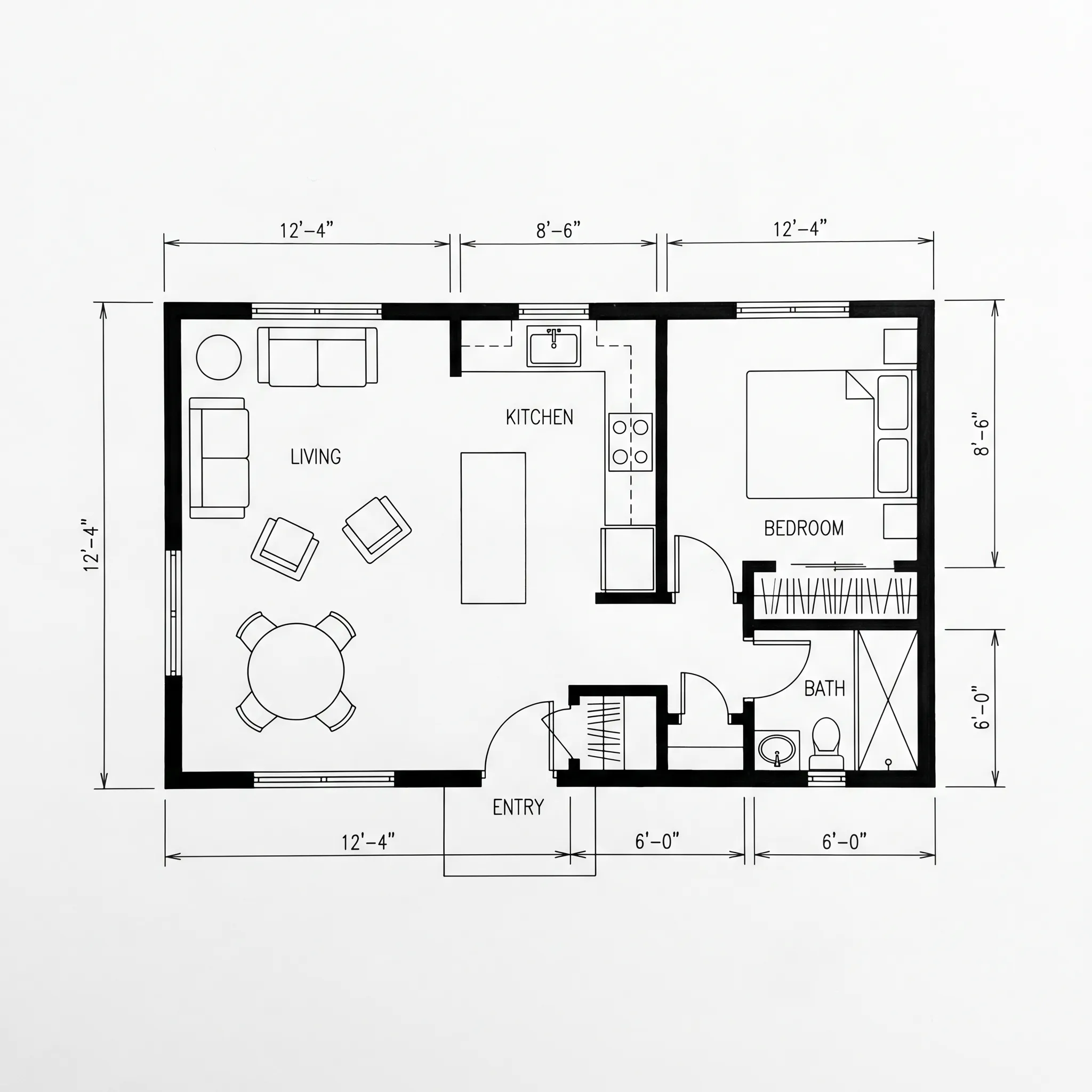
How to Turn a 2D Floor Plan Into a 3D Render With AI (5 Steps)
Turn a 2D floor plan into a 3D render with AI in 5 steps. Render a House makes a photorealistic image in 30–60 seconds, free to start.
Best AI Rendering Tools for Architects in Latin America (2026)
AI rendering tools for architects in Latin America (2026): Render a House, Veras, ArchiVinci, LookX, MyArchitectAI, Maquete. Languages, prices.
