 Render a House/Updated Sep 7, 2026
Twinmotion Pricing 2026: Free Tier, $445 Seats, and the Unreal Subscription
Twinmotion is free if your company's annual gross revenue is under $1 million — the full application, every update, no watermark, and permission for paid commercial work. Cross that line and a Twinmotion seat costs $445 a year, or $1,850 a year for the Unreal Subscription that adds Unreal Engine and RealityScan.
Read that first paragraph again, because the free tier is the part most comparisons get wrong. It is not a trial and it is not feature-limited — below the revenue line you get the identical application a paying studio gets, minus one thing: Twinmotion Cloud. Above the line, or the moment Cloud specifically is what you need, Epic asks for a seat.
Every figure below comes from Epic's own Twinmotion licensing and pricing page, checked twice five months apart — once in an April 2026 archive taken right after Epic's own licensing update, and again on the live page in September 2026. Neither the $445 nor the $1,850 figure moved in that window. Epic's commerce pages sit behind a bot check that blocks most automated tools; where a number could not be confirmed against Epic's own text, it is left out rather than estimated.
Twinmotion pricing at a glance
| Tier | Price | Who qualifies | Includes |
|---|---|---|---|
| Free | $0 | Individuals and companies under $1M in annual gross revenue, students, educators, hobbyists, and educational institutions | All Twinmotion updates, documentation, community forums, download |
| Twinmotion seats | $445 / seat / yr | Individuals and companies over $1M in annual gross revenue, or anyone who needs Twinmotion Cloud | Twinmotion updates for one year, documentation, community forums, Twinmotion Cloud |
| Unreal Subscription | $1,850 / seat / yr | Companies over $1M in annual gross revenue that also want Unreal Engine and RealityScan | Updates to Unreal Engine, Twinmotion, and RealityScan for one year, documentation, community forums, Twinmotion Cloud; Epic Pro Support is a paid add-on at 10+ seats |
Epic sells exactly two paid options, both billed annually, and both managed the same way — through the Epic Developer Portal, not a shopping cart on the Twinmotion site. There is no monthly plan and no published multi-year discount, a narrower structure than KeyShot's three tiers or Enscape's month-to-month billing — see KeyShot pricing and Enscape pricing.
Is Twinmotion free?
Yes, conditionally, and the condition is a single number: $1 million in trailing-12-month or fiscal-year gross company revenue. Below that line, Twinmotion is free for individuals, small businesses, students, educators, hobbyists, and educational institutions — no seat count limit, no watermark, and no restriction against paid client work. Epic's own FAQ states plainly that "use of Twinmotion alone does not create any royalty obligation," so there is no revenue-share to budget for either, unlike Unreal Engine's game-royalty model.
The threshold is measured in company revenue, not revenue from any one product line, and it is always calculated in US dollars — Epic asks for "a reasonable currency conversion rate" if your business bills in something else. Cross the line and you need a seat; drop back under it later and Epic's FAQ confirms you become eligible for the free tier again, without an obligation to keep renewing a seat you no longer need.
One nuance is easy to miss: Twinmotion Cloud is withheld from the free tier regardless of revenue. A hobbyist well under $1 million can use every rendering feature in Twinmotion for free, forever, but the moment Cloud access matters to that workflow, Epic's own pricing card lists it as a reason to buy a seat on its own — "for individuals and businesses that make over $1 million USD in gross annual revenue, and/orthat require access to Twinmotion Cloud."
| What you get | Free | Twinmotion seat ($445/yr) | Unreal Subscription ($1,850/yr) |
|---|---|---|---|
| All Twinmotion updates | Yes | Yes | Yes, plus Unreal Engine and RealityScan updates |
| Documentation and learning materials | Yes | Yes | Yes |
| Community forums | Yes | Yes | Yes |
| Paid commercial work, under the $1M threshold | Yes | Yes | Yes |
| Twinmotion Cloud | No | Yes | Yes |
| Unreal Engine and RealityScan included | No | No | Yes |
| Offline installer | By request for institutions | Yes | Yes |
Set this next to the rest of the category and the free tier looks unusually generous. D5 Render's Community plan is genuinely free too, but restricted to non-commercial use — see D5 Render pricing. KeyShot has no free tier at all, only a 14-day trial (KeyShot pricing). Of the renderers this page compares Twinmotion against, none gives away paid-commercial-use rights the way Twinmotion does below its revenue line.
What each Twinmotion tier includes
Free tier — $0
| Who | Price | Notes |
|---|---|---|
| Students | $0 | Same full feature set as a paid seat, no watermark |
| Educators | $0 | Same full feature set as a paid seat |
| Educational institutions (lab deployments) | $0 | Offline installer available on request for installing across a lab |
| Hobbyists | $0 | Non-institutional individual use, regardless of scale |
The free tier is not one bucket — it is five, and none of them pays anything. Individuals and companies under the $1 million threshold sit alongside students, educators, hobbyists, and educational institutions, all on the identical build of Twinmotion. Institutions installing across a computer lab can request an offline installer at no extra charge, the same installer paid subscribers get.
Twinmotion seats — $445 per seat per year
$445 per seat per year buys a licence for anyone over the revenue threshold, or anyone under it who specifically needs Twinmotion Cloud. It includes a year of updates, documentation, community forums, and Cloud access. Seats are purchased and managed through the Epic Developer Portal, can be installed on multiple computers tied to the same account, and can be assigned to contractors outside your own organization — useful for a studio that brings in freelance visualization help on a project basis.
Epic's self-serve checkout tops out at 25 seats; ordering more, or negotiating custom licensing terms, means contacting Epic directly rather than checking out online. Cancel within 14 days of purchase and Epic's FAQ guarantees a full refund; after that window, you can still stop a subscription from renewing at the end of its term.
Unreal Subscription — $1,850 per seat per year
$1,850 per seat per year is the Unreal Subscription — the same Twinmotion seat, plus a year of Unreal Engine and RealityScan updates, plus Twinmotion Cloud. The extra $1,405 a year over a Twinmotion-only seat ($1,850 − $445) buys two additional applications, not a better version of Twinmotion itself: Unreal Engine for teams pushing a scene into a real-time, interactive, or VR build, and RealityScan for photogrammetry work turning photos into 3D scans. At 10 or more seats, Epic Pro Support becomes available as a paid add-on on top of either tier.
This tier only makes sense if a studio actually uses Unreal Engine or RealityScan for something. Buying it purely for the Twinmotion seat means paying 4.2× the standalone seat price ($1,850 ÷ $445) for two applications that go unused.
Twinmotion pricing by payment term
| Term | Price | Works out at | Notes |
|---|---|---|---|
| Twinmotion seat, annual | $445 / yr | $37.08 / mo equivalent | The only Twinmotion-only term Epic sells |
| Unreal Subscription, annual | $1,850 / yr | $154.17 / mo equivalent | Bundles Unreal Engine and RealityScan with Twinmotion |
Epic states a monthly-equivalent figure on both plans, but neither is actually payable month to month — both are one annual charge. Compare that equivalent to a tool that genuinely bills monthly: Render a House's standalone monthly plan is $39/mo, about $1.92 more per month than Twinmotion's $37.08/mo annual-equivalent ($445 ÷ 12) — a small reminder that an annual-only commitment can price out slightly ahead of true monthly billing, even before counting the flexibility a real month-to-month plan buys.
Twinmotion educational licence pricing
Twinmotion's education pricing is not a discount — it is zero. Students, educators, and educational institutions sit inside the same free tier as any other business under the revenue threshold, with the same full feature set and no seat cost. That is a different model from most of this category: KeyShot charges $95/yr for its student licence, and SketchUp's education pricing is a paid, discounted tier rather than free. Twinmotion simply doesn't charge this segment at all, and institutions deploying across a lab can request an offline installer at no extra cost on top of that.
Costs beyond the Twinmotion licence
The licence — free or paid — is the floor, not the ceiling. Three costs sit outside it, and none of them is optional once Twinmotion is actually part of a workflow.
Hardware
Twinmotion runs on both Windows and Mac, but the two floors are different, and the Path Tracer has a stricter, separate GPU requirement from the app itself. Twinmotion system requirements covers the full breakdown — 16 GB RAM and a 6 GB graphics card at minimum, 64 GB and 12 GB at the high end, and an NVIDIA RTX or AMD RX 6000-series card with 8 GB of VRAM specifically to unlock the Path Tracer, on top of whatever the licence costs.
Training
Twinmotion markets itself on being fast to pick up — a drag-and- drop material and asset library, and Direct Link syncing changes live from Revit, SketchUp, Archicad, or Rhino without a manual re-export. That reputation is largely earned relative to a full production renderer, but budget onboarding time regardless; camera setup, lighting, and Direct Link configuration are still skills a new seat has to learn.
The built-in asset library
Epic's pricing page lists no separate asset-pack purchase at any tier. The material and object library that ships with Twinmotion is the same library in the free tier and the paid tiers — nothing in the licensing FAQ describes a content pack sold on top of a seat. That is worth stating plainly rather than assuming: unlike a renderer that meters cloud credits or sells add-on modules a la carte, Twinmotion's published price is close to the whole story.
The real cost of a year on Twinmotion
Putting the tiers together, here is what a year actually costs at five common setups. Licence figures are Epic's own published prices; a Windows GPU workstation or a Mac clearing the Path Tracer's stricter floor is a separate line not included below.
| Setup | What is in it | Total |
|---|---|---|
| Hobbyist, or a firm under $1M in revenue | Free tier, unlimited seats | $0 / yr |
| Solo practice just over the revenue threshold | 1 Twinmotion seat | $445 / yr |
| Five-person studio, all over the threshold | 5 × $445 seats | $2,225 / yr |
| Three-person team also standardizing on Unreal Engine and RealityScan | 3 × $1,850 Unreal Subscription seats | $5,550 / yr |
| Largest order Epic sells without a sales call | 25 × $445 seats — Epic's published self-serve ceiling | $11,125 / yr |
The jump from a five-seat team ($2,225/yr) to the same five people standardizing on the Unreal Subscription instead would be $9,250/yr (5 × $1,850) — a factor of 4.2, the same ratio as the single-seat comparison, because Epic prices the bundle as a flat multiple of the Twinmotion-only seat rather than a bulk discount on top of it.
Twinmotion pricing compared to alternatives
First, credit where it's due: Lumion genuinely ships the deepest built-in asset library in this category, and a studio that leans on stock vegetation, people, and materials more than any other single factor will notice that advantage the first week. Twinmotion's pricing advantage sits somewhere else entirely — in what it gives away for free, not in what its paid tier includes.
| Renderer | Entry price | Notes |
|---|---|---|
| Twinmotion | Free under $1M revenue · $445 / seat / yr above it | The free tier is not feature-gated and permits paid commercial work under the revenue cap — the most generous free tier in this comparison |
| Lumion | $229 / yr (View) · $1,149 / yr (Pro) | Pro carries the deepest asset library of any tool here; Windows only, see Lumion pricing |
| Enscape Solo | $47.90 / mo · $574.80 / yr | Real-time preview inside the SketchUp, Revit, Rhino, Archicad, or Vectorworks viewport |
| D5 Render | $30 / mo · $360 / yr (Pro) · Community free | D5 Community is genuinely free, but restricted to non-commercial use — unlike Twinmotion's free tier |
| V-Ray Solo | $45 / mo · $540 / yr | Plugs directly into SketchUp, Revit, or Rhino rather than working from an exported file |
| Render a House | Free · $39 / mo or $312 / yr | Browser-based, no GPU and no install; 3 renders a day on the free tier |
Once a studio is over the revenue threshold and paying for a seat, Twinmotion's $445/yr sits in the middle of the paid field, not at the bottom. At $445/yr against Lumion Pro's $1,149/yr, Twinmotion is 39% of the price. Against Enscape Solo's $574.80/yr, Twinmotion is about 77% of the price — a real but modest gap. D5 Render's $360/yr Pro plan actually undercuts Twinmotion's $445/yr by 19% ($85/yr less) — or, counted the other way, Twinmotion costs 24% more than D5 Pro ($85 ÷ $360). V-Ray Solo's $540/yr is 21% more than Twinmotion's $445/yr ($95/yr more), which is the same as saying Twinmotion is 18% cheaper than V-Ray Solo ($95 ÷ $540). None of these comparisons is where Twinmotion wins; the free tier is.
The gap that actually matters is the one D5 Render's own free plan exposes: D5 Community is free but explicitly non-commercial, so a firm doing any paid work has to pay from seat one. Twinmotion draws the line at $1 million in revenue instead of at the word "commercial," which is a much higher bar for most small and mid-size architecture practices to clear before a licence fee applies at all.
When Twinmotion makes financial sense
When Twinmotion is the right tool
- Your firm is genuinely under $1M in revenue. You get the full application indefinitely, not a time-boxed trial, and you can bill clients for the work you render in it.
- You work in Revit, SketchUp, Archicad, or Rhino. Direct Link keeps a Twinmotion scene in sync with the source model without a manual re-export, at either pricing tier.
- You already use, or plan to use, Unreal Engine. The Unreal Subscription bundles Twinmotion with the engine and RealityScan for one combined seat price rather than three separate licences.
- You want a real free commercial tier, not a trial. Of the renderers on this page, Twinmotion is the only one that lets a paying, revenue-generating small business use it free indefinitely.
When to consider alternatives
- You're already over the threshold and price-sensitive. D5 Render's $360/yr Pro plan is 19% less than a $445/yr Twinmotion seat, and V-Ray Solo's $540/yr is far below the $1,850/yr Unreal Subscription if you don't need Unreal Engine itself.
- Asset-library depth matters more than price. Lumion Pro's library is the deepest in the category — worth the higher $1,149/yr price for a studio that leans on it daily.
- You want month-to-month, not an annual commitment. Enscape and V-Ray both bill monthly; Twinmotion does not offer that option at any tier.
- The deliverable is a handful of stills, not a real-time workflow. Paying for a GPU-bound renderer and the workstation behind it is a lot of fixed cost for occasional output.
Is Twinmotion worth the cost?
For the segment Epic built it for — individuals and businesses under $1 million in revenue, students, and educators — yes, unambiguously. Twinmotion gives away more of its actual product for free than any other renderer compared on this page, with paid commercial use permitted rather than fenced off behind a non-commercial clause.
For a firm already over that line, the honest answer is more ordinary: $445/yr is a fair, mid-pack price for a real-time architecture renderer, not a standout bargain once you're paying at all. Whether it's worth it then comes down to Direct Link support for your modeling software and whether the Unreal Engine and RealityScan bundle has any use in your pipeline — not to the sticker price itself.
You can skip the licence and the GPU workstation behind it entirely. Render a House takes a screenshot or an exported still — GLB, GLTF, OBJ, or an image, never a native Twinmotion project file — and returns a photorealistic image without a render engine. It's free to start, with 3 renders a day, and paid plans are $39/mo, or $312/yr — the annual plan works out to about 30% less than a single Twinmotion seat ($312 vs $445/yr). Full plan details are in the pricing docs.
What browser rendering cannot do
It is not a substitute for Twinmotion, and treating it as one wastes time. Twinmotion's core value is Direct Link — live sync from the source model, with instant feedback as it changes. Browser rendering works from a static export or an image, so a model change means exporting or uploading again. It also has no real-time viewport to navigate, no VR mode, no video timeline or walkthrough export, and no Path Tracer to control frame by frame — it produces a still concept image, quickly, from geometry you already have.
Common questions about Twinmotion pricing
How much does Twinmotion cost?
Twinmotion is free for individuals and companies under $1 million in annual gross revenue, and for students, educators, hobbyists, and educational institutions regardless of scale. Above that revenue line — or for anyone who needs Twinmotion Cloud specifically — a Twinmotion seat costs $445 per year. A seat that also includes Unreal Engine and RealityScan, called the Unreal Subscription, costs $1,850 per year. Epic sells no monthly plan; both paid options are billed annually.
Is Twinmotion really free, even for commercial work?
Yes, up to the revenue threshold. Epic's own licensing FAQ states that use of Twinmotion alone creates no royalty obligation, and the free tier is not feature-limited or watermarked — it is the same application as the paid tiers, minus access to Twinmotion Cloud. That is a genuinely more permissive free tier than D5 Render's Community plan, which is free but restricted to non-commercial use, or SketchUp's free web viewer, which drops most modeling tools entirely.
What happens when my company passes the $1 million revenue threshold?
You need to purchase a seat subscription to keep using Twinmotion under the terms of its EULA. The threshold is based on your company's total annual gross revenue, not revenue from any specific product, calculated in US dollars using a reasonable conversion rate if your business is in another currency, over the trailing 12 months or your fiscal year. If your revenue later drops back under $1 million, Epic's FAQ states you become eligible for the free tier again without needing to keep renewing a paid seat.
Is there a discounted Twinmotion educational licence?
There is no discounted educational tier to speak of, because education is not a paid tier at all — students, educators, and educational institutions use the same free tier as any other business under the revenue threshold, at full features and no cost. That is a different model from KeyShot's $95/yr student rate or SketchUp's paid education pricing; Twinmotion's education pricing is simply $0. Institutions deploying across a lab can request an offline installer at no extra charge.
Can you still buy a perpetual Twinmotion licence?
No. Every tier Epic currently publishes — the free tier, the $445/yr Twinmotion seat, and the $1,850/yr Unreal Subscription — is either free or a term subscription. Epic's own licensing page and FAQ make no mention of a one-time purchase option, so treat any listing offering a perpetual Twinmotion licence as outdated or unofficial.
Does Twinmotion have a monthly subscription plan?
No. Epic sells exactly two payment terms, and both are annual: a $445/yr Twinmotion-only seat and a $1,850/yr Unreal Subscription seat. Epic states the monthly-equivalent of each price, but there is no way to actually pay monthly, and no published discount for committing to more than one year at a time.
Compare the rest of the visualization stack
Pricing a different piece of the same architecture visualization stack? These cover the modeling licences, the other renderers, the hardware behind them, and the two tools most often used to finish a Twinmotion export.
- Twinmotion system requirements covers the CPU, GPU, and RAM figures behind every hardware claim on this page, including the Path Tracer's separate, stricter floor.
- SketchUp pricing covers the $399/yr Pro tier most Twinmotion Direct Link users model in.
- Revit pricingbreaks down the $3,005/yr subscription for the BIM tool on the other end of Twinmotion's most common architecture workflow.
- Archicad pricing covers the $2,414/yr Studio tier for the other BIM package that plugs into Twinmotion via Direct Link.
- Rhino pricingexplains the $995 perpetual licence — one of the few CAD tools left in this stack that isn't a subscription.
- Vectorworks pricing is the other BIM licence commonly paired with Twinmotion for landscape and interior work.
- Chief Architect pricing covers the residential-focused CAD tool some Twinmotion users model in instead of Revit or SketchUp.
- V-Ray pricing and D5 Render pricing cover the two renderers this page compares Twinmotion against most directly.
- Topaz AI pricing and Magnific AI pricing cover the two upscaling tools architects run a Twinmotion still through before a large-format print.
- Revit system requirements, Lumion system requirements, and Enscape system requirements run the same hardware breakdown for the tools most often shortlisted against Twinmotion.
- SketchUp system requirements, Archicad system requirements, and Rhino system requirements cover the modeling side of the same Direct Link workflow.
- V-Ray system requirements and D5 Render system requirements cover the hardware side of the two renderers compared above.
- Blender system requirements is the same spec breakdown for the free, open-source modeler some Twinmotion users bring geometry from instead of a CAD package.
- Render a House's upscaler sharpens a Twinmotion export before it goes to print, without a separate subscription.
- Twinmotion alternatives puts Lumion, Enscape, V-Ray and D5 Render side by side, with Render a House on the last line.
- Twinmotion vs Render a House compared sets the free tier and the $445 seat against a browser AI renderer.
Keep reading
Related guides and comparisons
ChatGPT for architectural rendering: does it work?
Partly. ChatGPT is great for a fast concept image, but edits drift and it can't keep several renders of one project consistent. Render a House can.
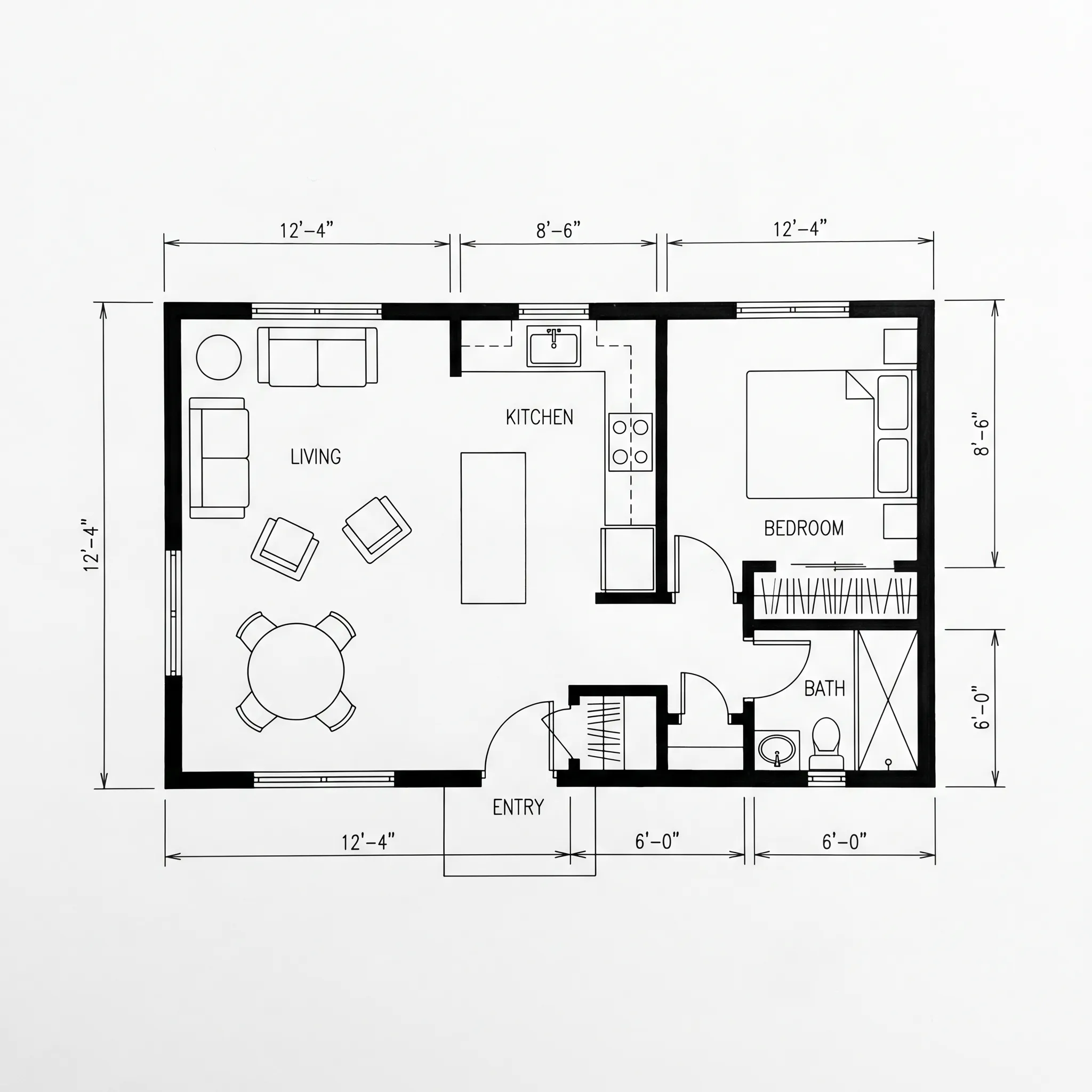
How to Turn a 2D Floor Plan Into a 3D Render With AI (5 Steps)
Turn a 2D floor plan into a 3D render with AI in 5 steps. Render a House makes a photorealistic image in 30–60 seconds, free to start.
Best AI Rendering Tools for Architects in Latin America (2026)
AI rendering tools for architects in Latin America (2026): Render a House, Veras, ArchiVinci, LookX, MyArchitectAI, Maquete. Languages, prices.
